
Last updated September 22, 2026
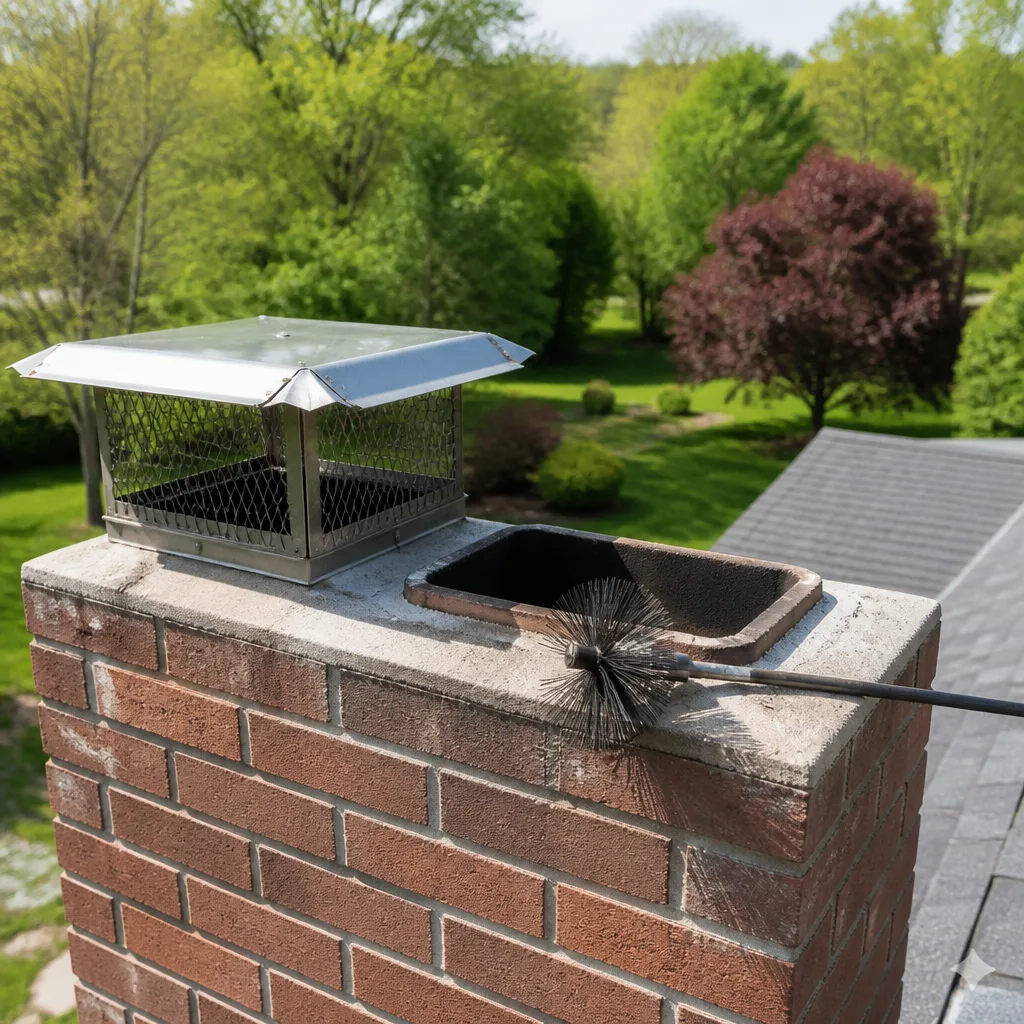
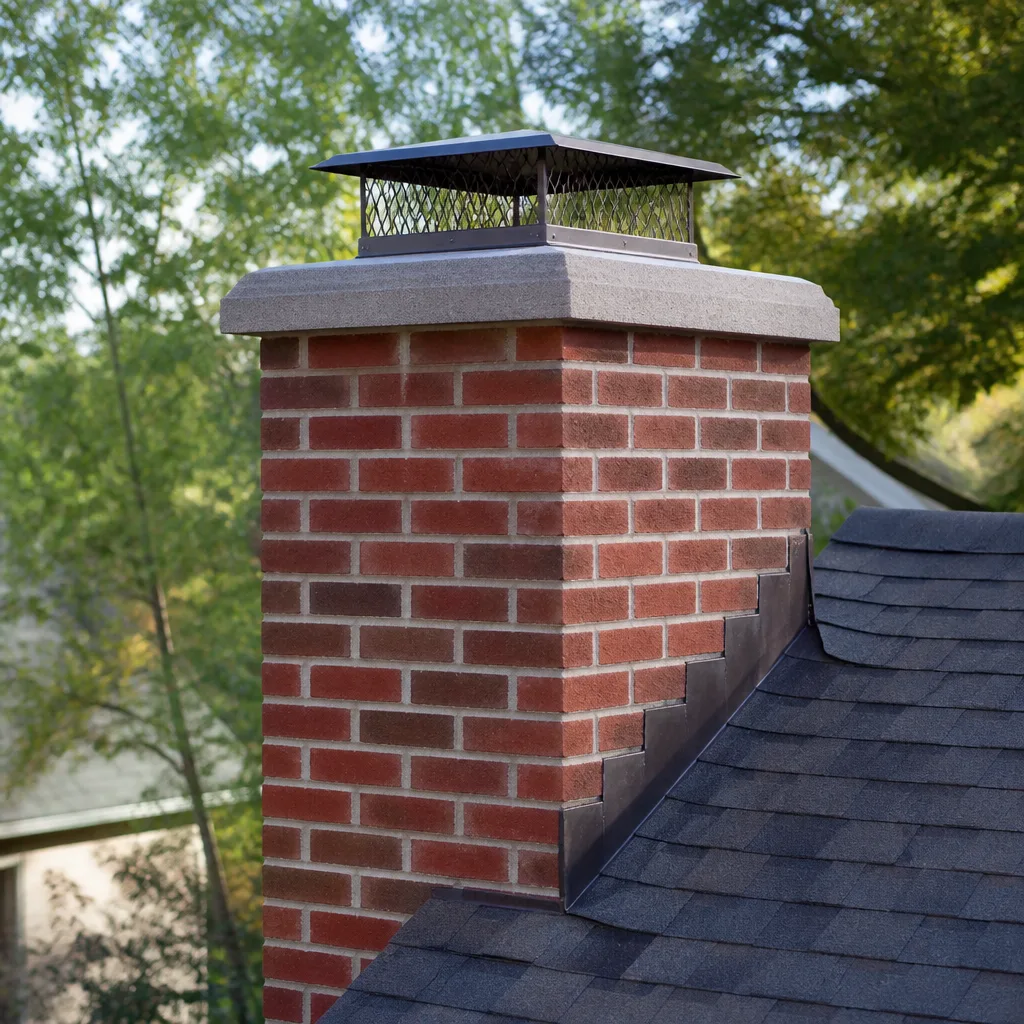
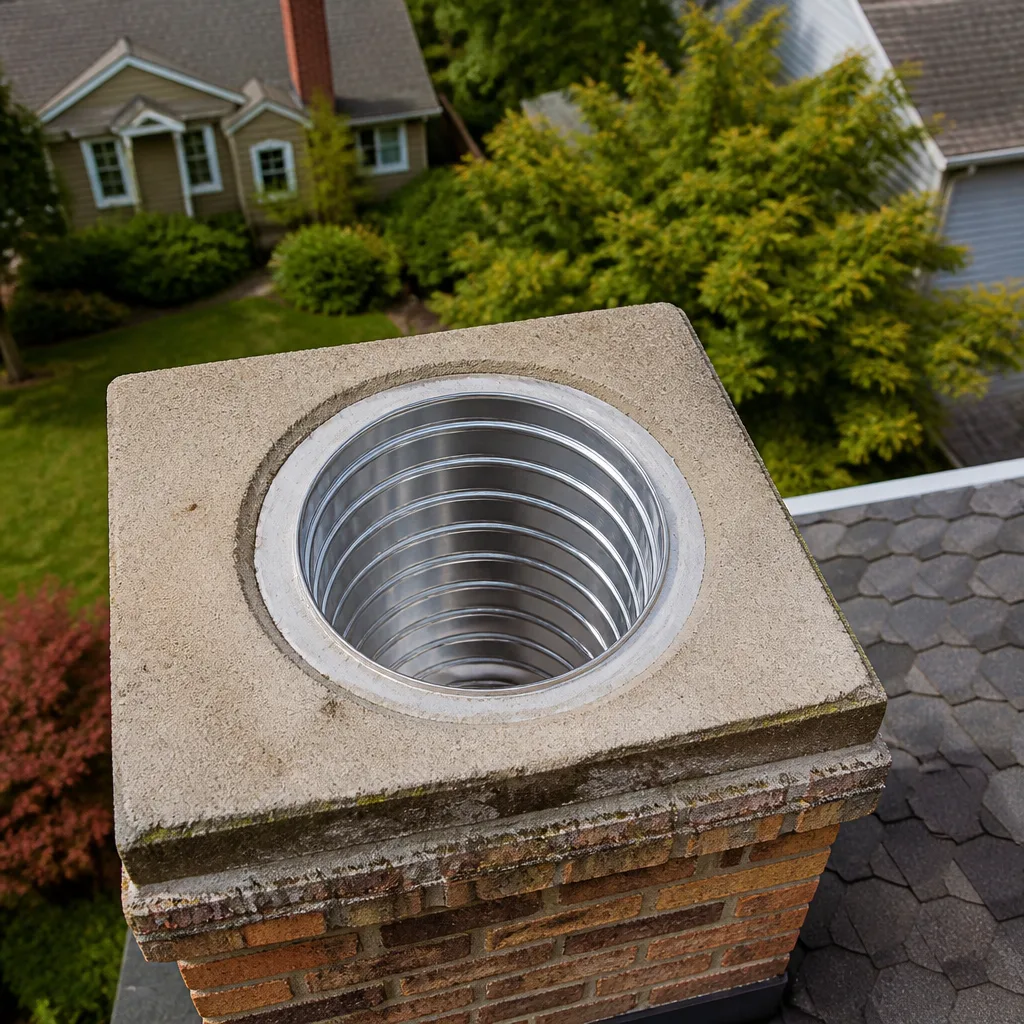
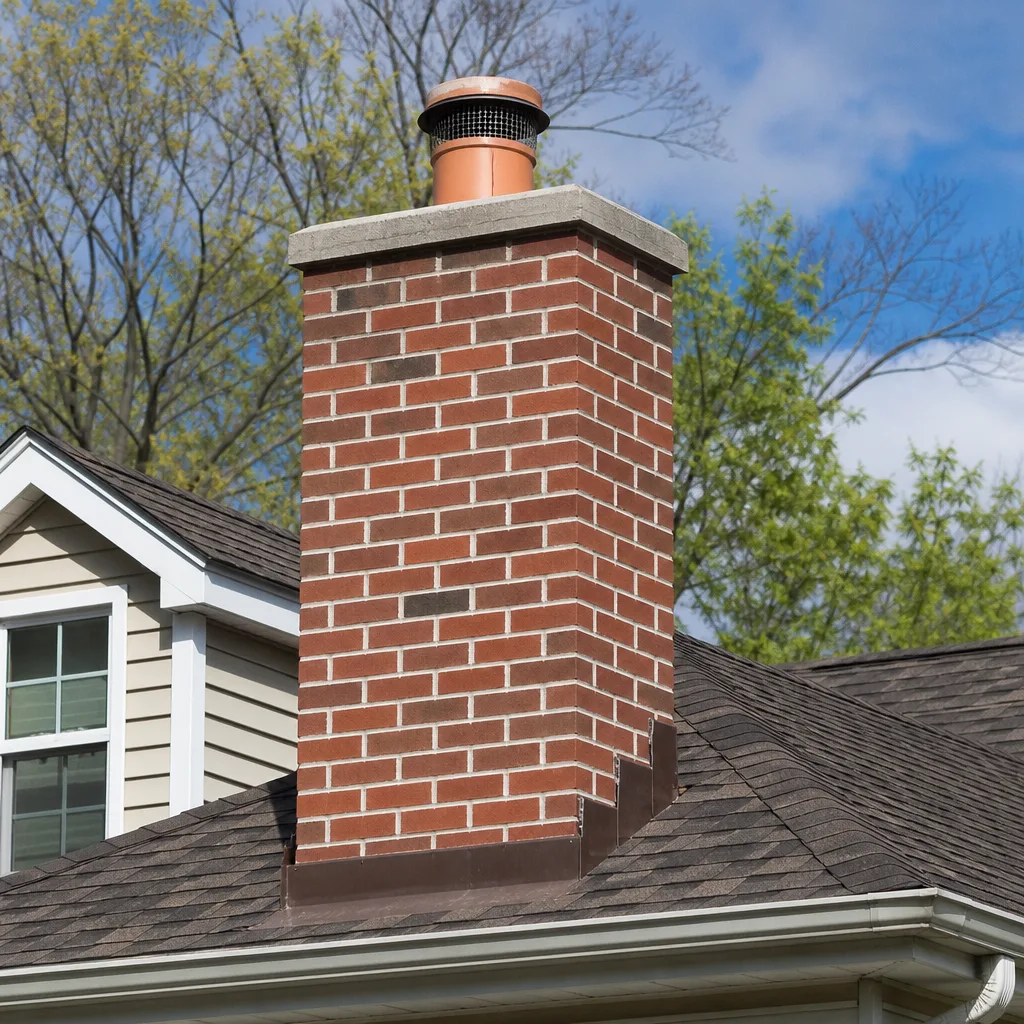
Level 1 sweep and inspection to the NFPA 211 annual standard - flue, crown, cap, and flashing checked and photographed
Chimney sweep logs do not sweep chimneys. They loosen some creosote - which then falls where a brush and vacuum still have to collect it.
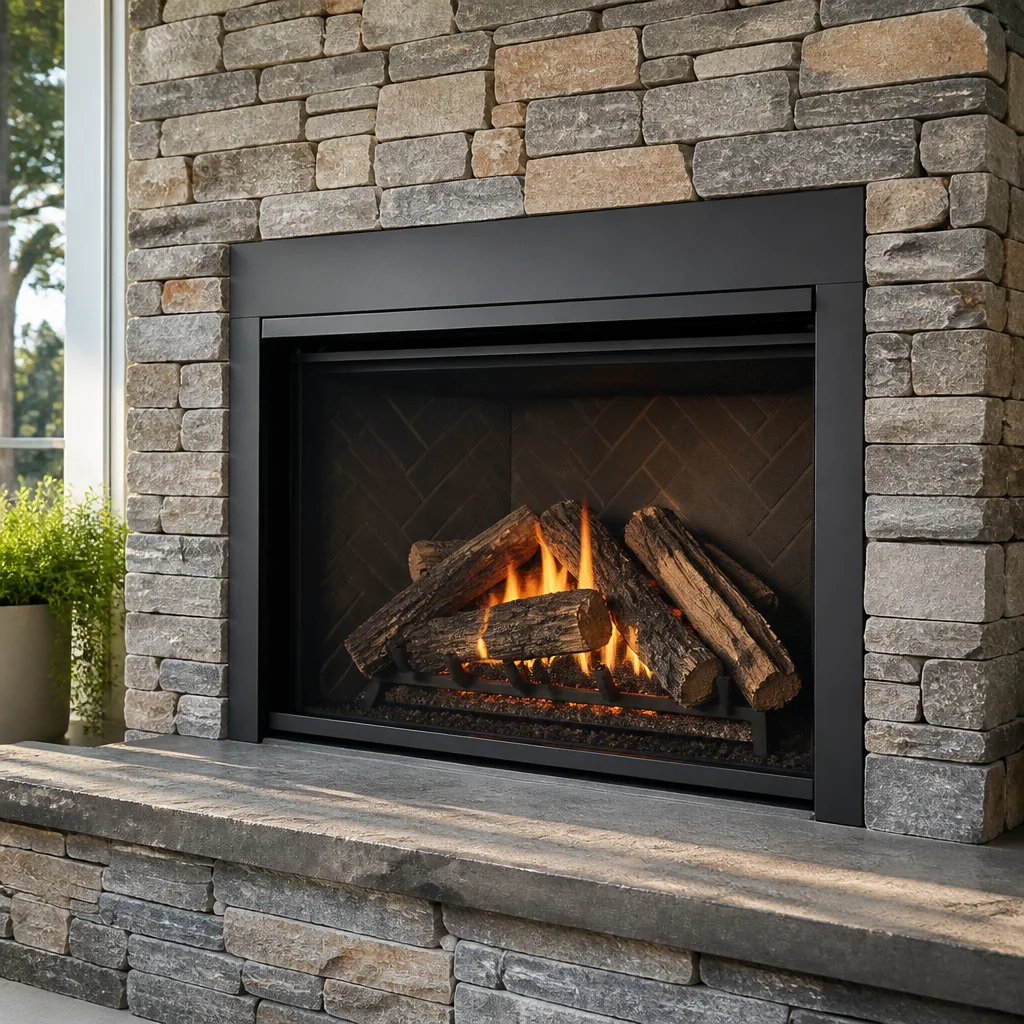
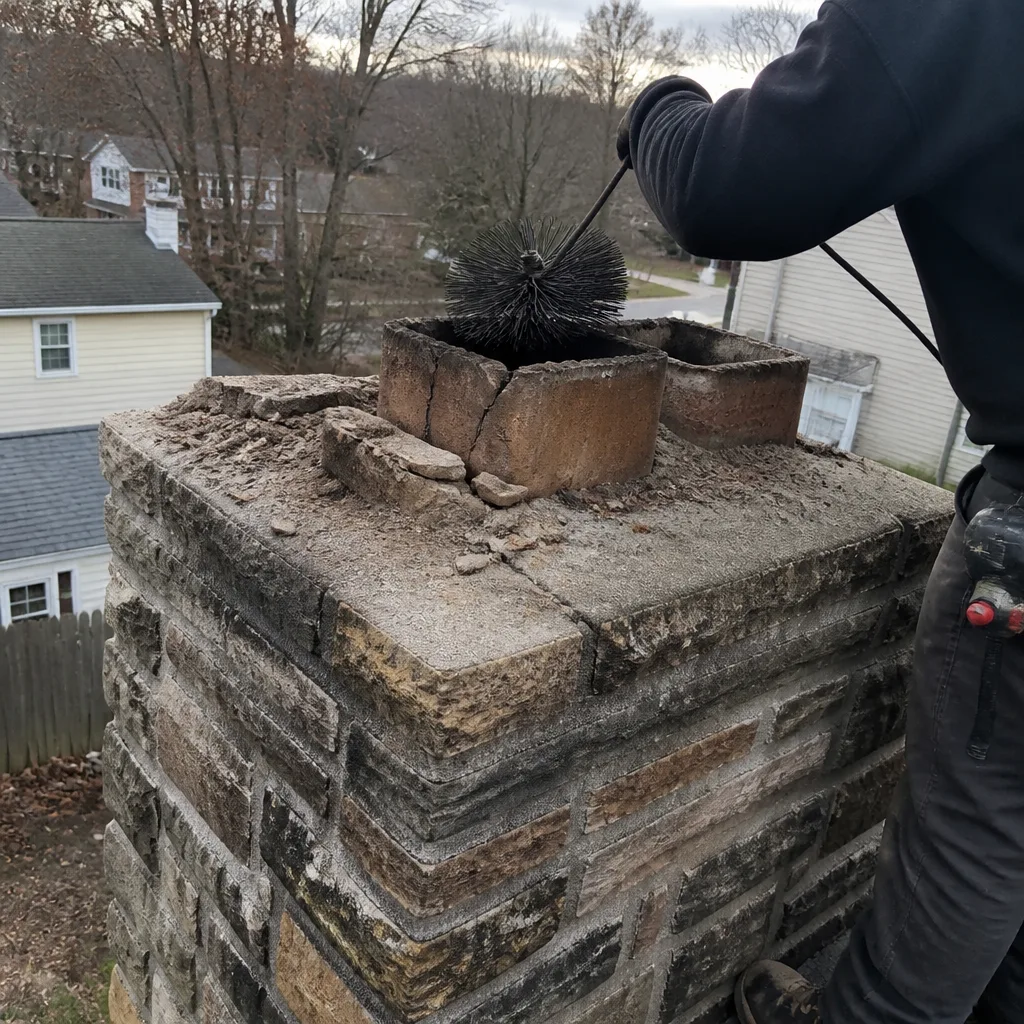 Before
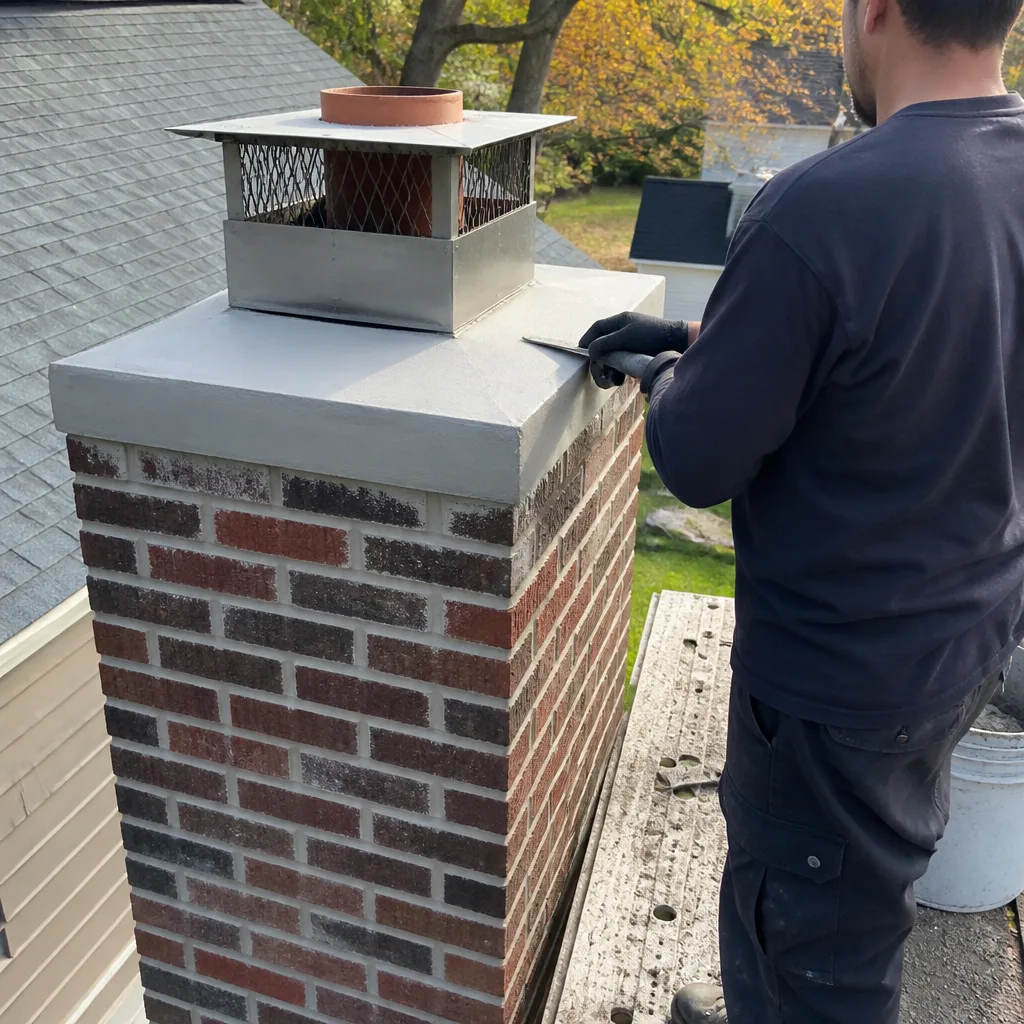 After
After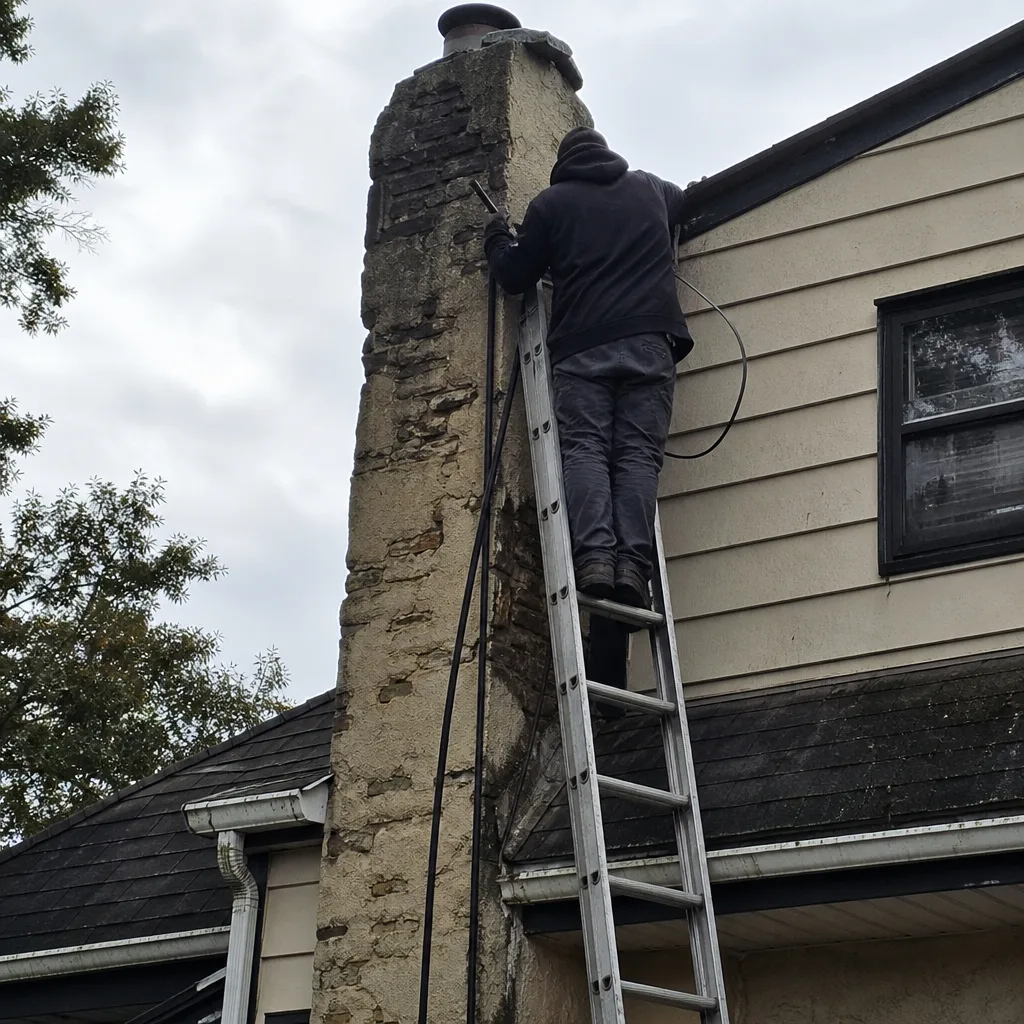 Before
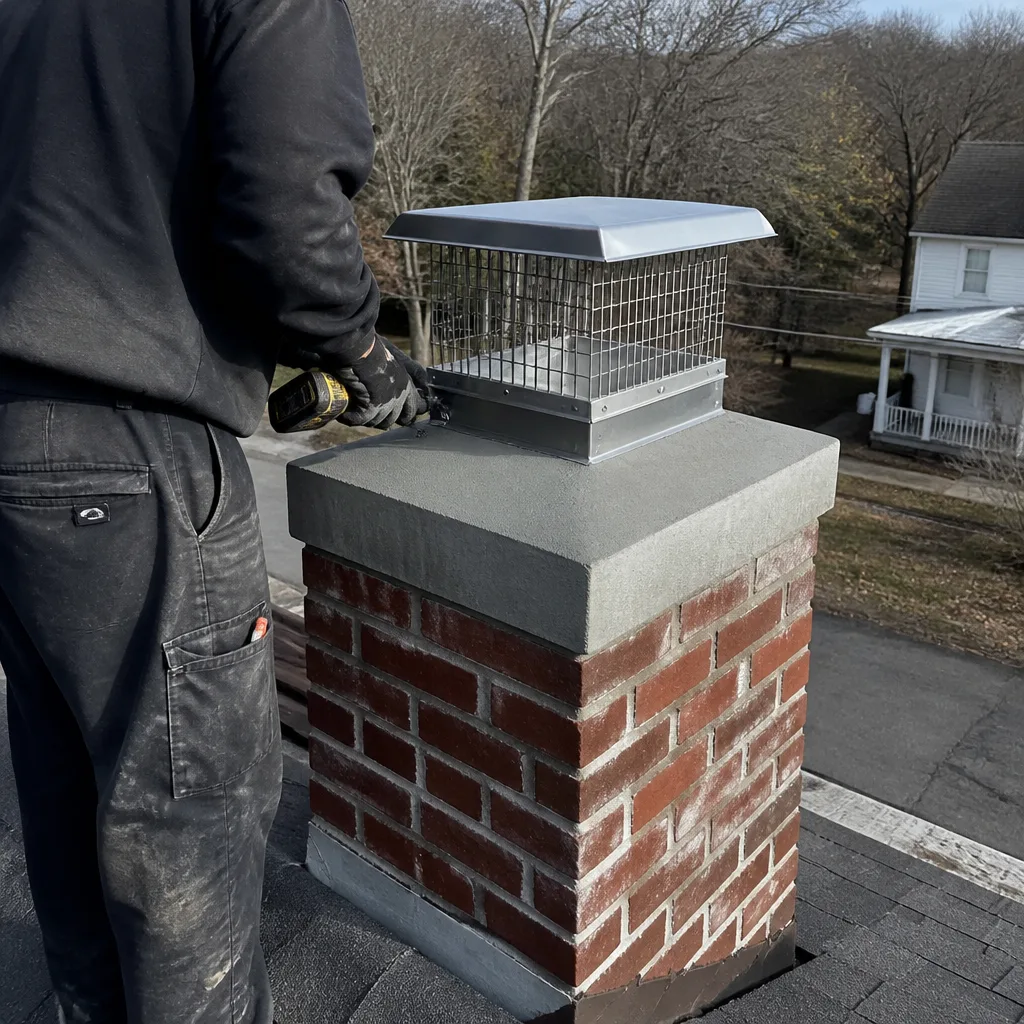 After
After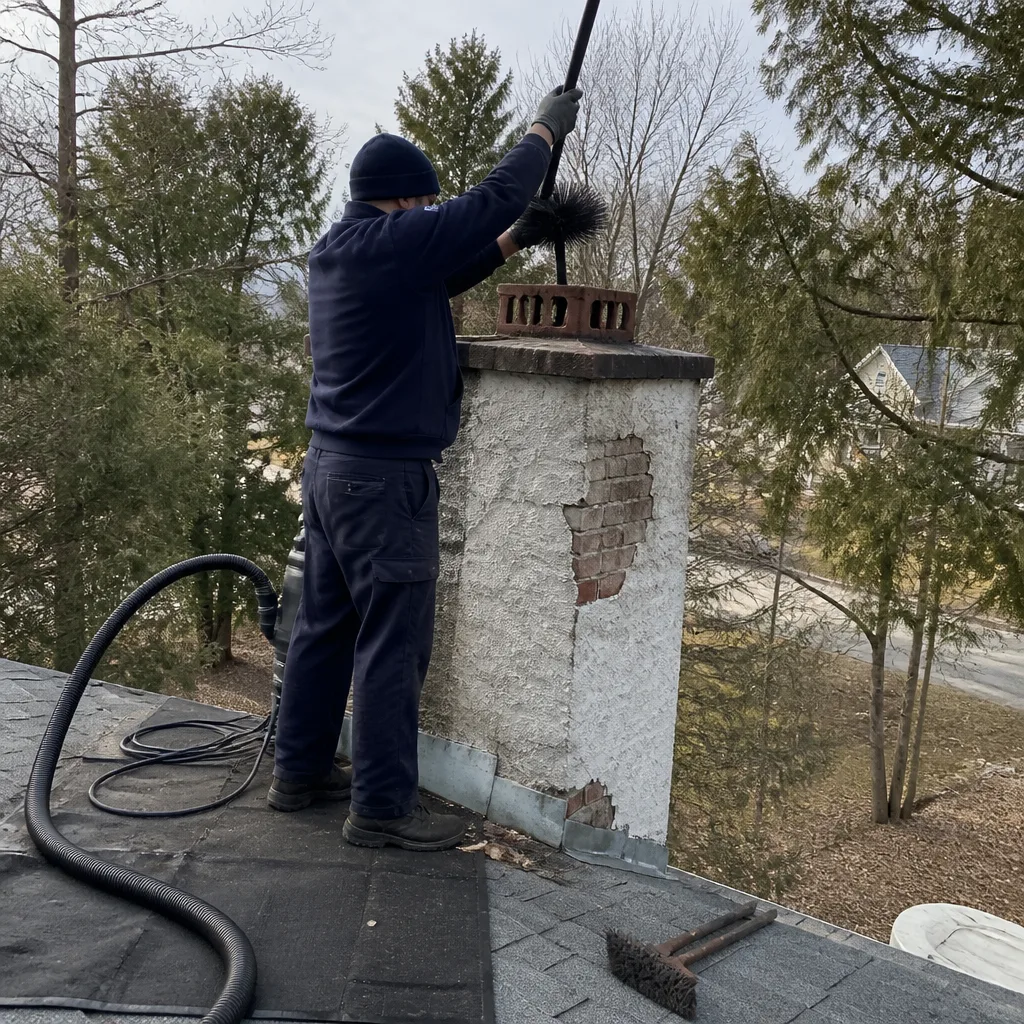 Before
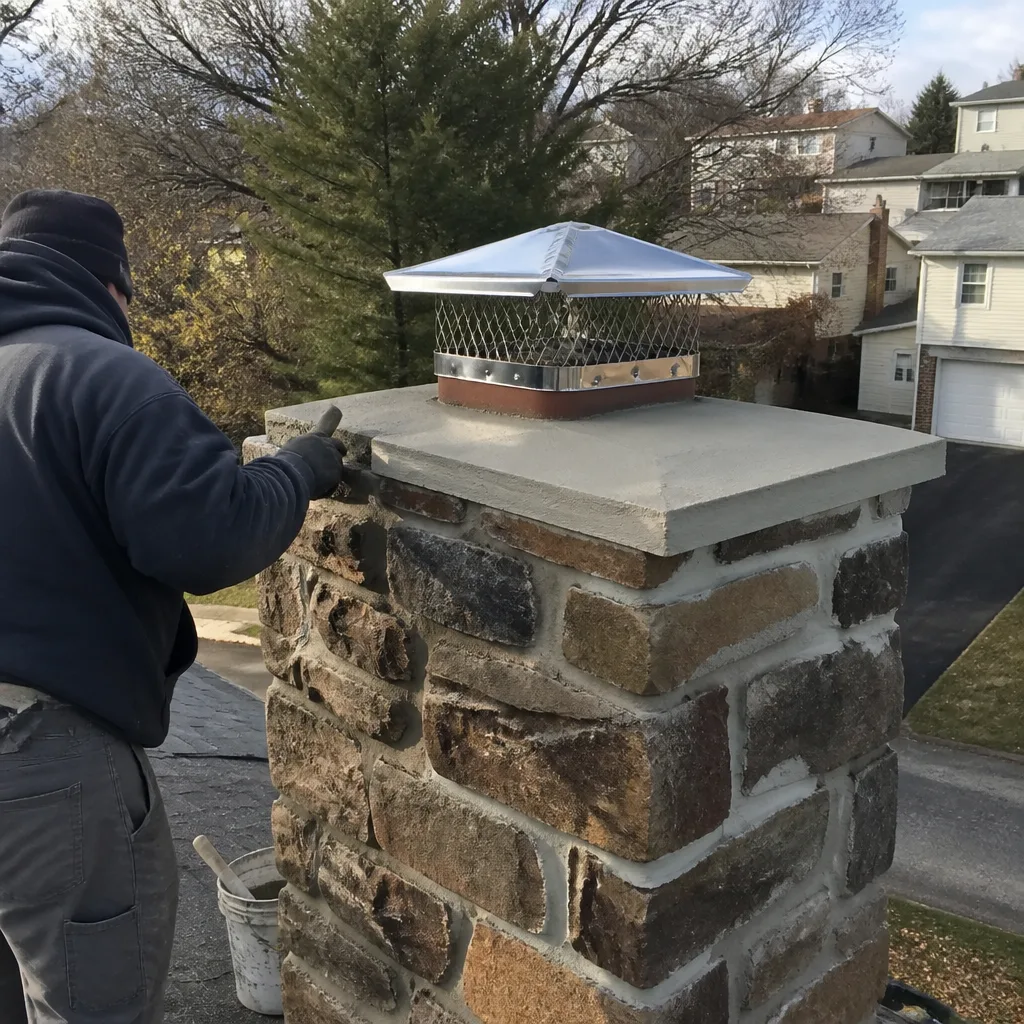 After
AfterDIY vs Professional Chimney Cleaning: The Norristown Homeowner’s Decision Guide
Chimney brush kits cost about $60 at the Home Depot on West Main Street. What they don’t include: a camera, a trained eye for hairline liner fractures, a ladder rated for the steep pitches common in Norristown’s older neighborhoods like Westover, and a written record that satisfies your homeowner’s insurance maintenance clause. The brush is the cheap part. In this guide and our more guides & resources, we’ll separate what a motivated homeowner can actually accomplish from what the job structurally requires, show you where the risk-reward math shifts, and explain why Pennsylvania’s real estate and insurance rules make professional documentation non-negotiable in specific scenarios.
Quick Answer
Most Norristown homeowners can safely handle light soot removal from an accessible, single-story flue and basic firebox cleaning. However, DIY chimney cleaning cannot produce a camera-documented inspection of the flue liner, smoke chamber, or hidden crown damage - and Pennsylvania home sales, insurance claims, and NFPA 211 compliance all require that documentation in specific situations. The real cost gap between DIY materials plus a mandatory professional inspection and a full professional service with documentation included is typically under $150.
Table of Contents
- What DIY Chimney Cleaning Can Actually Accomplish
- Three Conditions That Make Professional Service Non-Negotiable
- NFPA 211 and Why It Ends the DIY Debate for Most Norristown Homes
- Real Cost Comparison: DIY Plus Inspection vs. Full Professional Service
- The Insurance and Liability Angle Most Homeowners Miss
- Norristown-Specific Risks: Climate, Housing Stock, and Code Reality
- What Professional Chimney Cleaning Actually Includes
- Common Mistakes to Avoid
- When to Call a Professional
- Frequently Asked Questions
- The Bottom Line
 Before
 After
AfterWhat DIY Chimney Cleaning Can Actually Accomplish
Let’s start with what you can do, not what you can’t. A homeowner with basic mechanical skills, proper ladder safety equipment, and patience can accomplish three things that genuinely matter for chimney maintenance.
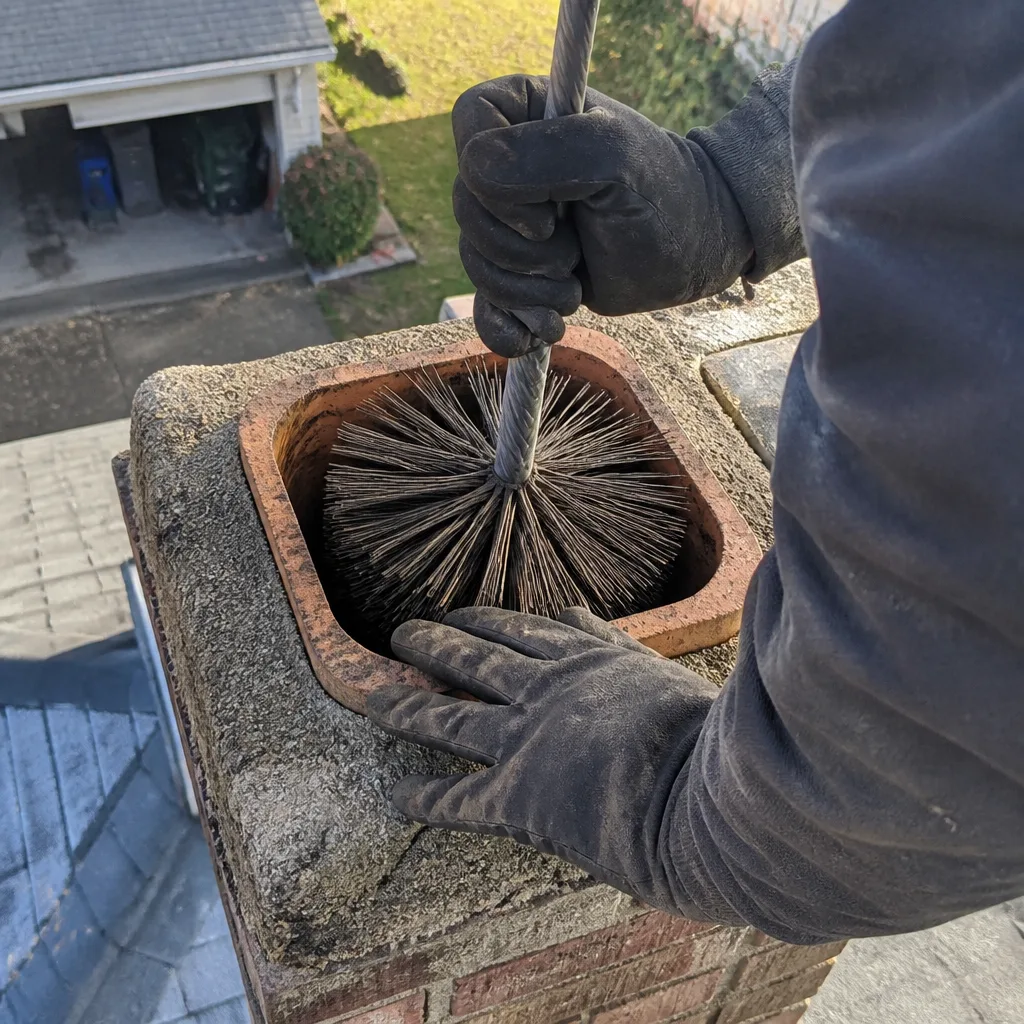
Light soot removal in accessible, single-story flues. If your chimney is straight, masonry-built, and you’ve been burning properly seasoned hardwood on a regular cleaning schedule, a polypropylene brush and fiberglass extension rods can remove powdery Class I soot from the flue walls. This is real work. It takes 2-3 hours for a first-timer. You’ll need a shop vacuum with a HEPA filter, drop cloths for your fireplace surround, and respiratory protection - soot particles are fine enough to penetrate standard dust masks.
Firebox cleaning and inspection. The firebox is the visible chamber where combustion happens. You can remove ash buildup, check for cracked firebrick, and verify that the damper opens and closes fully. Look for mortar joints that have receded more than a quarter-inch. In Norristown’s pre-war housing stock, we’ve seen fireboxes where the original mortar has turned to sand - a condition a homeowner can spot if they know to look.
Ground-level cap and crown visual check. With binoculars from your yard or a second-story window, you can identify obvious crown cracks, missing cap sections, or animal nesting evidence. What you cannot do from the ground is assess whether that crown crack extends through to the flue liner or whether water intrusion has already begun spalling the interior brick.
Here’s the honest boundary: DIY cleaning addresses what you can reach and see. It does not address what happens inside the flue liner, above the smoke shelf, or within the structural cavity where most chimney fires begin. The Chimney Cleaning & Sweep in Norristown that we perform includes camera documentation of these hidden zones as standard - not because we’re selling fear, but because the data exists and the homeowner has a right to it.
What DIY Cannot Do: The Structural Limits
Three capabilities separate professional service from even the most diligent homeowner effort:
- Camera inspection of the flue liner. A chimney fire often starts where the liner has cracked or spalled, allowing heat to reach combustible framing. No brush kit includes a 360-degree camera that can navigate a flue with offsets or document liner condition with timestamped footage.
- Assessment of Class II and III creosote. Light soot brushes off. Tar-like Class II creosote and hardened, glazed Class III creosote require chemical treatment or mechanical removal with specialized chains and whips - tools that cost more than a professional cleaning and require training to use without damaging the liner.
- Written documentation for third parties. Insurance adjusters, home inspectors, and Pennsylvania real estate transactions require dated, professional documentation. Your word that “I cleaned it myself” carries no weight in any of these contexts.
Three Conditions That Make Professional Service Non-Negotiable
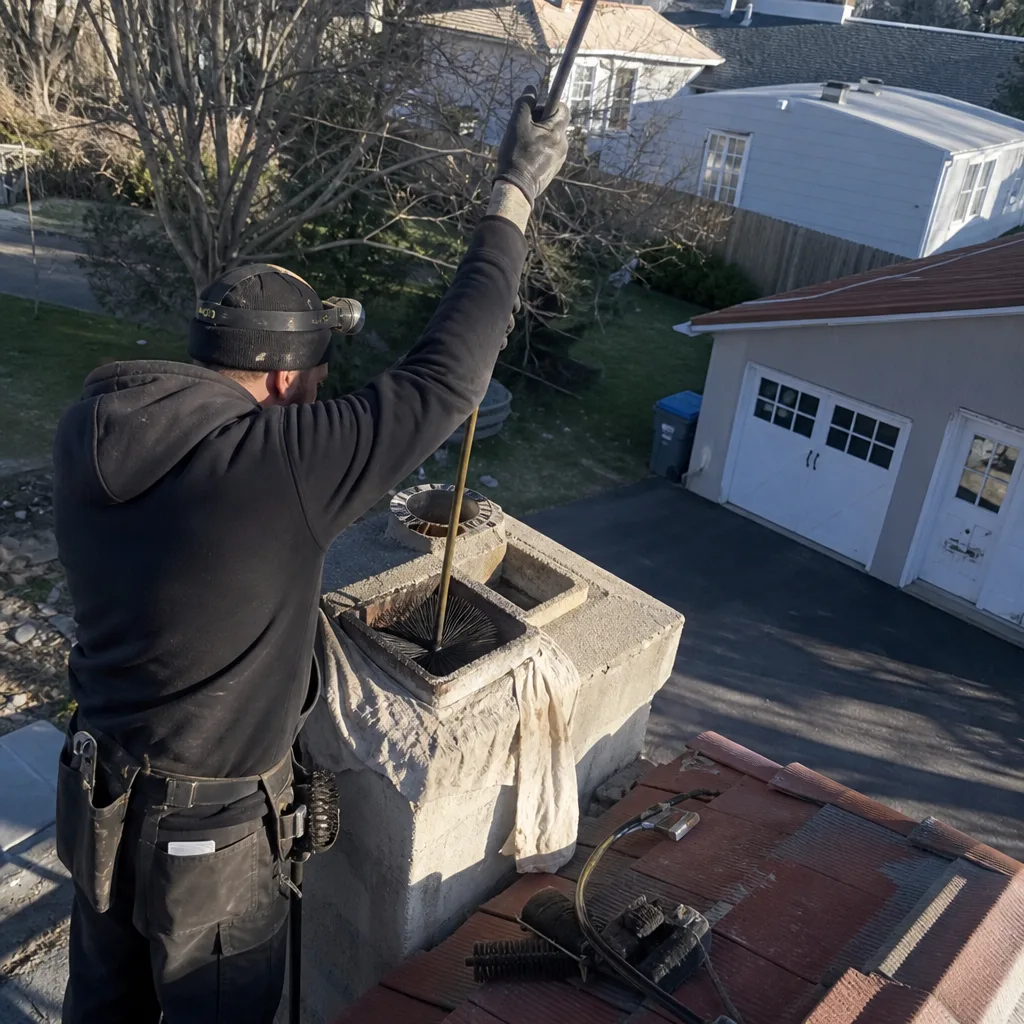
Regardless of budget, skill level, or how many YouTube tutorials you’ve watched, three scenarios make professional chimney service mandatory. Not recommended - mandatory. These aren’t our rules. They’re Pennsylvania property law, NFPA 211, and insurance policy language. For seasonal planning, see our Seasonal Chimney Cleaning Care for Norristown: Year-Round Homeowner’s Guide.
Condition 1: Any chimney not professionally cleaned in two or more years. Creosote accumulation follows a nonlinear curve. Year one might produce light soot. Year two produces measurable buildup. Year three, especially with the mixed hardwoods and occasional softwood burning common in Norristown, often produces glazed creosote that no homeowner brush kit can remove. More critically, two years of unchecked moisture intrusion - standard in our freeze-thaw climate - can degrade a liner from sound to hazardous without any visible exterior sign. After 24 months without professional inspection, you’re not maintaining; you’re guessing.
Condition 2: Any appliance change, insert installation, or fuel conversion. Installing a wood insert into a fireplace opening, converting from wood to gas, or even changing to a higher-efficiency wood stove changes the thermal dynamics and venting requirements of your chimney. NFPA 211 requires a Level 2 inspection - camera scan, accessible interior surfaces examined, clearances verified - before the new appliance operates. This is not a recommendation. It’s a life safety standard. A DIY cleaning provides zero documentation that your flue is compatible with the new appliance’s venting profile.
Condition 3: Any home purchase or sale in Pennsylvania. Pennsylvania’s real estate disclosure requirements place chimney condition squarely on the seller’s plate. Home inspectors flag chimneys without recent professional documentation. Buyers’ insurance underwriters increasingly require proof of maintenance. A DIY cleaning, no matter how thorough, produces no documentation that satisfies any of these parties. In competitive Norristown markets like East Norriton Township or the Main Street corridor, a chimney with no professional inspection record becomes a negotiation point - or a deal breaker.
We’ve completed more than 38,000 chimney inspections and cleanings since 2009. A meaningful percentage of those were homeowners who cleaned diligently themselves, then called us when they realized their insurance, their home sale, or their new appliance installation required documentation they couldn’t produce.
NFPA 211 and Why It Ends the DIY Debate for Most Norristown Homes
NFPA 211 is the National Fire Protection Association’s standard for chimneys, fireplaces, vents, and solid fuel-burning appliances. It’s not a building code - it’s the standard that building codes reference, that insurance policies incorporate by reference, and that courts use to determine whether maintenance was reasonable.
The standard defines three inspection levels:
- Level 1: Visual examination of readily accessible portions. What a homeowner can do from the ground and firebox.
- Level 2: Camera scan of the flue liner, examination of accessible interior surfaces, and verification of clearances. Required on property transfer, appliance change, or after chimney fire or seismic event.
- Level 3: Destructive examination when serious hazard is suspected. Rarely needed.
Here’s what matters for the DIY question: NFPA 211 Level 2 is the default professional standard, and it’s what we perform on every Emberly Chimney Cleaners Norristown home visit. The standard’s name is literally our company’s name because we made it our baseline in 2009 - before regulators or insurers asked for it - and that practice became Clause 4 of the Haven Standard.
A homeowner with a $60 brush kit can perform elements of a Level 1 inspection. They cannot perform a Level 2 inspection. The camera equipment alone runs $3,000-$8,000 for professional-grade units. The training to interpret what the camera reveals - hairline cracks versus surface staining, spalling depth, liner joint separation - takes years of documented field experience.
In Norristown specifically, the housing stock amplifies this gap. Homes built between 1900 and 1950, common in the West End and near the Elmwood Park Zoo corridor, often have unlined brick flues or early terra cotta liners that fail in patterns invisible to the naked eye. We’ve pulled camera footage from flues that looked sound from the firebox but showed complete liner separation above the smoke shelf - a condition that would have remained hidden until a chimney fire breached the wall.
When your insurance adjuster asks whether the chimney was maintained to NFPA 211 standards, “I brushed it myself” is not a sufficient answer. The standard requires documented inspection, and documented inspection requires equipment and training no homeowner reasonably possesses.
Real Cost Comparison: DIY Plus Inspection vs. Full Professional Service
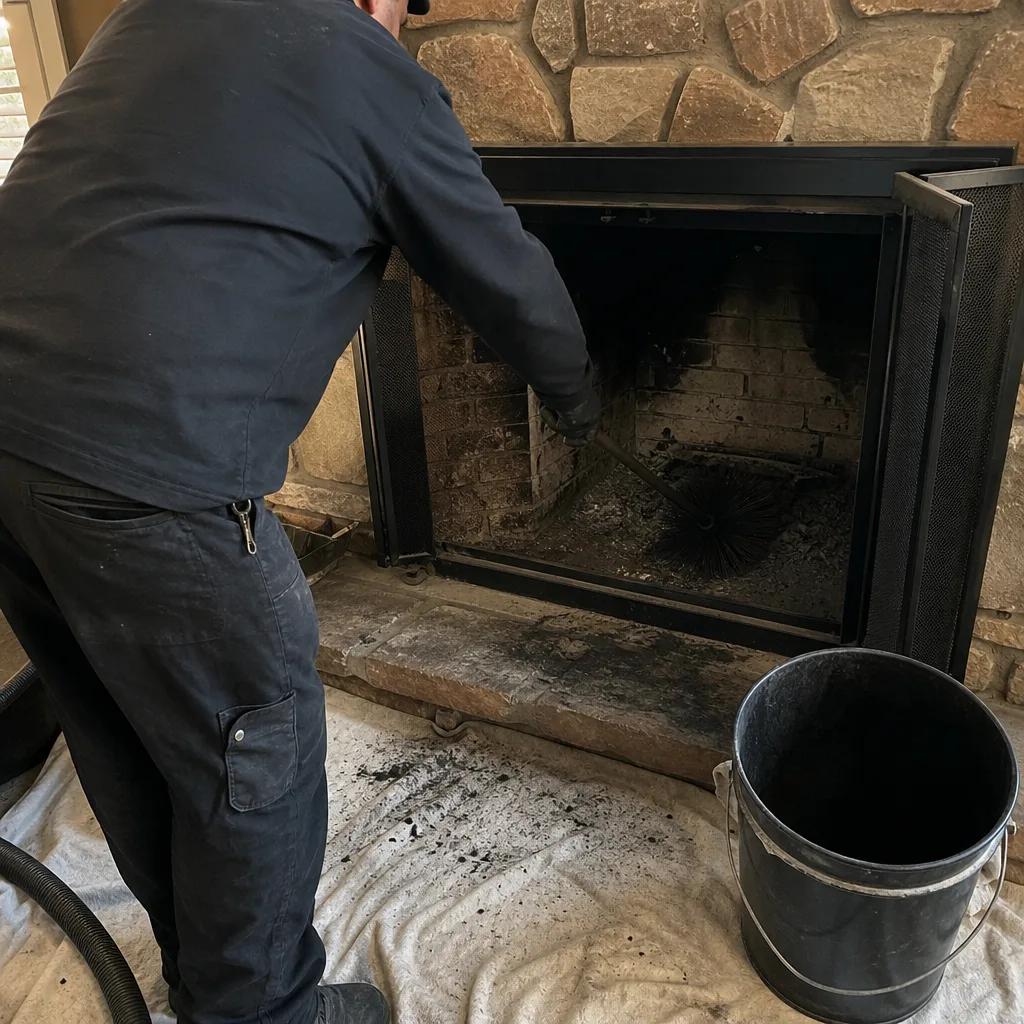
The financial argument for DIY chimney cleaning looks straightforward until you account for what the job actually requires. Here’s the honest math for a Norristown homeowner, with detailed figures in our Chimney Cleaning Cost Breakdown: The Norristown Homeowner’s Reference for 2026.
DIY Route: Minimum Viable Setup
| Item | Cost |
|---|---|
| Chimney brush kit (brush + rods) | $45-$75 |
| HEPA shop vacuum or rental | $80-$150 (or $40/day rental) |
| Respiratory protection (N95 minimum, P100 preferred) | $15-$40 |
| Ladder rated for your roof pitch (many homeowners lack) | $200-$400 |
| Drop cloths, tarps, cleaning supplies | $30-$50 |
| Subtotal: DIY materials | $370-$715 (or $255-$365 if ladder owned) |
But this assumes the cleaning goes perfectly. It doesn’t account for:
- Creosote remover chemicals if you encounter Class II or III buildup ($25-$60)
- Replacement brush heads if your flue is rough or damaged ($20-$35)
- The professional camera inspection you’ll still need for insurance or sale documentation ($150-$250)
Professional Service: What Emberly Chimney Cleaners Norristown Includes
Our Chimney Cleaning & Sweep in Norristown includes:
- NFPA 211 Level 2 camera-scan inspection of the full flue length
- Mechanical sweeping with appropriate brushes, chains, or whips for your creosote class
- Smoke chamber and firebox cleaning
- Documented photo record delivered digitally - Clause 4 of the Haven Standard
- Written scope, written price, and written warranty before any work begins - Clause 1
The margin between “DIY materials plus mandatory professional inspection” and “full professional service with everything documented” is typically $100-$180. For that difference, you get: proper equipment selection for your specific flue type, trained interpretation of camera findings, no personal injury risk on ladders or roofs, and documentation that satisfies insurance, real estate, and warranty requirements.
We source materials through Haven’s buying network from DuraFlex, HeatShield, Gelco, Olympia Chimney, Famco, and Copperfield specifically to keep customer prices honest. The 38,000+ chimneys we’ve serviced since 2009 have all been quoted in writing before work started - no exceptions.
The Insurance and Liability Angle Most Homeowners Miss
This is where the DIY vs. professional question gets concrete in ways that matter when something goes wrong.
Homeowner’s insurance policies contain maintenance clauses that require “regular professional inspection and cleaning” for solid fuel appliances. The exact language varies by carrier, but the pattern is consistent: after a chimney fire, the adjuster requests maintenance records. If you provide receipts for brush kit purchases and describe self-performed cleaning, the claim enters a gray zone that can delay or reduce payout.
More specifically, check your policy for these phrases:
- “Professional service required” - explicit exclusion of DIY maintenance
- “NFPA 211 compliance” - requires documented inspection, not just cleaning
- “Certified technician” - may specify CSIA or equivalent credential
We’ve worked with Norristown homeowners whose claims were initially denied after chimney fires, then approved only after we provided documentation of our prior inspection and the specific deficiency we had identified. In one case on Markley Street, our camera footage from a prior visit showed liner deterioration we had documented and quoted for repair; the homeowner’s delay in authorizing work became part of the claim record, but our documentation established that the hazard was known and professionally identified.
Without that documentation trail, the same homeowner would have faced questions about whether the hazard was pre-existing, whether maintenance was adequate, and whether negligence contributed to the loss. The brush kit doesn’t produce a record. The camera does.
Pennsylvania’s comparative negligence rule means that if an insurer can assign any percentage of fault to inadequate maintenance, your recovery drops by that percentage. A documented professional inspection shifts that burden. A DIY cleaning leaves it on you.
Norristown-Specific Risks: Climate, Housing Stock, and Code Reality
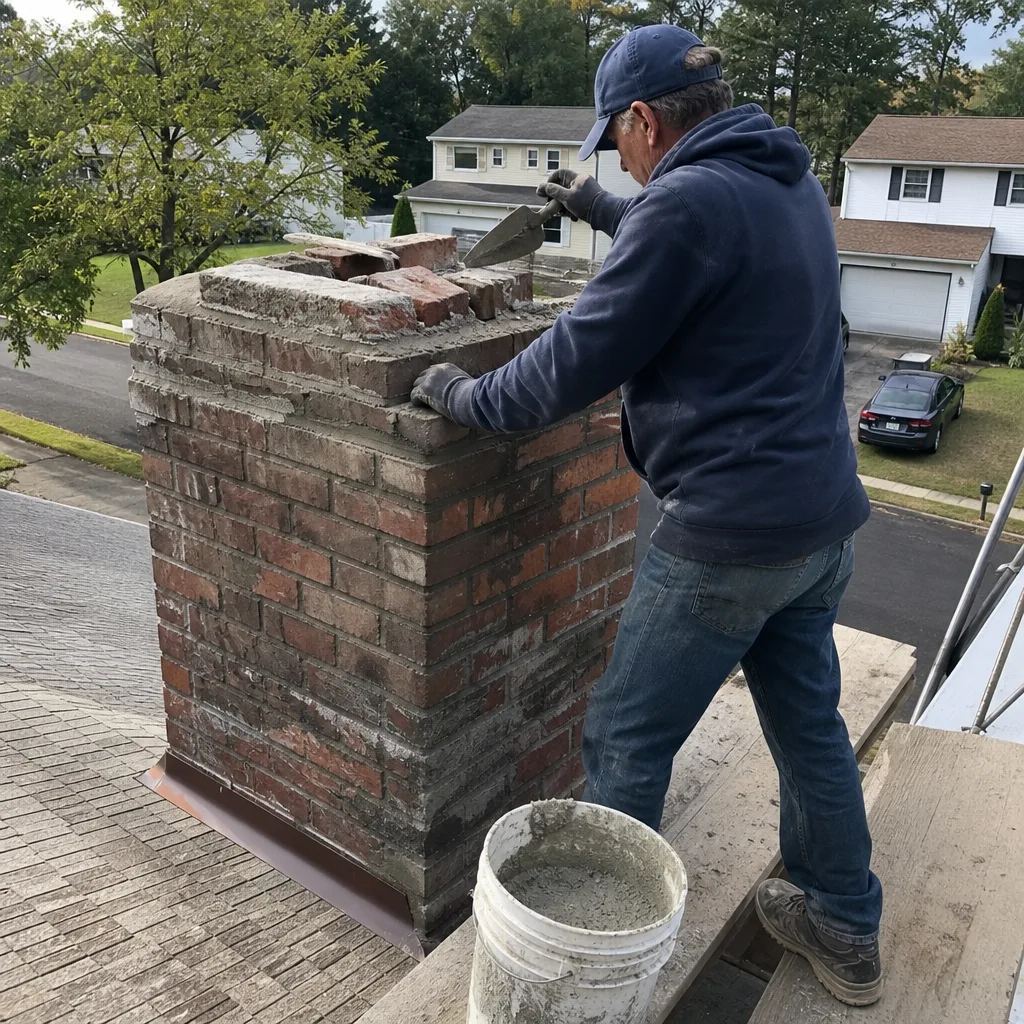
Norristown’s geography and building patterns create chimney conditions that amplify the gap between DIY cleaning and professional inspection.
Freeze-thaw cycling. Our location in the Schuylkill River valley produces temperature swings that stress masonry chimneys from October through April. Water penetrates crown cracks, freezes, expands, and spalls brick faces. By spring, a chimney that looked sound in October may have interior damage no ground-level inspection reveals. The camera scan catches this. The brush kit doesn’t.
Housing age and type. Norristown’s inventory includes significant pre-1950 construction with unlined brick flues, transitional terra cotta liners from the 1920s-1940s, and postwar homes with early stainless steel liners that may be approaching end of service life. Each liner type fails differently. Each requires different inspection technique. We’ve found complete liner collapse in Westover homes where the exterior brick looked pristine - the collapse was internal, hidden, and detectable only by camera.
Local burning patterns. Norristown homeowners burn mixed hardwoods, often sourced locally with variable seasoning. The oak and maple common in Montgomery County produce different creosote profiles than softwoods, but incomplete seasoning - wood with moisture content above 20% - accelerates buildup regardless of species. We’ve measured Class III glazed creosote in chimneys cleaned annually by homeowners who didn’t realize their wood source was insufficiently dried.
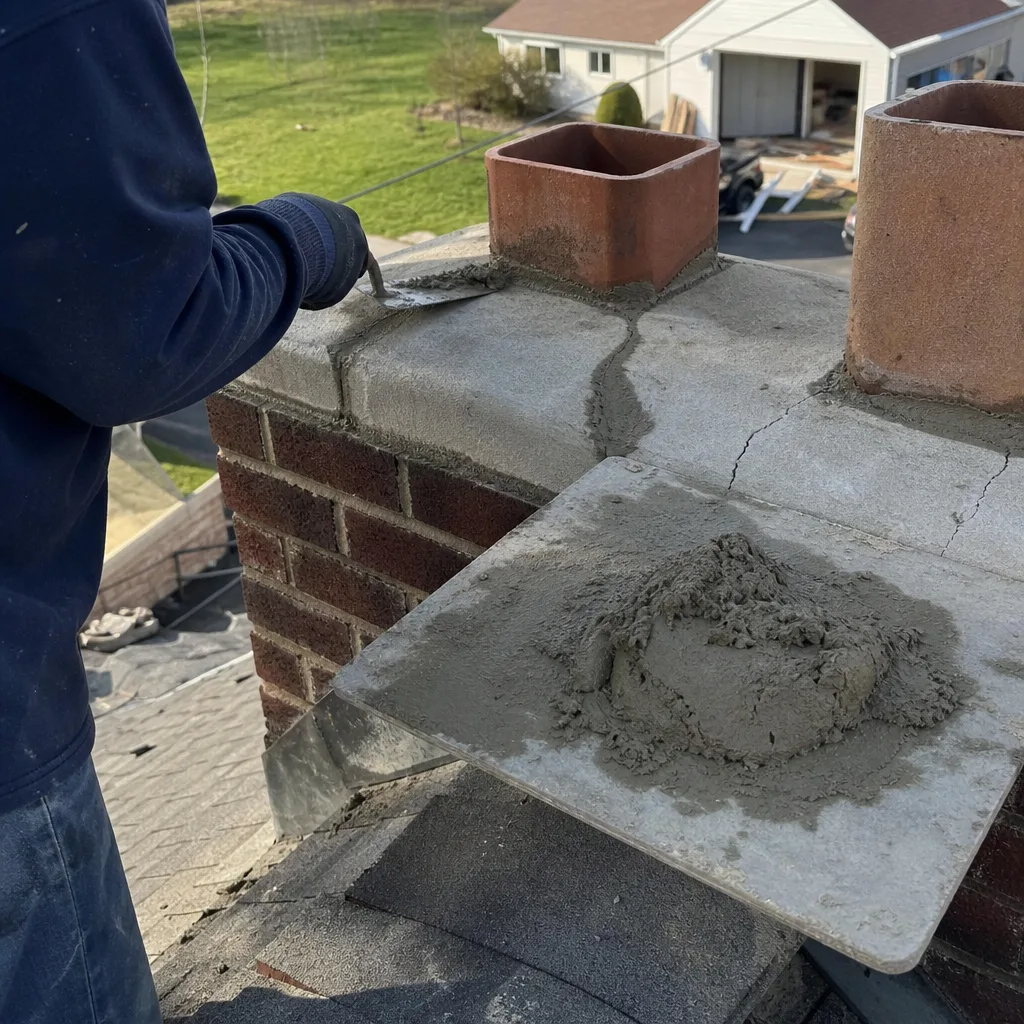
Permit and code context. Montgomery County requires permits for chimney liner replacement and structural repair. The permit application requires professional documentation of the deficiency. A homeowner’s visual assessment doesn’t satisfy the building department. Our Chimney Repair in Norristown includes permit-ready documentation as standard.
These factors don’t make DIY cleaning impossible. They make it incomplete in ways that specifically matter for Norristown properties.
What Professional Chimney Cleaning Actually Includes
To evaluate whether DIY meets your needs, you need to know what professional service actually entails. Here’s our standard process, which follows the Haven Standard clauses we’ve operated under since 2009.
- Pre-arrival documentation. You’ll receive a text when your technician is en route, with name, photo, and license information - H.A.V.E.N. “Arrive on schedule” and “Verified crews.”
- Written price before work starts. We inspect accessible areas, identify your creosote class, and deliver a written scope with fixed price before any cleaning begins. Clause 1 of the Haven Standard: “Have it in writing.” No surprises, no upsell after we’re in your home.
- Camera-scan inspection. NFPA 211 Level 2: 360-degree camera down the full flue length, smoke chamber assessment, firebox and damper inspection. We record timestamped footage and still images.
- Mechanical cleaning with appropriate tools. Class I soot: polypropylene brushes. Class II tar-like creosote: chemical treatment with mechanical follow-up. Class III glazed creosote: specialized chains, whips, or rotary systems. We match the tool to the condition, not the other way around.
- Post-cleaning camera verification. We run the camera again to confirm flue condition after cleaning and document any structural findings that require repair.
- Delivered documentation. Digital photo record, written summary of findings, and written warranty. Clause 4 of the Haven Standard requires this archive on every job - a practice we started in 2009 and have maintained across 38,000+ visits.
The 365-Day Done Right Promise applies to everything: if it’s not done right, we make it right. No time-limit gymnastics, no exclusionary fine print.
Our Fireplace Services in Norristown extend this same documentation standard to gas fireplace inspection, insert servicing, and damper repair - because the same insurance and real estate rules apply regardless of fuel type.
Common Mistakes to Avoid
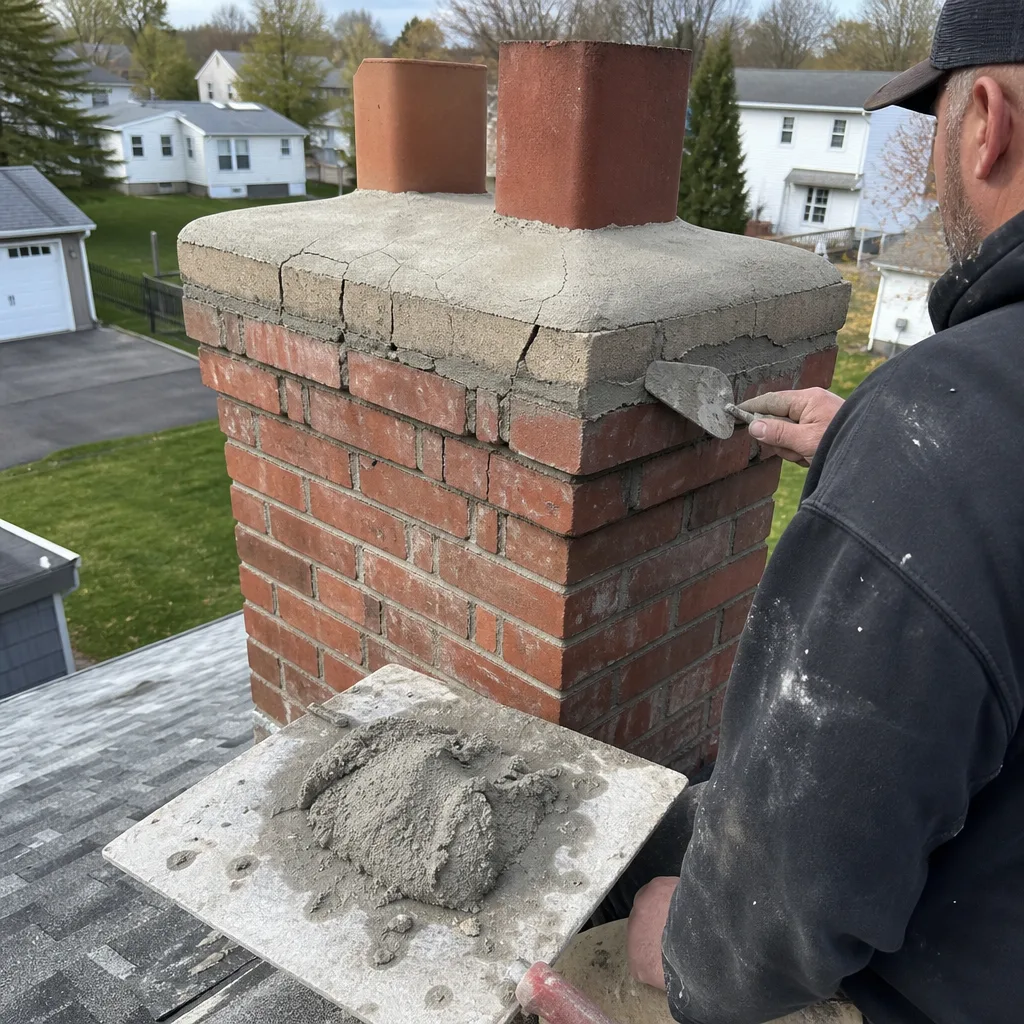
- Assuming a clean flue means a sound flue. We’ve camera-inspected flues that brushed clean beautifully but showed liner cracks that would have allowed a chimney fire to reach framing within minutes. Cleaning and structural assessment are separate tasks.
- Using the wrong brush material for the flue type. Metal brushes in stainless steel liners can score and damage the surface. Poly brushes in heavy creosote just polish it. Most homeowners buy one kit and use it regardless of conditions.
- Skipping the smoke chamber. The smoke chamber - the area above the damper that funnels smoke into the flue - accumulates creosote heavily but is awkward to reach. DIY efforts often stop at the damper. Professional service includes this zone because chimney fires frequently start there.
- Working without proper ladder safety. Norristown’s older homes have steeper roof pitches than modern construction. Extension ladders require 4:1 angle ratio, three points of contact, and often a helper. Falls from roof height are the leading cause of DIY home maintenance injury.
- Burning unseasoned wood and cleaning annually without inspection. The “I clean it every year so I’m fine” homeowner often has glazed creosote that annual light brushing doesn’t remove. Camera inspection reveals the actual accumulation pattern.
- Ignoring the cap and crown until water damage is visible inside. By the time you see water stains on your ceiling, the damage path runs through multiple structural layers. Ground-level visual checks catch obvious problems; camera inspection catches the early stage.
When to Call a Professional
Call a professional chimney service when: your chimney hasn’t had a documented inspection in 24 months or more; you’re buying, selling, or refinancing your home; you’ve changed or added any heating appliance; you smell smoke in your living space during operation; you see white efflorescence or dark staining on exterior brick; or your damper doesn’t open and close smoothly. These aren’t sales triggers. They’re conditions where the cost of not knowing exceeds the cost of documentation. New to hiring? Read How to Hire a Chimney Cleaning Contractor in Norristown: A Step-by-Step Guide.
Emberly Chimney Cleaners Norristown offers free estimates throughout Norristown and surrounding Montgomery County communities. Every estimate includes a preliminary assessment and written price - no charge, no obligation. Call (484) 552-9695 to schedule.
Frequently Asked Questions
Professional chimney sweeping with NFPA 211 Level 2 camera inspection in Norristown typically ranges from $250-$400 for standard masonry fireplaces, depending on creosote class, flue accessibility, and whether the smoke chamber requires mechanical cleaning. Emberly Chimney Cleaners Norristown provides a written, fixed price before any work begins - call (484) 552-9695 for an exact quote; estimates are free.
You need a new liner when the existing one is cracked, spalled, corroded, or improperly sized for your appliance - conditions we document with camera footage and show you directly. Not every chimney needs relining; we’ve inspected thousands where the existing liner was sound for continued use. The only way to know is camera inspection, not guesswork. If another company has recommended relining, our Free Second Opinion on Any Written Estimate applies.
NFPA 211 recommends annual inspection, with cleaning frequency determined by creosote accumulation. Most Norristown homeowners burning seasoned hardwood 2-3 times weekly need cleaning every 1-2 years. Those burning more frequently, burning softwoods, or using improperly seasoned wood may need annual cleaning. The camera inspection determines your actual accumulation rate - it varies by wood source, burning practice, and flue design.
Skipped cleaning allows creosote to accumulate beyond safe levels, increasing chimney fire risk and potentially obstructing flue draft. In Norristown’s freeze-thaw climate, simultaneous moisture intrusion degrades liners and masonry. The combined effect: higher fire risk, possible carbon monoxide backdraft into living spaces, and accelerated structural damage that turns a maintenance item into a multi-thousand-dollar repair. Camera inspection shows you exactly where you stand - call (484) 552-9695 to schedule.
You can, but the economics rarely work in your favor. By the time you purchase proper equipment and pay for a standalone camera inspection, you’re typically within $100-$180 of full professional service that includes both cleaning and documentation. Additionally, if our camera reveals Class II or III creosote your DIY effort didn’t remove, you’ll pay for remedial cleaning anyway. The bundled service is usually the better value.
Most Pennsylvania homeowner’s policies include maintenance clauses that require “regular professional inspection” for solid fuel appliances. The specific language varies - check your policy for “NFPA 211,” “certified technician,” or “professional service required.” After a chimney fire, adjusters routinely request maintenance records. DIY cleaning without professional documentation can delay or reduce your claim. Our written documentation satisfies standard policy requirements.
The Bottom Line
A $60 brush kit can remove light soot from an accessible flue. It cannot inspect the liner, document condition for insurance or real estate purposes, or satisfy NFPA 211 requirements for property transfers and appliance changes. The gap between DIY cleaning and professional service is smaller in dollars than most homeowners assume - and the gap in documentation is absolute. For Norristown homes, especially the older stock common in neighborhoods from Westover to the Main Street corridor, the camera scan isn’t a luxury add-on. It’s the only way to know what your chimney actually contains.
Written by Corrine Halstead, Owner at Emberly Chimney Cleaners Norristown, serving Norristown since 2009.