
Last updated September 22, 2026
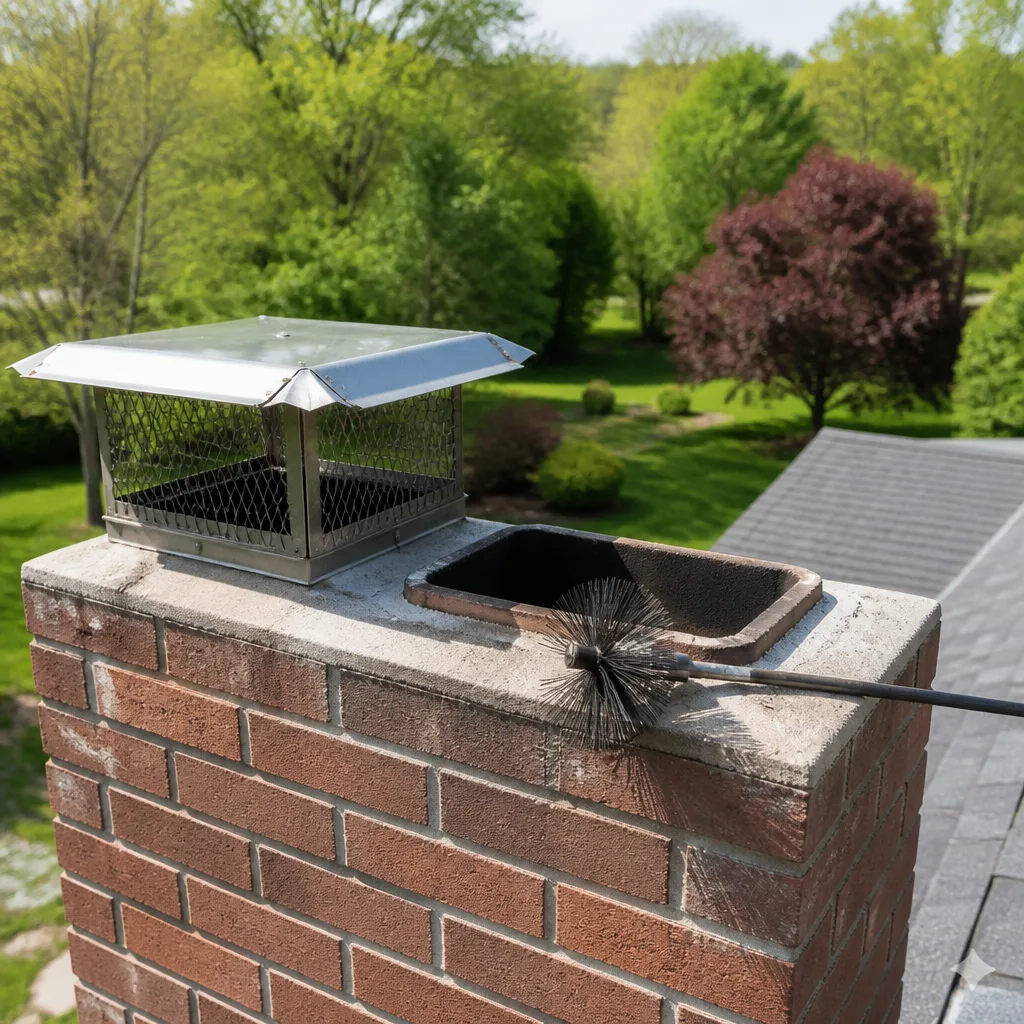
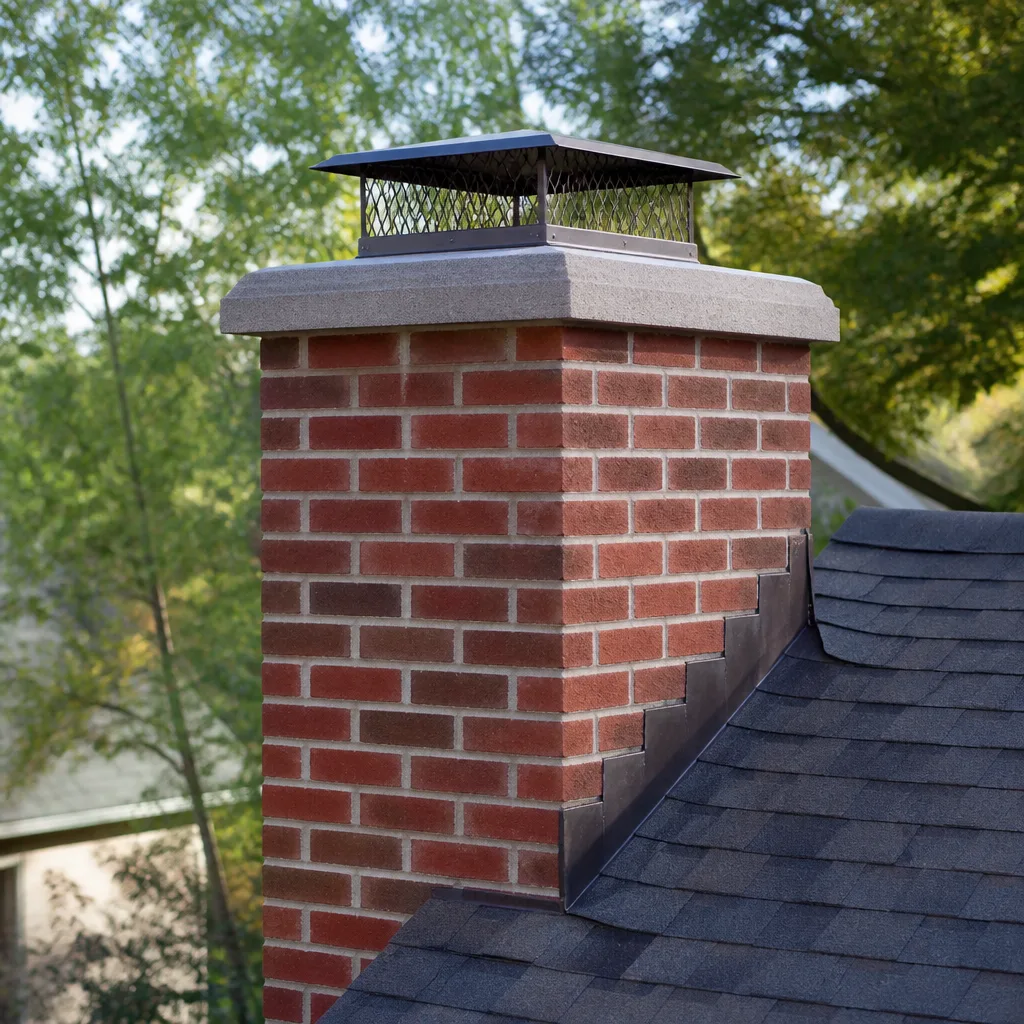
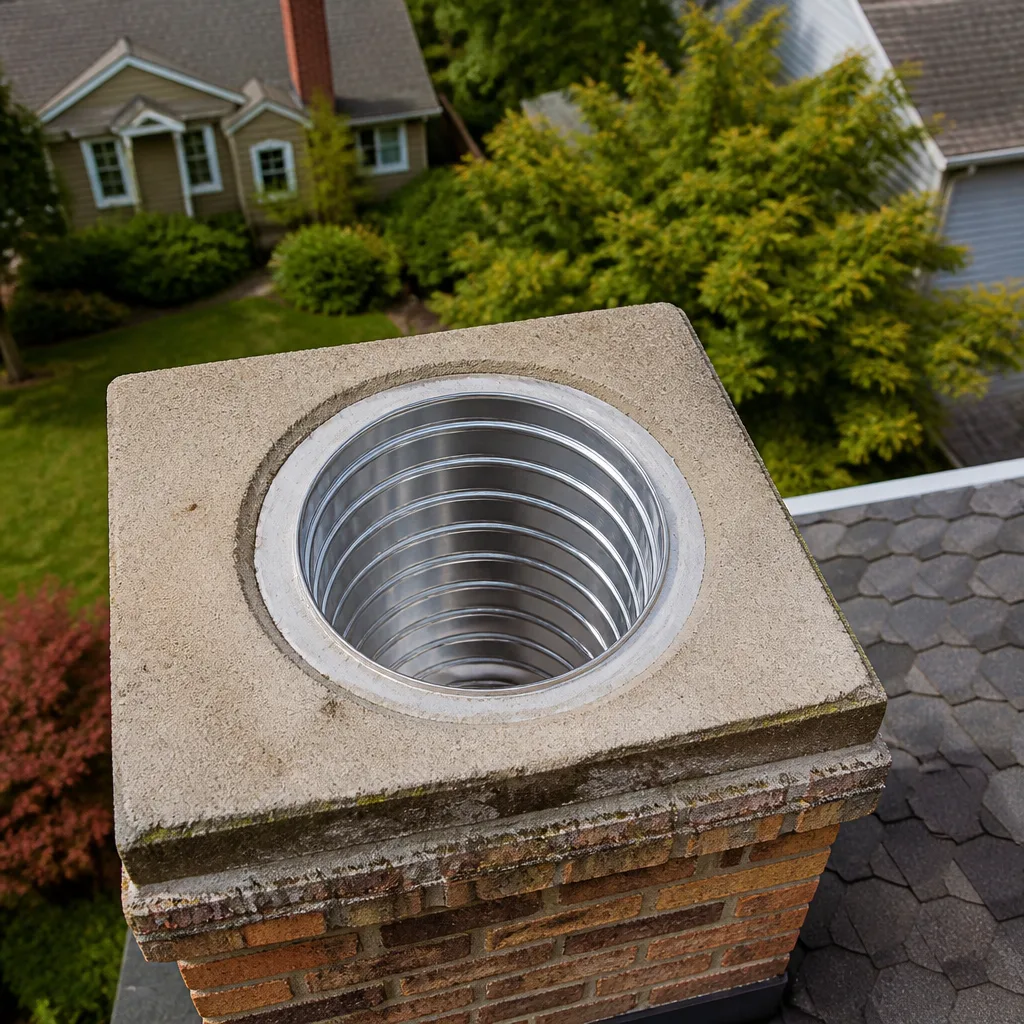
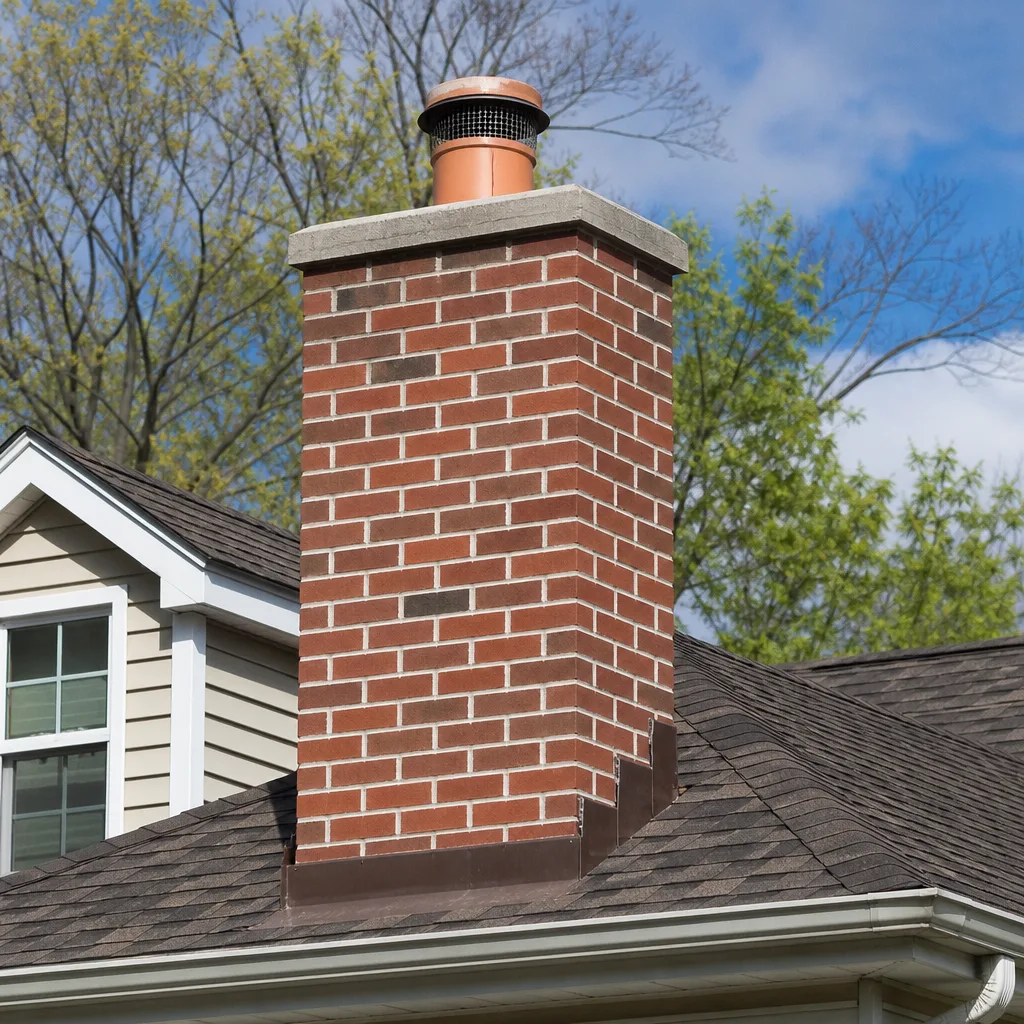
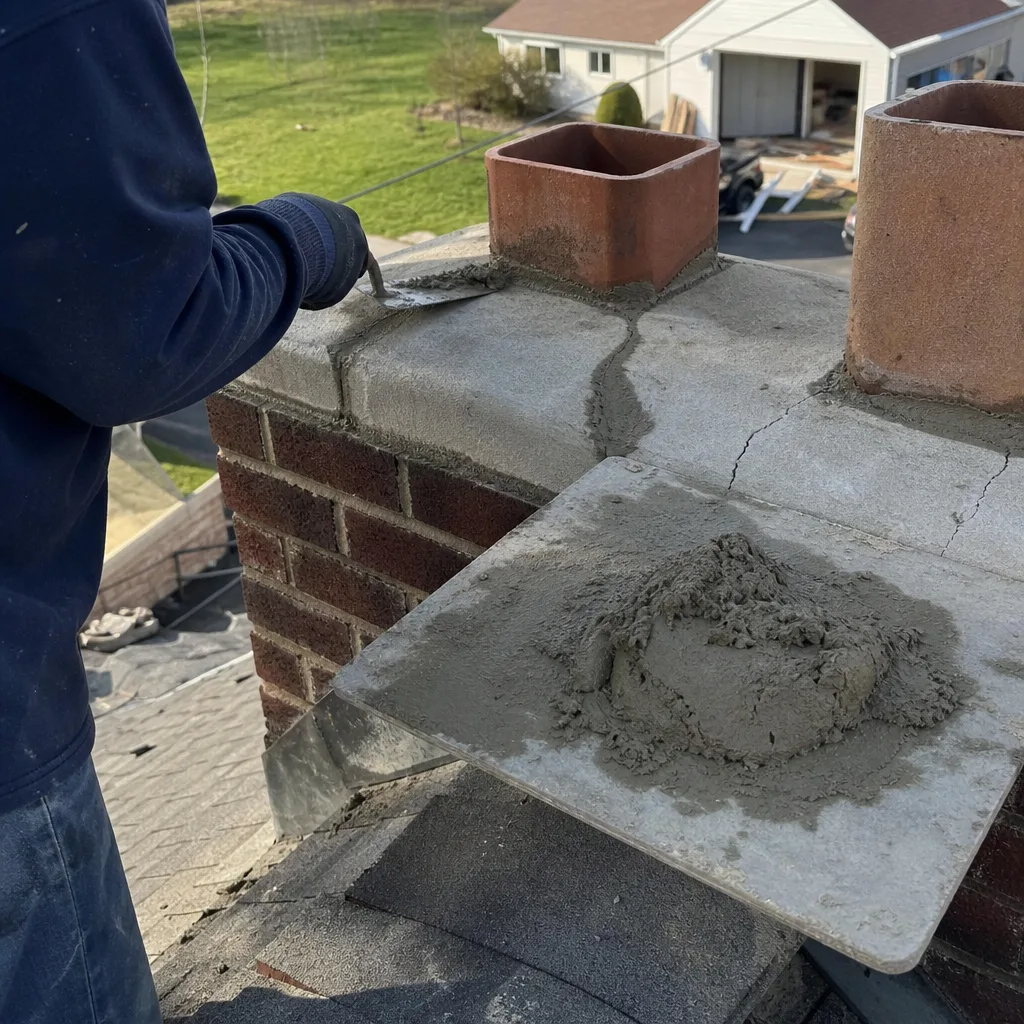
Level 1 sweep and inspection to the NFPA 211 annual standard - flue, crown, cap, and flashing checked and photographed
Chimney sweep logs do not sweep chimneys. They loosen some creosote - which then falls where a brush and vacuum still have to collect it.
 Before
 After
After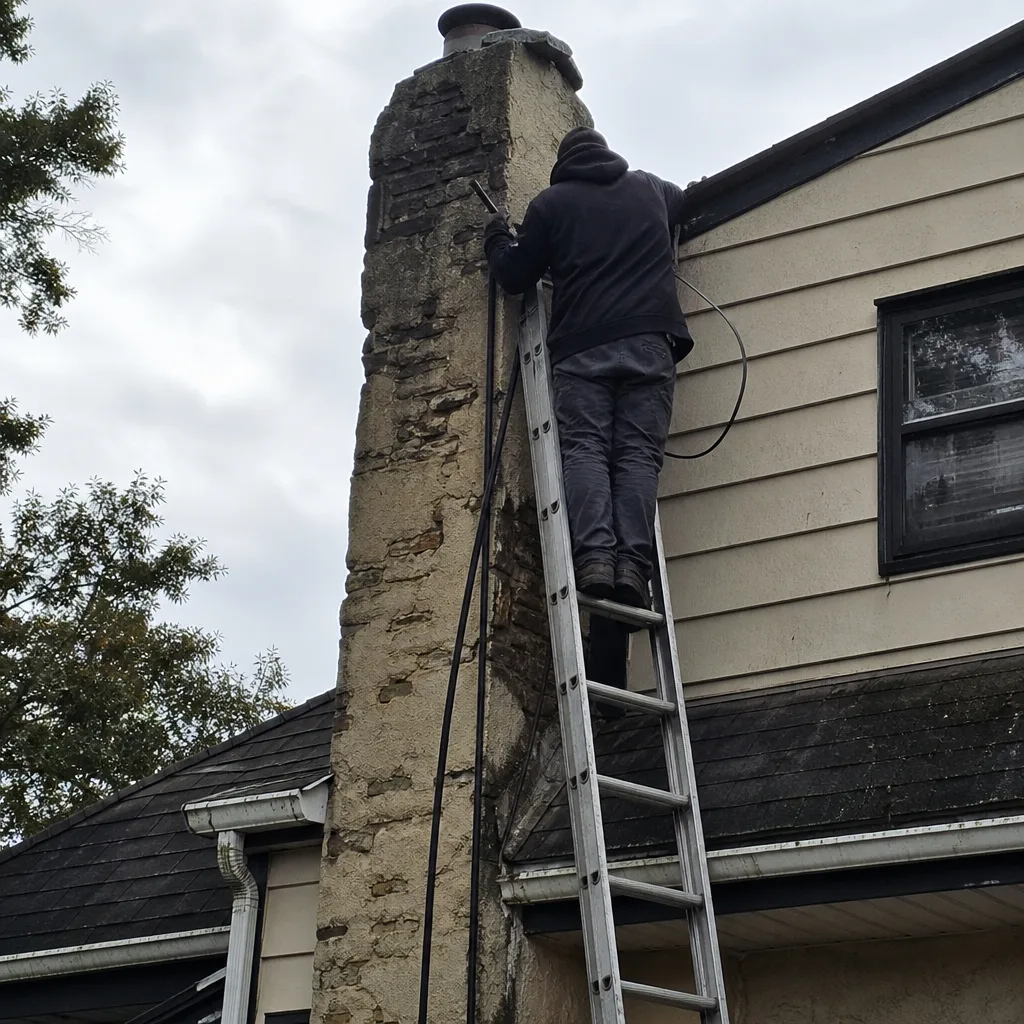 Before
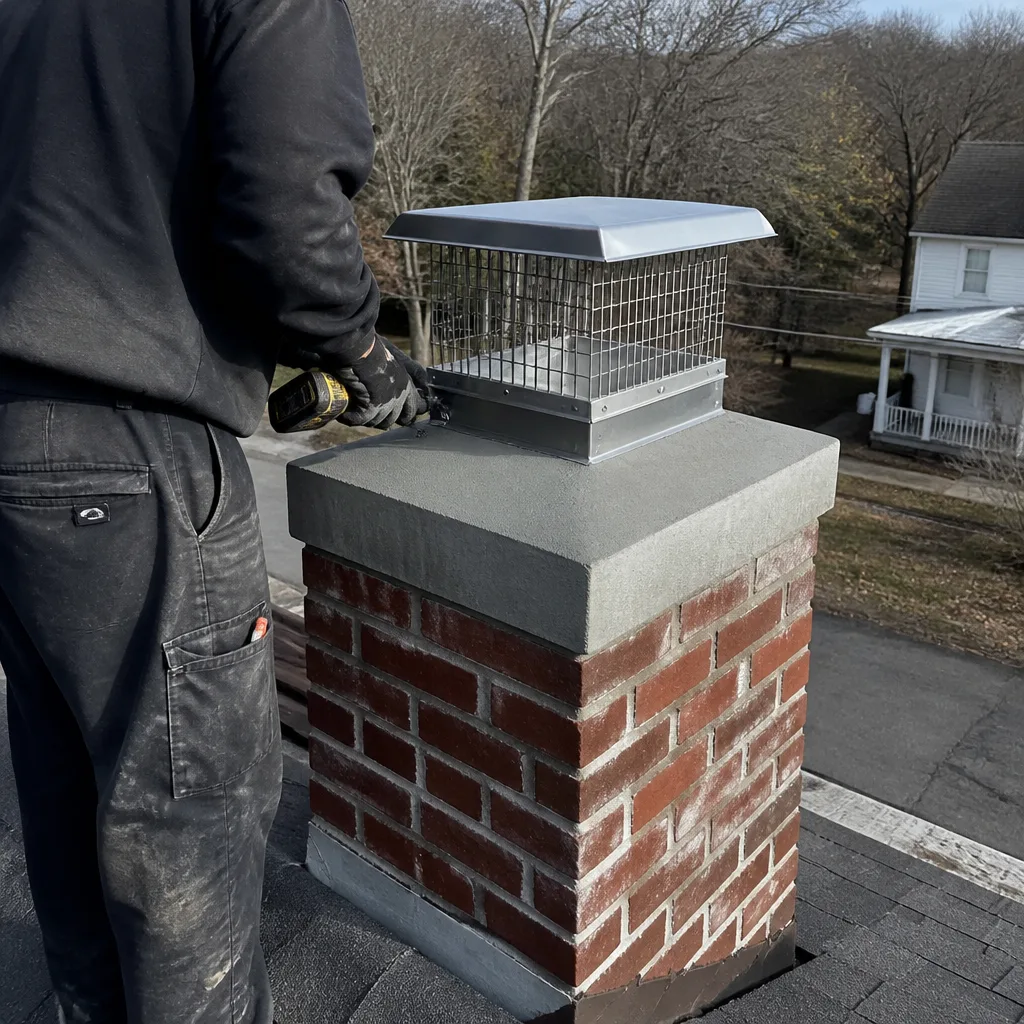 After
After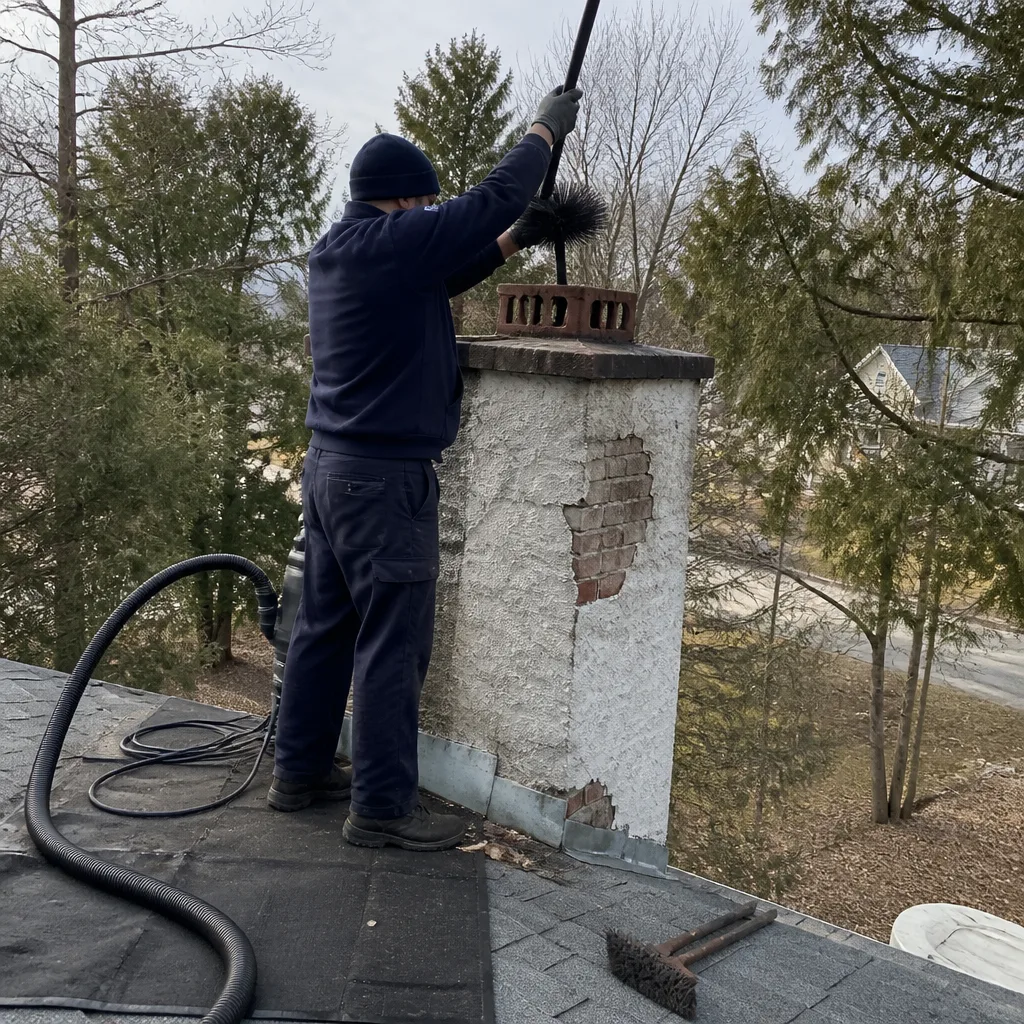 Before
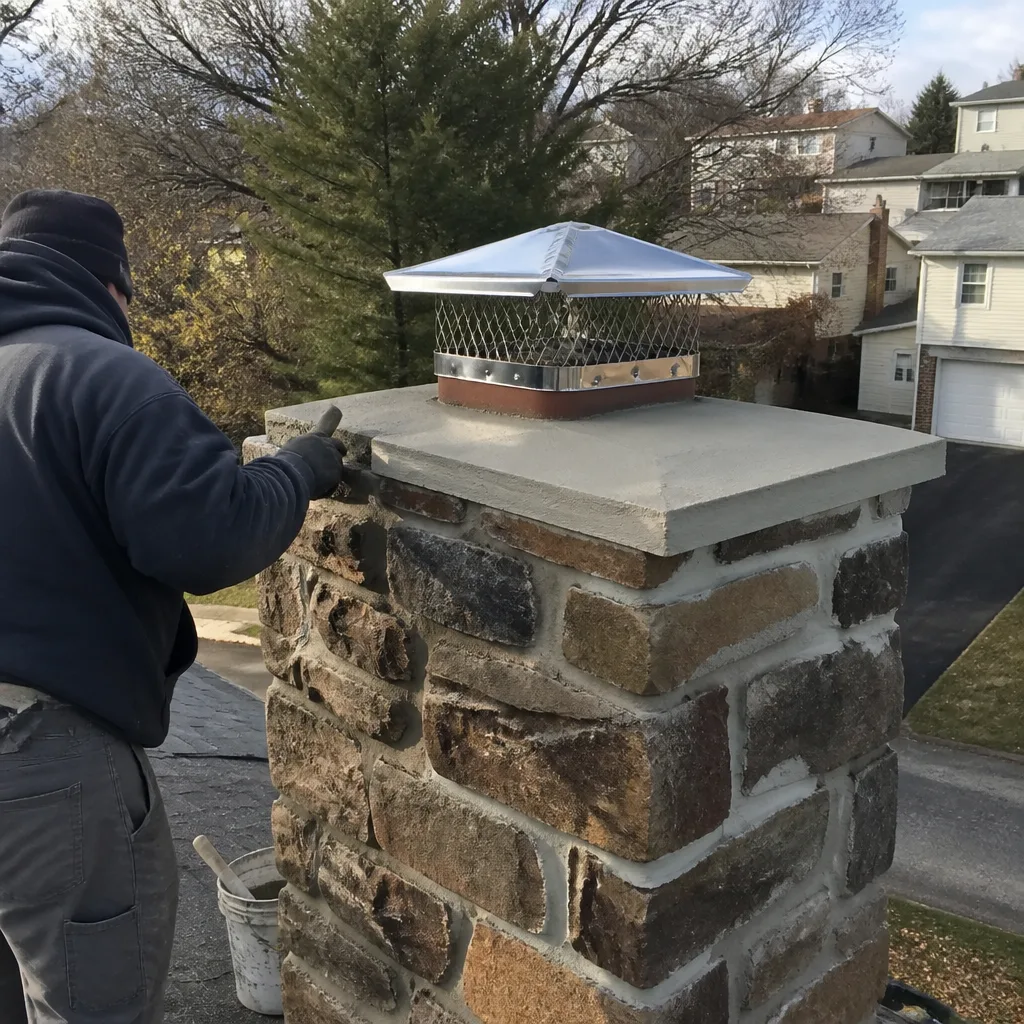 After
AfterThe Complete Guide to Chimney Cleaning in Norristown
The NFPA estimates that 25% of home heating fires involve chimneys that were cleaned but never properly inspected. The sweep came, the brush went up, and nobody looked at what the brush missed. In Norristown, where pre-1960 masonry chimneys with clay tile liners dominate neighborhoods like East Norriton and West Norriton, that gap between cleaning and inspection isn’t just a technicality. It’s how cracked flue liners, deteriorated smoke chambers, and Class III glazed creosote go undetected until the first cold snap. This guide explains what chimney cleaning actually involves, why the inspection matters as much as the sweep, and what documentation you should walk away with every single time. For more guides & resources on keeping your home safe, see our blog.
Quick Answer
Professional chimney cleaning in Norristown costs between $199 and $349 for a standard sweep with NFPA 211 Level 2 camera inspection included. The service removes creosote and debris from the flue, documents liner condition with photo evidence, and produces a written report with draft readings and any recommended repairs priced separately. Most homes in Norristown with active wood-burning fireplaces need this annually; gas and oil systems follow different schedules based on appliance type and venting configuration. For help choosing a qualified provider, see our How to Hire a Chimney Cleaning Contractor in Norristown: A Step-by-Step Guide.
Table of Contents
- The Difference Between Cleaning and a Level 2 Inspection
- Why Norristown’s Older Housing Stock Changes Everything
- What a Documented Cleaning Record Actually Contains
- How Fuel Type Changes Your Cleaning Needs
- How to Read Your Written Report
- What Chimney Cleaning Costs in Norristown
- Common Mistakes to Avoid
- When to Call a Professional
- Frequently Asked Questions
BeforeAfterThe Difference Between Cleaning and a Level 2 Inspection
Most homeowners in Norristown use “chimney cleaning” and “chimney inspection” interchangeably. They’re different procedures with different purposes, and getting one without the other leaves real gaps. If you’re unsure whether to tackle maintenance yourself or call a pro, read our DIY vs Professional Chimney Cleaning: The Norristown Homeowner’s Decision Guide.
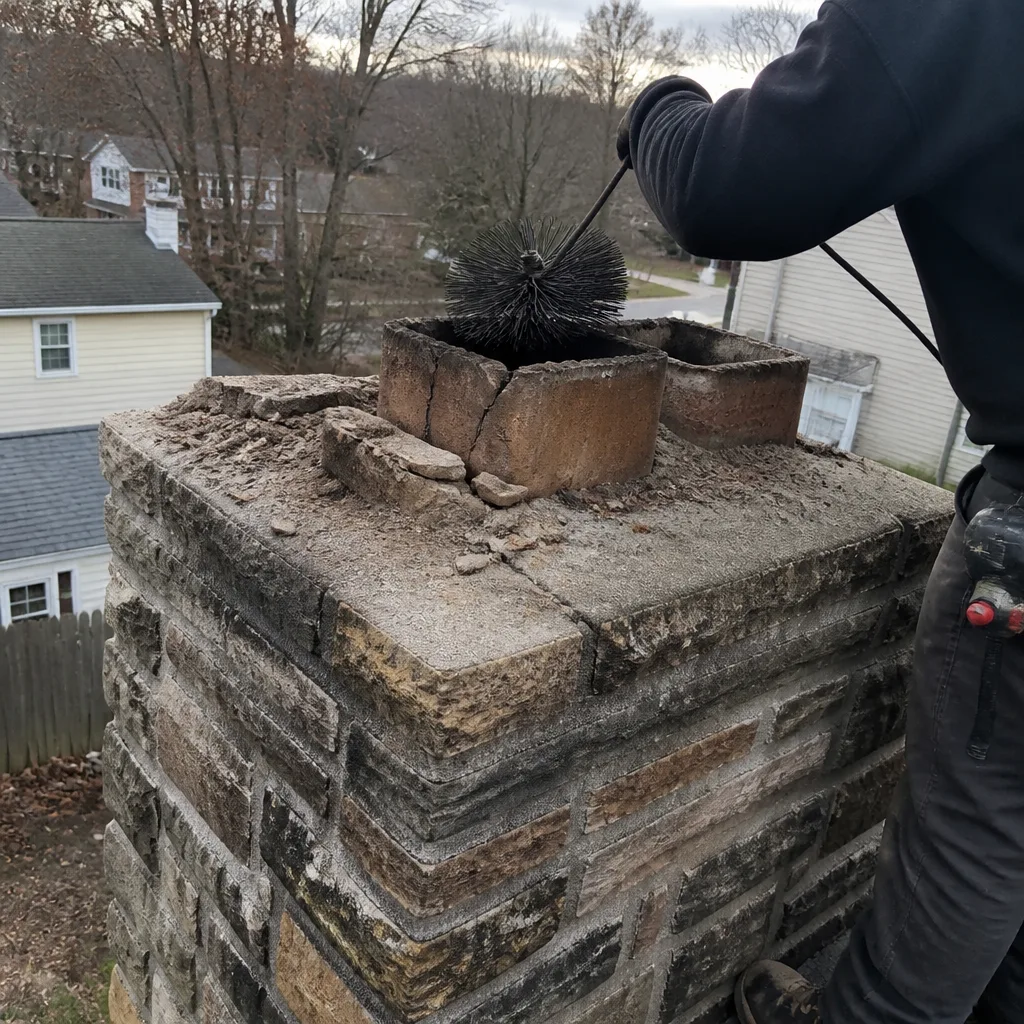
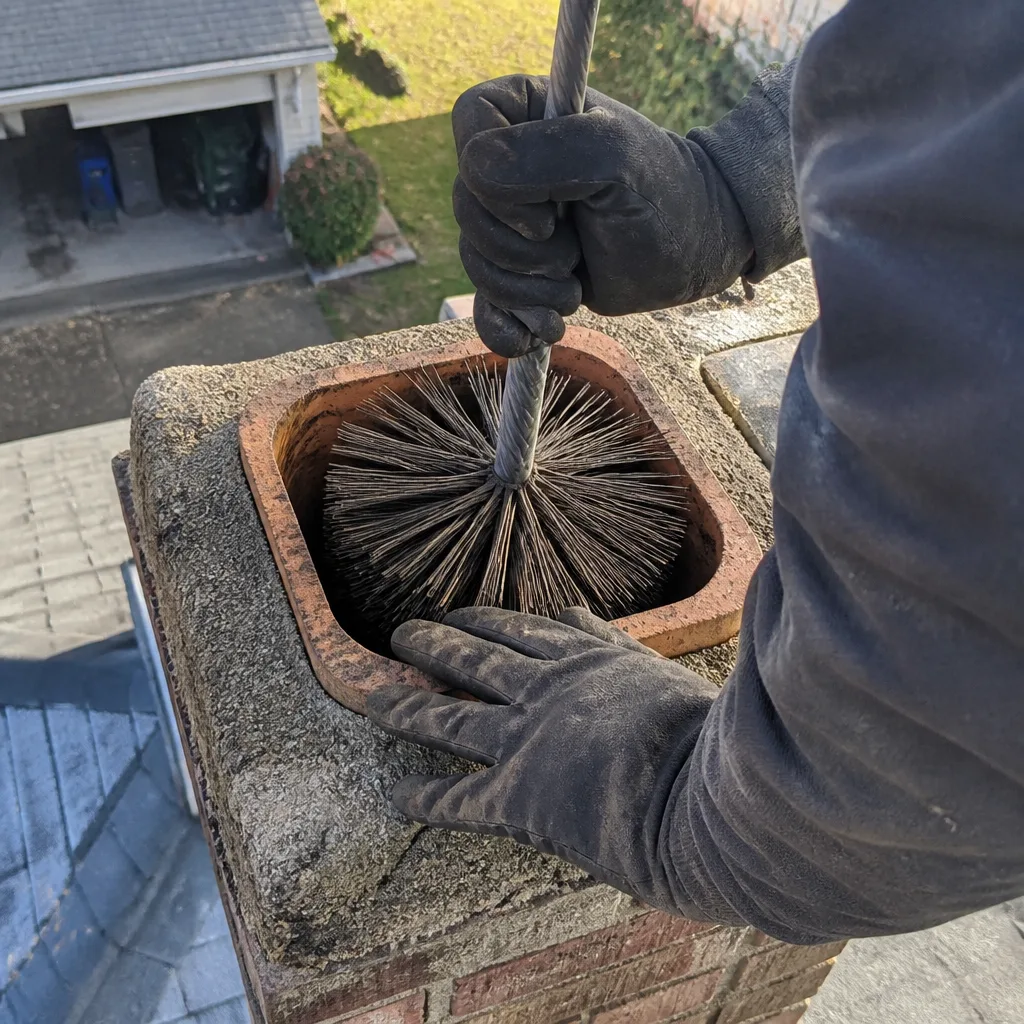
Chimney cleaning (the sweep) is mechanical. A technician runs brushes and rods up the flue to remove creosote buildup, soot, and any obstructions like bird nests or fallen masonry. The goal is clear passage for combustion gases. A proper sweep takes 45 minutes to 90 minutes depending on flue height, creosote thickness, and accessibility.
NFPA 211 Level 2 inspection is visual and documentary. A camera travels the full length of the flue liner, capturing images of every tile joint, every crack, every area of spalling (surface flaking), and any gaps between liner sections. The technician also examines the smoke chamber, firebox, damper assembly, and exterior crown. This isn’t optional for us. Clause 4 of the Haven Standard requires a photo record on every job, a practice we’ve maintained since 2009.
Here’s why the distinction matters in practice. A sweep removes what you can see from the top or bottom. A camera finds what you can’t:
- Hairline cracks in clay tile liners that open under thermal stress during the first serious fire
- Mortar erosion between liner joints that allows flue gases to reach combustible framing
- Smoke chamber corbelling (stepped brickwork) with gaps or missing mortar that radiates heat toward wall studs
- Creosote accumulation behind partial obstructions the brush simply bypasses
We’ve completed more than 38,000 chimney inspections and cleanings since 2009. In our experience, roughly 30% of chimneys that passed a “visual inspection” (flashlight from top and bottom) showed actionable defects on camera. The brush came out clean. The liner didn’t.
The NFPA 211 standard defines three inspection levels. Level 1 is a visual examination of readily accessible portions, appropriate when no changes have been made to the system. Level 2 is required upon sale or transfer of property, after chimney fire or operational malfunction, or when any component is replaced. Level 3 involves demolition of building materials to access concealed areas. For routine maintenance in Norristown’s aging housing stock, Level 2 is the appropriate baseline, not an upgrade.
Why Norristown’s Older Housing Stock Changes Everything
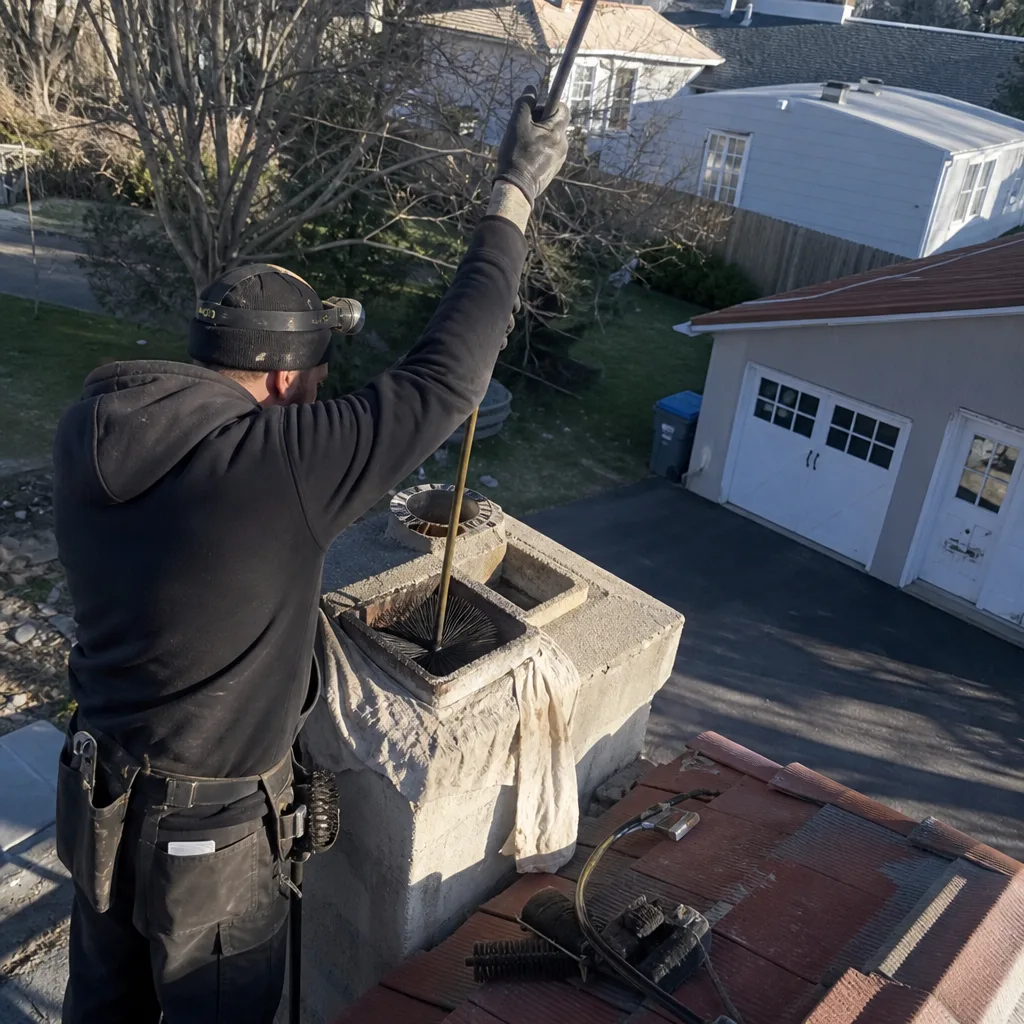
Norristown sits in Montgomery County with a housing stock heavily weighted toward pre-1960 construction. The 19402, 19401, and 19403 ZIP codes contain thousands of brick and stone masonry chimneys built with clay tile liners, parged smoke chambers, and lime-based mortars that behave differently than modern systems. This isn’t character. It’s a technical reality that changes what cleaning should involve.
Clay tile liner degradation. Original clay tile liners in Norristown homes were designed for coal and early oil combustion, not the higher-efficiency, lower-temperature fires of modern appliances. When flue gases stay cooler, condensation increases, and the acidic condensate attacks mortar joints from the inside. The tiles themselves often look intact from the firebox. The camera finds the joint gaps and the mortar washout above the smoke chamber.
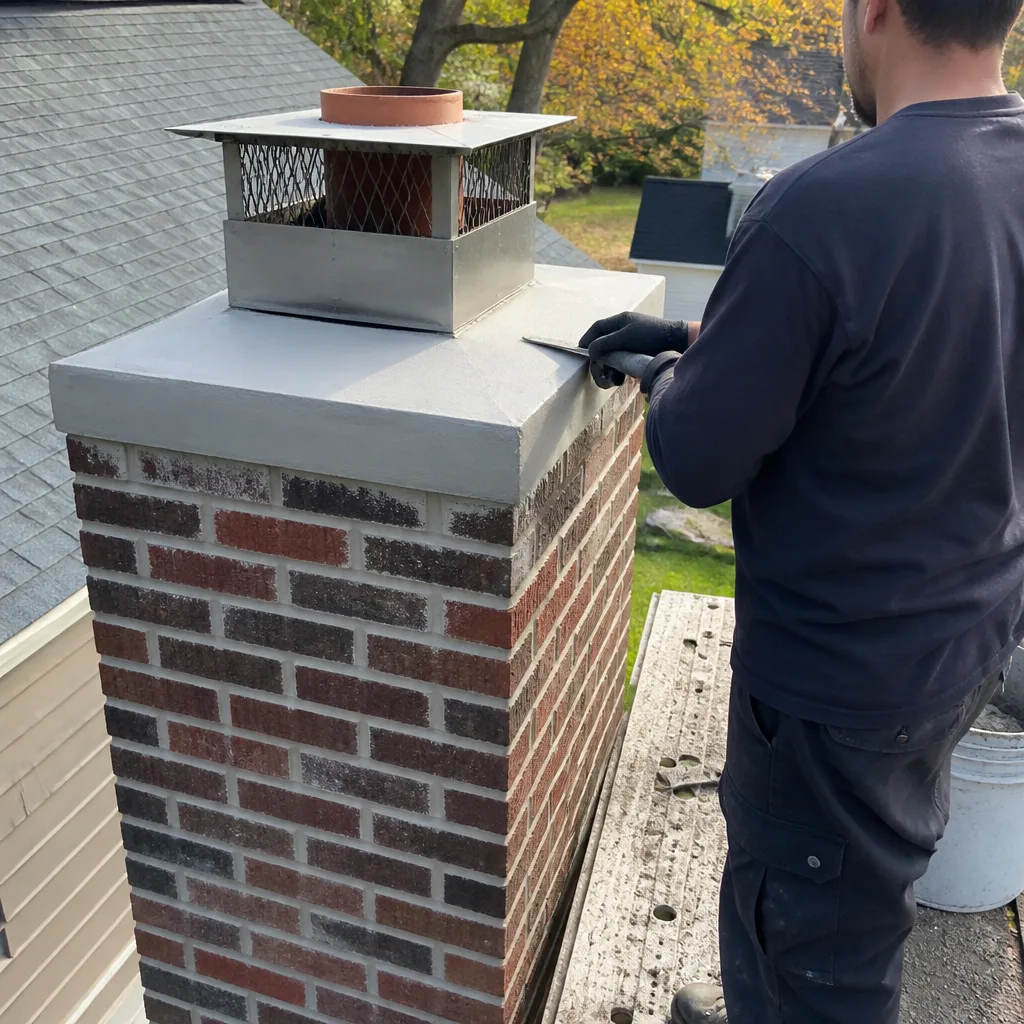
Spalling and freeze-thaw. Norristown averages 20-25 freeze-thaw cycles annually. Water enters crown cracks, parapet gaps, or deteriorated flashing, then expands on freezing. The result is spalling brick faces, deteriorated crown concrete, and, in severe cases, liner displacement as the surrounding masonry shifts. A sweep without exterior assessment misses this entirely.
Smoke chamber parging failure. The smoke chamber, the area above the damper that funnels gases into the flue, was originally parged (smoothed) with mortar to reduce turbulence and creosote adhesion. In homes built before 1940 in neighborhoods near Elmwood Park or along Airy Street, we’ve found smoke chambers where 60% or more of the parging has fallen away, exposing rough corbelled brick that traps creosote and creates turbulence that cools gases faster.
Unlined chimneys and “repairs” that created new problems. Some Norristown homes, particularly those built before 1920, were constructed without liners. Later owners may have had terra cotta liners dropped in, or more recently, stainless steel liners installed. The transition points between old and new, and the quality of the original installation, are frequent problem areas that only camera documentation reveals.
Local code context matters too. Montgomery County follows the 2018 International Residential Code with amendments, requiring chimney liners for all solid fuel appliances and mandating proper clearance to combustibles. The Norristown Municipal Code references these standards for permit work. But code compliance on paper doesn’t equal safe operation in practice. We’ve found lined chimneys with improper sizing for the appliance, creating draft problems that produce exactly the creosote buildup the cleaning is supposed to address.
In the Swede Square and Westover areas, we’ve documented repeated patterns: original 1920s chimneys with later gas appliance connections, no liner adaptation, and corrosion at the flue base from condensing gases. The cleaning was routine. The underlying condition wasn’t.
What a Documented Cleaning Record Actually Contains
Every chimney cleaning should produce physical documentation, not a verbal summary. Under Clause 4 of the Haven Standard, the photo record is mandatory and dated, with technician identification. Here’s what you should receive:
- Before-and-after flue images. Camera footage or high-resolution stills showing liner condition at multiple elevations, typically every 3-5 feet, with the technician’s annotation of any defects found.
- Creosote classification. Documented as Class I (sooty, brush-removable), Class II (granular, requires more aggressive mechanical removal), or Class III (glazed, hardened, often requires chemical treatment or rotary removal). This determines cleaning method and frequency.
- Draft and pressure readings. Measured at the appliance and flue base where accessible, with notation of whether readings fall within manufacturer specifications.
- Written scope of work performed. Exactly what was done, what equipment was used, and what areas were accessed.
- Written price for services rendered. Agreed before work began, with no post-completion additions.
- Recommended repairs, if any, priced separately. Each item with its own written price, never bundled or pressured.
- Warranty terms. The 365-Day Done Right Promise, with specific coverage and claim process.
- Technician signature and license information. Identifying who performed the work and their qualifications.
This documentation serves multiple purposes beyond immediate service verification. For insurance claims after chimney fires, adjusters increasingly request maintenance records. For home sales in Norristown’s active market, disclosure documentation protects sellers and informs buyers. For warranty claims on appliances, manufacturers often require proof of annual venting system maintenance.
Our archive contains documented records for every one of those 38,000+ visits since 2009. When a customer in the Jeffersonville area called last season about a suspected defect, we pulled their 2017, 2019, and 2021 records and showed progressive crown deterioration that justified replacement before water intrusion damaged the liner. The documentation made the decision obvious.
What you should not accept: a carbon-copy checklist with checkmarks, a verbal “everything looks fine,” or photos on the technician’s phone that never reach you. Documentation you don’t possess doesn’t exist for warranty, insurance, or resale purposes.
How Fuel Type Changes Your Cleaning Needs
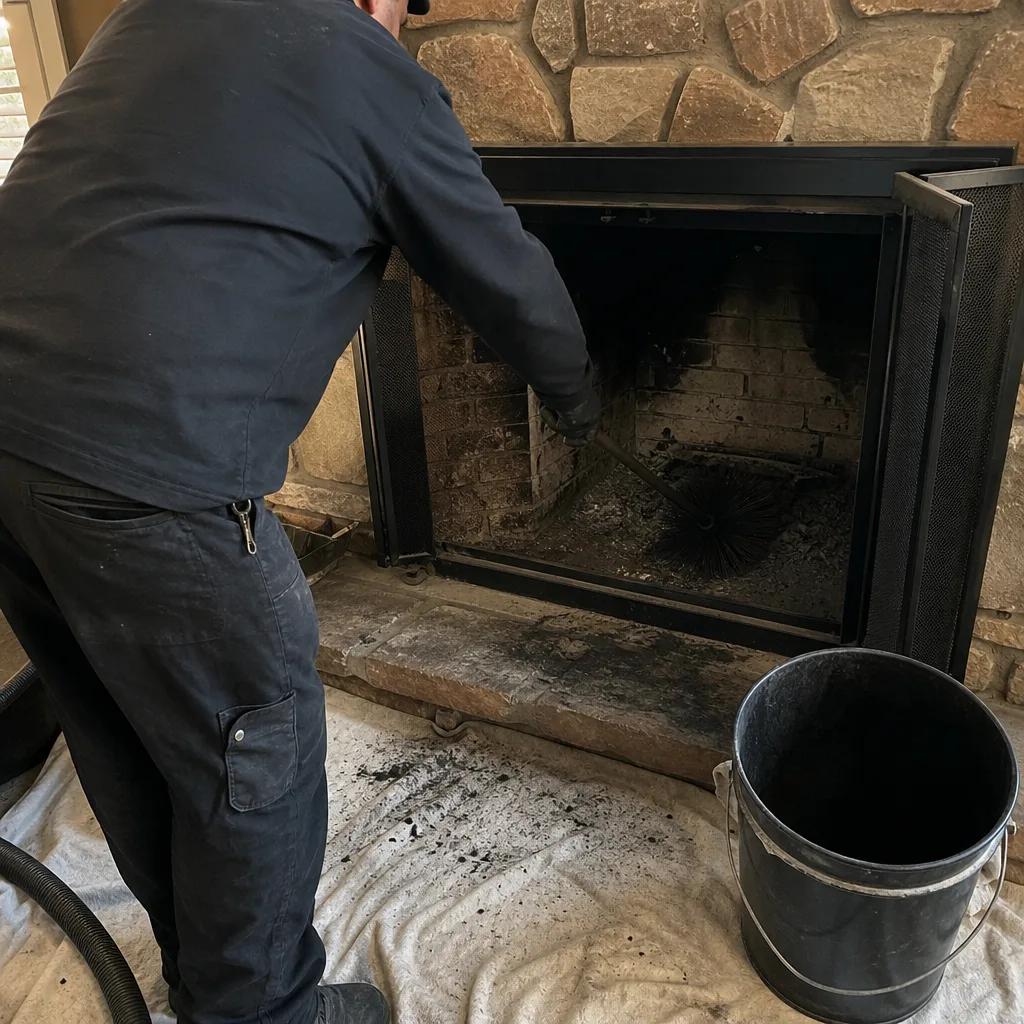
The fuel burning in your fireplace or appliance determines what kind of residue forms, how hazardous it is, and how often cleaning is necessary. Norristown homes run three primary fuel scenarios, each with distinct maintenance requirements.
Wood-Burning Systems
Wood combustion produces creosote, a tar-like condensate that builds in stages. The type of wood matters significantly. Seasoned hardwood (oak, maple, hickory) burns hotter and cleaner than softwood or unseasoned wood. In Norristown, we’ve found that homeowners burning pallet wood, construction scraps, or unseasoned cordwood purchased late in fall produce Class III glazed creosote at 2-3 times the rate of those with properly stored, seasoned hardwood.
Wood systems need annual inspection and typically annual cleaning for primary heating use, or every cord of wood burned. The camera inspection is especially critical because wood fires produce the highest flue temperatures and the most thermal stress on clay liners.
Gas-Burning Systems
Natural gas and propane burn cleaner than wood but produce different concerns. The primary residue is minimal particulate, but condensing flue gases create acidic moisture that attacks liners and masonry. In Norristown, we’ve documented significant deterioration in gas-vented chimneys where the liner was never adapted for lower-temperature operation.
Gas systems typically need inspection every 1-2 years and cleaning only if debris, animal nesting, or deterioration products are found. The critical issue is proper venting: direct-vent appliances, B-vent systems, and chimney-vented equipment each have specific requirements that a generalist sweep may not recognize.
Oil-Burning Systems
Fuel oil combustion produces sulfur compounds that form sulfuric acid condensate, extremely aggressive toward masonry and metal. Oil-vented chimneys in Norristown’s older homes often show the most rapid liner deterioration, particularly where clay tiles meet stainless steel adapters. These systems need annual inspection and typically annual cleaning to remove soot and acidic residue that accelerates metal fatigue.
The transition between oil and other fuels is a common problem point. We’ve found chimneys converted from oil to gas where the liner sizing was never recalculated, creating draft problems that produce carbon monoxide spillage or appliance shutdown.
| Fuel Type | Typical Cleaning Frequency | Primary Hazard | Critical Inspection Focus |
|---|---|---|---|
| Wood | Annually or per cord | Creosote ignition (chimney fire) | Liner cracks, creosote class, smoke chamber |
| Gas | Every 1-2 years | Carbon monoxide from improper venting | Liner compatibility, draft readings, condensation |
| Oil | Annually | Acidic corrosion, liner failure | Liner integrity, adapter condition, metal fatigue |
How to Read Your Written Report
The written report from a proper chimney cleaning and inspection should be readable by someone without trade knowledge. If it’s jargon-dense or vague, that serves the company, not you. Here’s how to evaluate what you receive.
Check for these three items first. If any are missing, the inspection was incomplete:
- Photo or video documentation of the full flue length. Not a single image from the top. Sequential documentation with location markers.
- Specific defect descriptions with locations. “Crack at 12 feet, east side” or “Missing mortar between tiles 4 and 5,” not “some wear noted.”
- Separate pricing for recommended repairs. Each item individually priced, with no pressure to combine or decide immediately.
Understand creosote classification. Class I (sooty) is normal and brush-removable. Class II (granular) indicates cooler fires or restricted airflow, requiring more aggressive cleaning. Class III (glazed, shiny, hardened) indicates sustained low-temperature operation or restricted draft, often requires chemical pretreatment or rotary mechanical removal, and significantly increases chimney fire risk. The report should state which class was found and which cleaning method was used.
Evaluate draft readings in context. Draft is measured in Pascals (Pa) or inches of water column. Acceptable ranges vary by appliance type and height. The report should state the measured reading, the acceptable range for your specific system, and whether the reading was taken with the appliance running or cold. A draft reading without this context is a number without meaning.
Assess repair recommendations skeptically. Every recommendation should correlate to a documented finding. If “liner replacement recommended” appears without photo evidence of the damage, that’s a red flag. At Emberly Chimney Cleaners Norristown, nothing is recommended without camera evidence the customer can see. We’ve also found that some conditions, particularly early-stage crown cracking or minor spalling, can be monitored annually rather than repaired immediately. The report should distinguish between urgent, scheduled, and monitor conditions.
Verify warranty terms. The 365-Day Done Right Promise covers workmanship on services performed. It doesn’t cover new defects that develop after service, but it does cover anything we should have caught or anything that fails due to our work. The terms should be specific, not “satisfaction guaranteed.”
What Chimney Cleaning Costs in Norristown
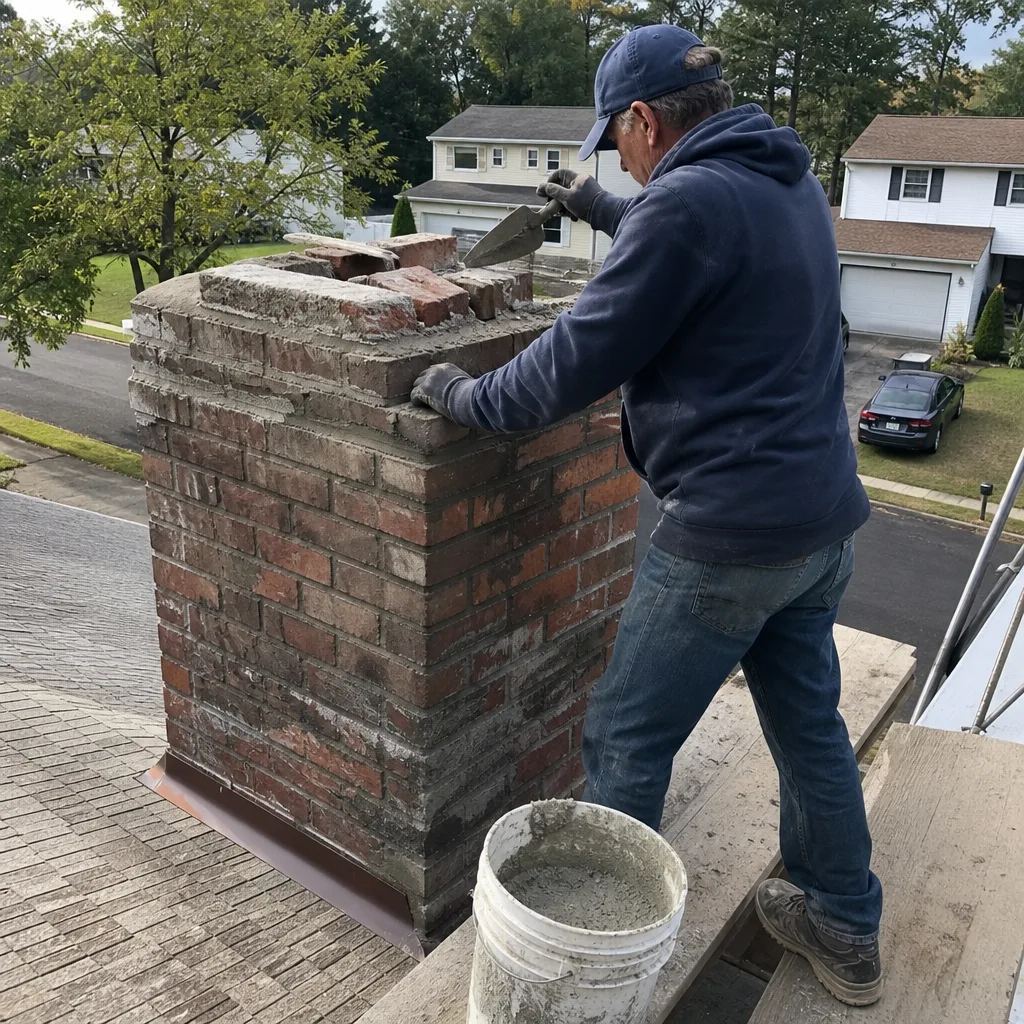
Chimney cleaning and inspection pricing in Norristown varies based on service depth, accessibility, and condition. These ranges reflect our 2024-2025 Montgomery County market:
| Service | Price Range | What’s Included |
|---|---|---|
| Standard sweep with Level 2 inspection | $199 - $349 | Mechanical cleaning, camera scan, photo record, draft reading, written report |
| Heavy creosote removal (Class III) | $349 - $549 | Chemical pretreatment or rotary mechanical removal, extended cleaning time, full documentation |
| Gas appliance vent inspection | $149 - $249 | Camera scan of vent system, draft analysis, combustion analysis where applicable |
| Multi-flue property (additional flues) | $99 - $179 per additional | Same documentation standard per flue |
Several factors push pricing toward the higher end in Norristown specifically:
- Chimney height and roof access. Three-story homes in the Stanbridge Street area or steep-pitch roofs require additional safety equipment and time.
- Insert or stove removal. Wood stove inserts must be removed to access the flue fully; this adds 30-60 minutes.
- Blocked or animal-occupied flues. Bird nest removal, particularly during spring nesting season, requires specialized equipment and humane handling protocols.
- Pre-1920 unlined chimneys. These require more careful assessment and often reveal conditions that need detailed documentation.
Every job is quoted in writing before work begins under Haven Standard Clause 1. The price on the page, or the written estimate, is the price. We’ve maintained this practice since 2009 with no exceptions. If a competitor provides a written estimate, we offer a Free Second Opinion with no obligation.
Materials for any needed repairs are sourced through our buying network from DuraFlex, HeatShield, and Gelco, among others, specifically to keep customer prices honest. We don’t markup proprietary products or push unnecessary liner replacements.
Common Mistakes to Avoid
- Hiring based on lowest price without verifying what’s included. A $99 “chimney sweep” special that doesn’t include camera inspection or documentation leaves you with a clean flue and undetected defects. In Norristown’s aging housing stock, that’s a gamble.
- Assuming gas doesn’t need inspection. Gas systems produce acidic condensate and carbon monoxide. The absence of creosote doesn’t mean the absence of risk. Annual inspection is still warranted.
- Using the chimney with a known defect. Cracked liners, deteriorated smoke chambers, and blocked flues are genuine fire and carbon monoxide hazards. The “we’ll get to it next year” approach has preceded multiple chimney fires we’ve investigated.
- Accepting verbal reports. Without written documentation, you have no warranty claim, no insurance record, and no disclosure for sale. Every finding should be documented.
- Ignoring seasonal timing. Norristown’s chimney sweep demand peaks October through December. Booking in spring or summer ensures availability and often better pricing, and catches winter damage before it’s compounded by another season.
- Assuming new home purchase inspection covered the chimney. General home inspectors visually examine chimneys from ground level or roof edge. They don’t run cameras, remove inserts, or assess liner condition internally. A separate Level 2 inspection is essential.
- DIY cleaning without understanding limits. Homeowner brush kits can remove accessible soot but cannot assess liner condition, measure draft, or document findings. For masonry chimneys in Norristown’s housing stock, the internal condition is what matters.
When to Call a Professional
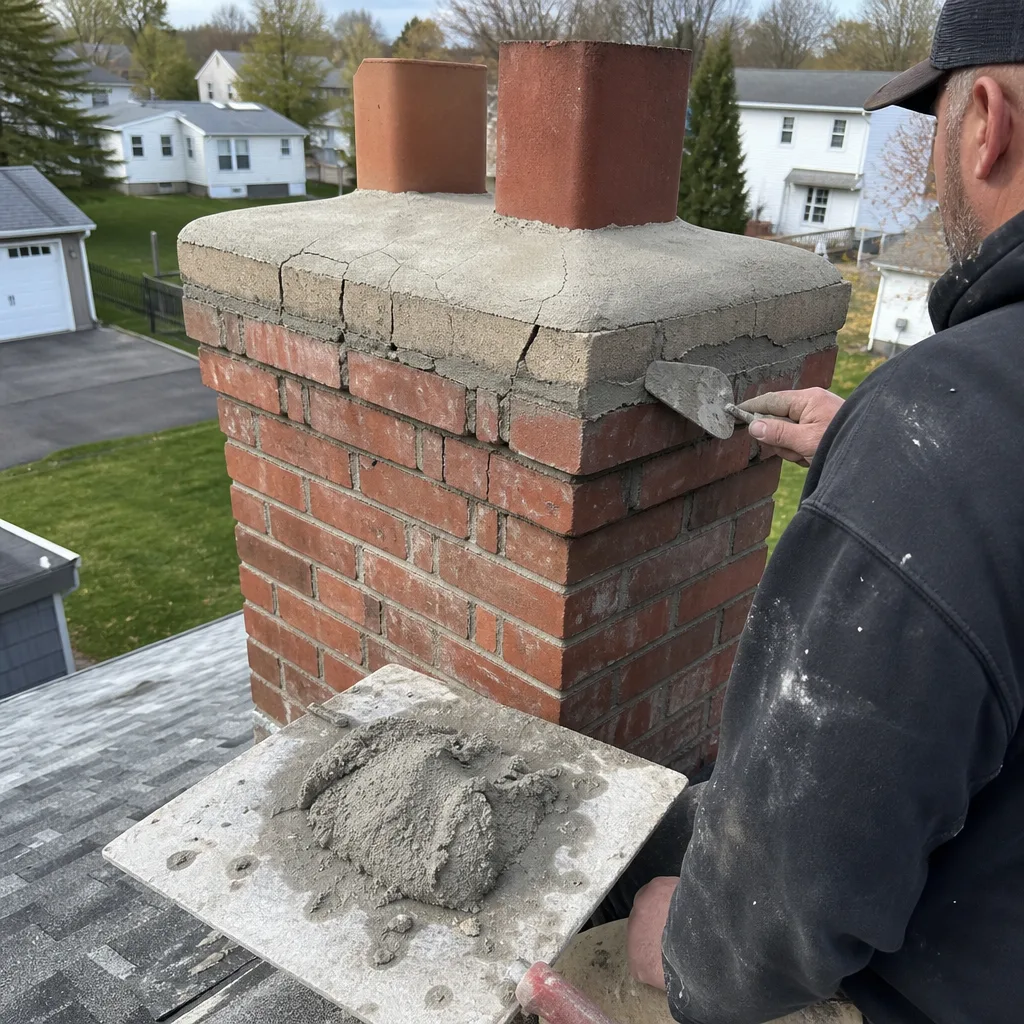
Call for inspection before the burning season begins, annually for wood and oil systems, every 1-2 years for gas. Call immediately if you notice smoke backup into the room, unusual odors, visible exterior damage, or changes in appliance performance. After any chimney fire, operational malfunction, or structural event (earthquake, lightning strike, significant foundation settling), Level 2 inspection is required regardless of timing.
Chimney Sweep in Norristown from Emberly Chimney Cleaners Norristown includes the full NFPA 211 Level 2 camera inspection and documented photo record on every visit. Chimney Repair in Norristown covers liner replacement, crown reconstruction, and masonry restoration when conditions warrant. Fireplace Services in Norristown handles insert installation, gas log conversion, and damper repair.
Emberly Chimney Cleaners Norristown offers free estimates in Norristown. Call (484) 552-9695. Calls are answered by a live person, 24 hours a day, 7 days a week. You’ll receive a written price before any work starts, a documented photo record when it’s done, and the 365-Day Done Right Promise on every job.
Frequently Asked Questions
A standard chimney sweep with NFPA 211 Level 2 camera inspection in Norristown typically costs between $199 and $349. Heavy creosote removal, multi-flue properties, or difficult access may increase this. Every job receives a written price before work begins. Call (484) 552-9695 for an exact quote - estimates are free.
Wood-burning systems need annual sweeping and inspection, or after every cord of wood burned. Gas systems need inspection every 1-2 years with cleaning as conditions warrant. Oil systems need annual inspection and typically annual cleaning due to acidic residue. Norristown’s older masonry chimneys with clay tile liners benefit from annual Level 2 inspection regardless of use frequency, as freeze-thaw aging progresses independently of burning hours. Call (484) 552-9695 to schedule.
Only if documented defects make the existing liner unsafe or non-functional. Cracked tiles, gaps between sections, or missing mortar that allows flue gas leakage into wall cavities are clear indications. We recommend nothing without camera evidence you can see yourself, and we distinguish between urgent replacement, scheduled replacement, and monitor conditions. A Free Second Opinion on any competitor’s written estimate is always available. Call (484) 552-9695.
Skipped maintenance allows creosote accumulation that increases chimney fire risk, permits liner deterioration that can allow carbon monoxide or fire into wall cavities, and masks developing conditions until they require expensive repair or create emergency hazards. In Norristown’s pre-1960 housing, the consequences of deferred maintenance are typically more severe due to original construction age and materials. The documented inspection is what catches problems while they’re still manageable. Call (484) 552-9695 to book before the season.
A sweep removes creosote and debris mechanically. An inspection documents the system’s internal condition with camera evidence. One without the other is incomplete: cleaning without inspection misses defects, and inspection without cleaning may obscure them. Emberly Chimney Cleaners Norristown performs both together as standard practice, with written documentation of each. Call (484) 552-9695 for scheduling.
Homeowners can remove accessible soot with brush kits, but cannot safely assess liner condition, measure draft performance, or produce documentation for warranty or insurance purposes. For Norristown’s masonry chimneys, particularly those with clay tile liners showing age-related degradation, professional camera inspection is essential to identify conditions that brushing alone cannot reveal. We do not recommend DIY approaches for systems showing any performance change or exceeding five years since professional inspection. Call (484) 552-9695 for a proper assessment.
The Bottom Line
Chimney cleaning in Norristown is not a single task but a documented system: mechanical sweep, camera inspection, draft measurement, and written record. The fuel type determines residue and risk. The housing age, particularly pre-1960 masonry with clay tile liners, determines what defects are likely. The documentation determines whether you have actionable information or just a clean flue and crossed fingers.
Every visit should produce photos you can see, readings you can verify, a price you agreed to in writing, and warranty terms you can enforce. Anything less leaves the gaps that the NFPA’s 25% statistic describes. We’ve built our practice since 2009 on closing those gaps, one documented inspection at a time.
Call (484) 552-9695 for a free estimate. Written price before work starts. Photo record when it’s done. The 365-Day Done Right Promise on every job.
Written by Corrine Halstead, Owner at Emberly Chimney Cleaners Norristown, serving Norristown since 2009.