
Last updated September 22, 2026
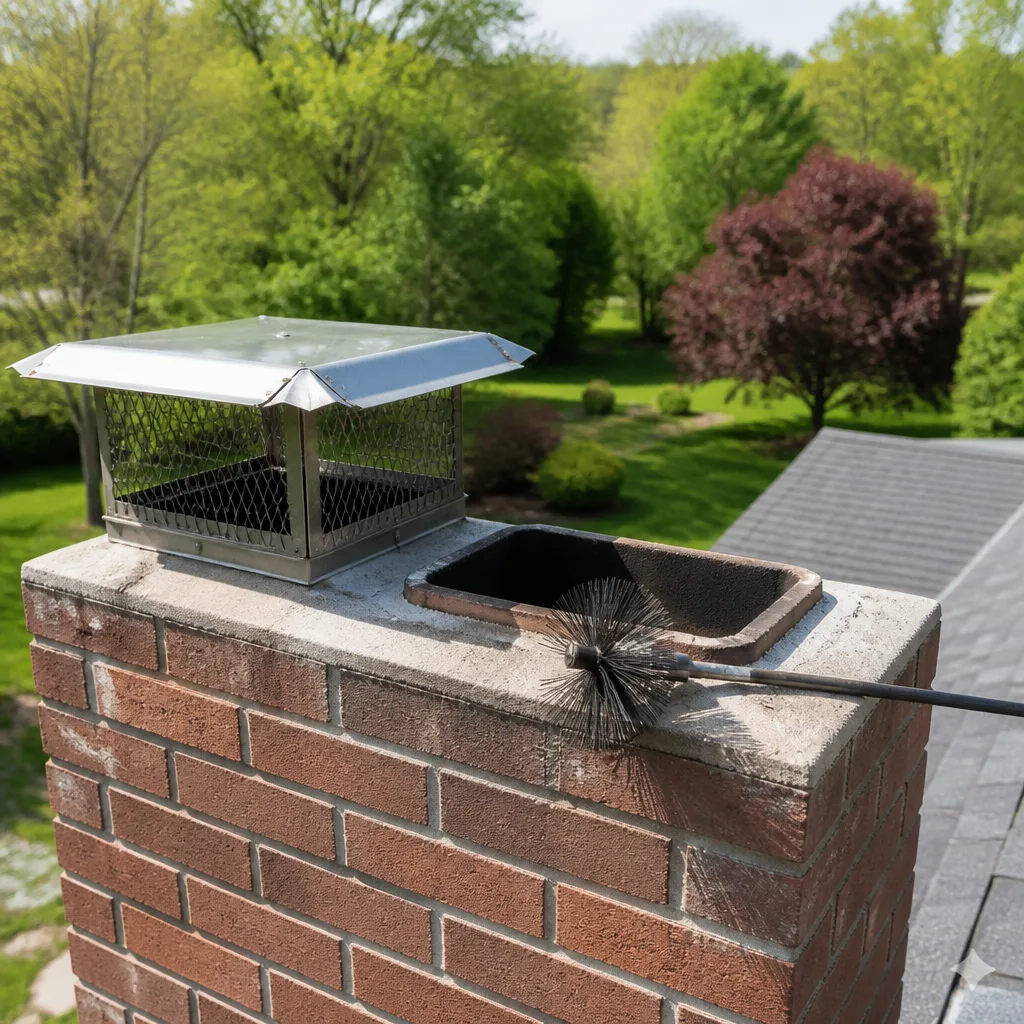
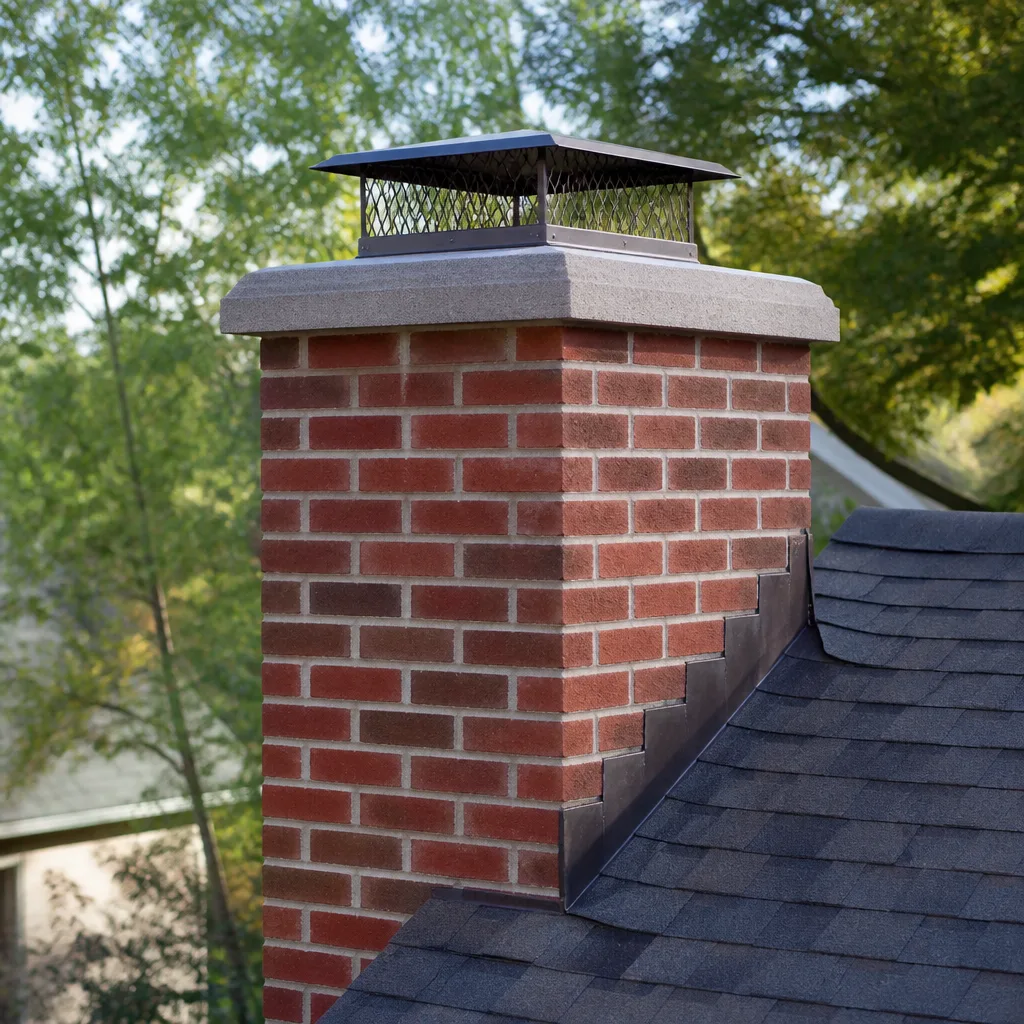
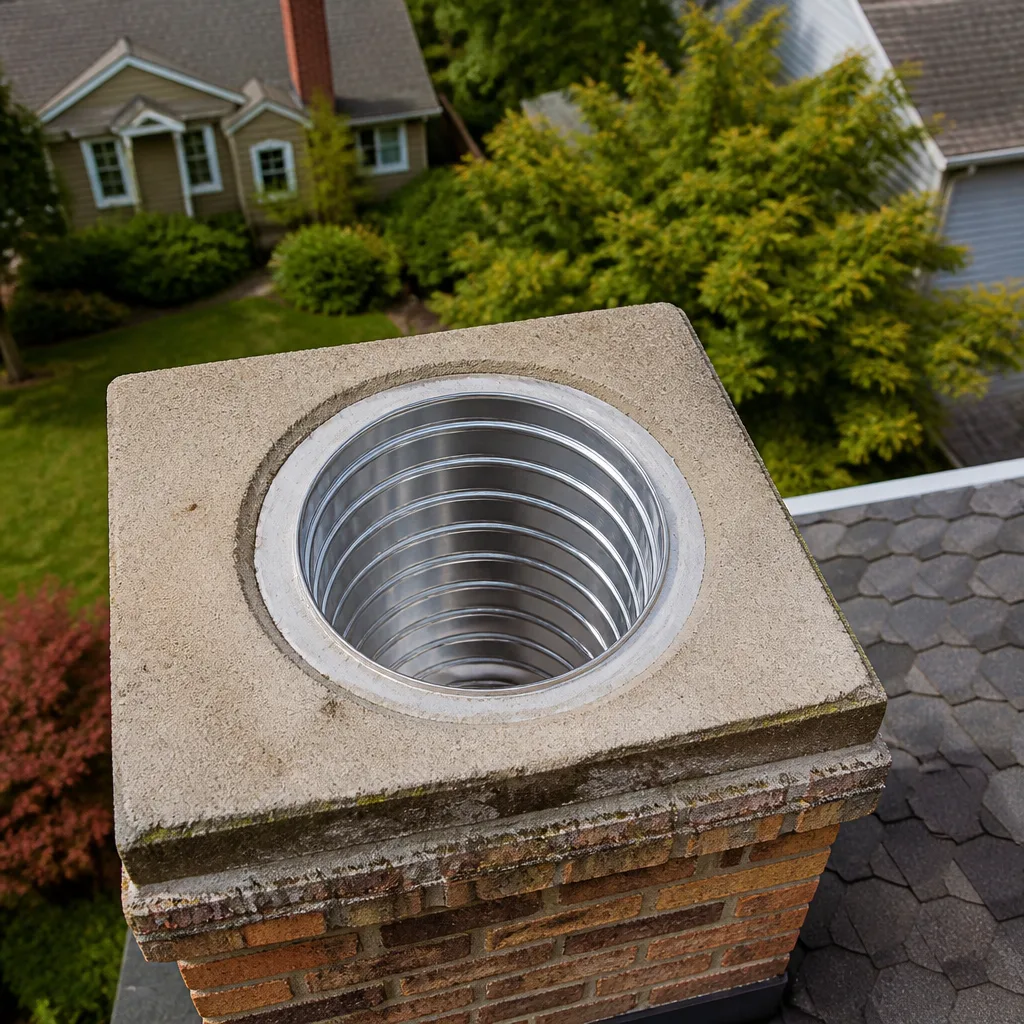
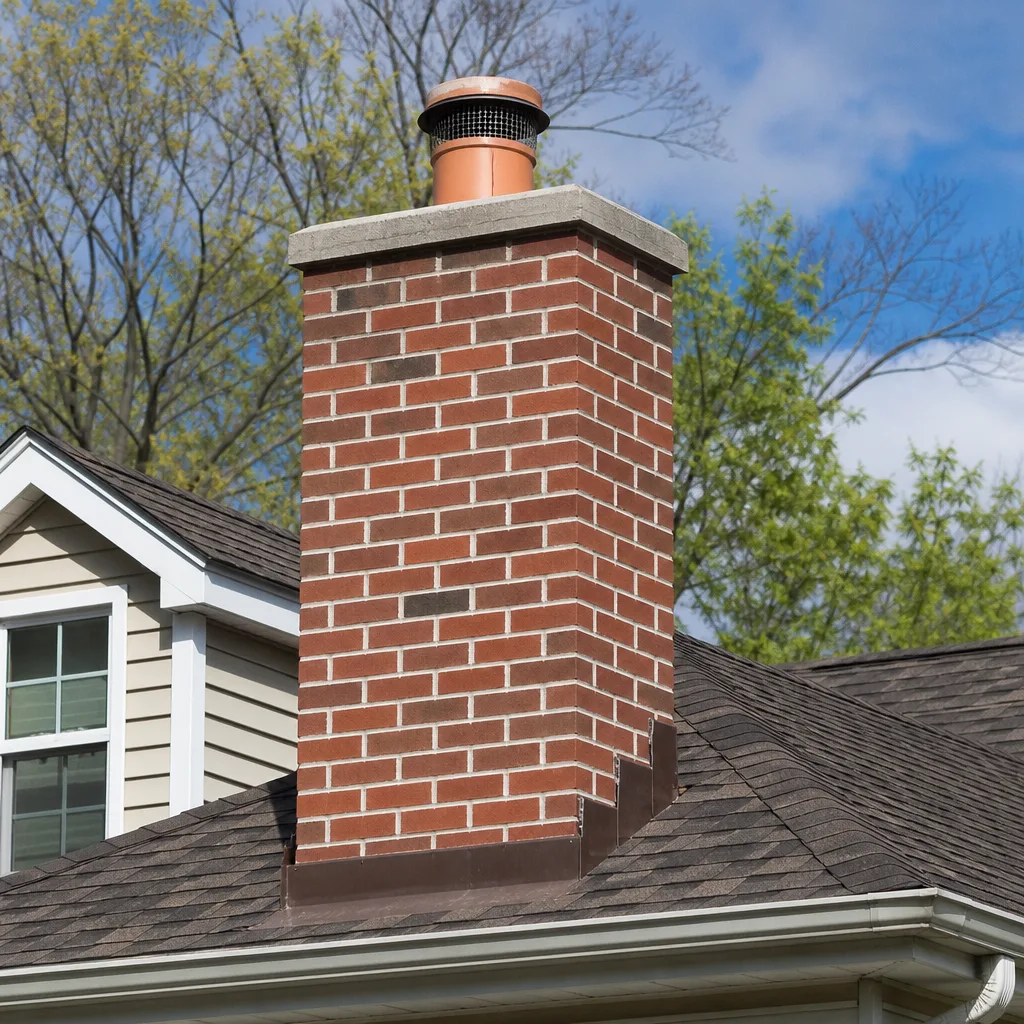
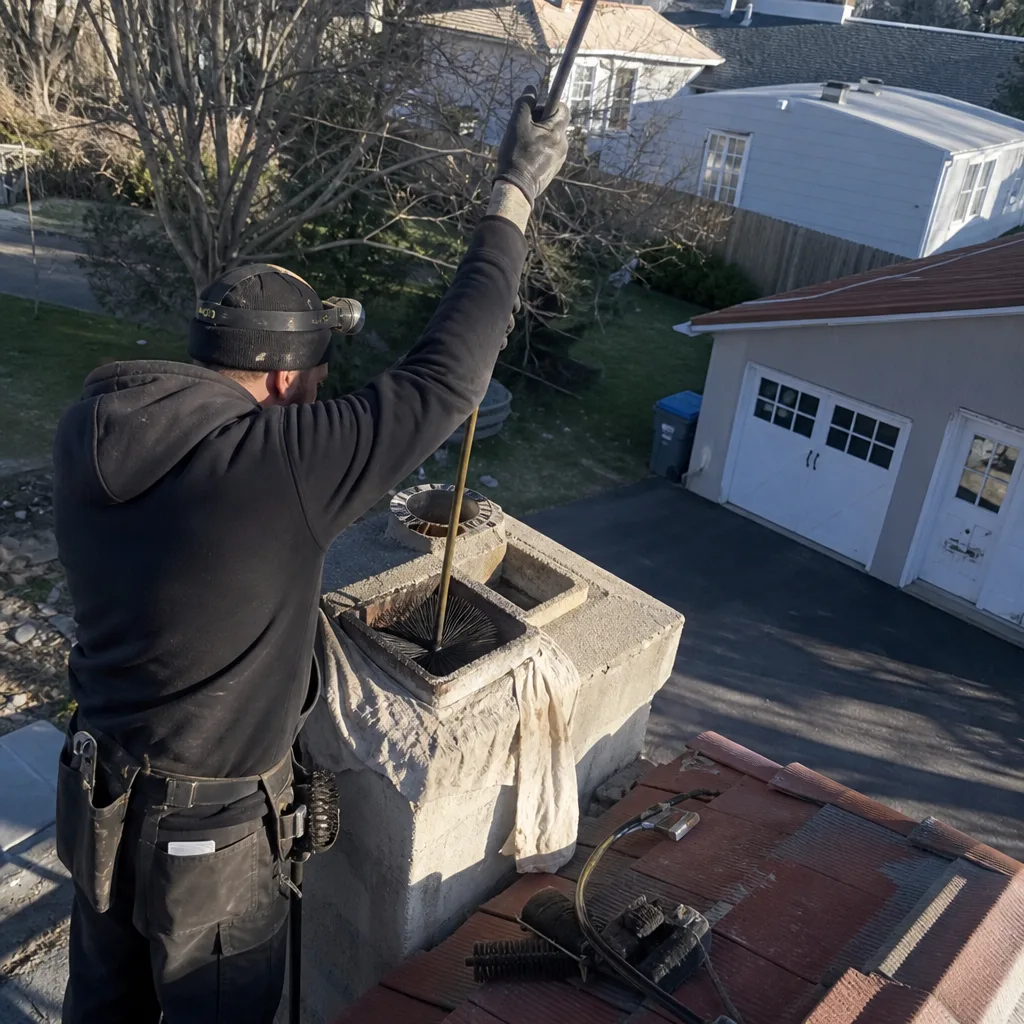
Level 1 sweep and inspection to the NFPA 211 annual standard - flue, crown, cap, and flashing checked and photographed
Chimney sweep logs do not sweep chimneys. They loosen some creosote - which then falls where a brush and vacuum still have to collect it.
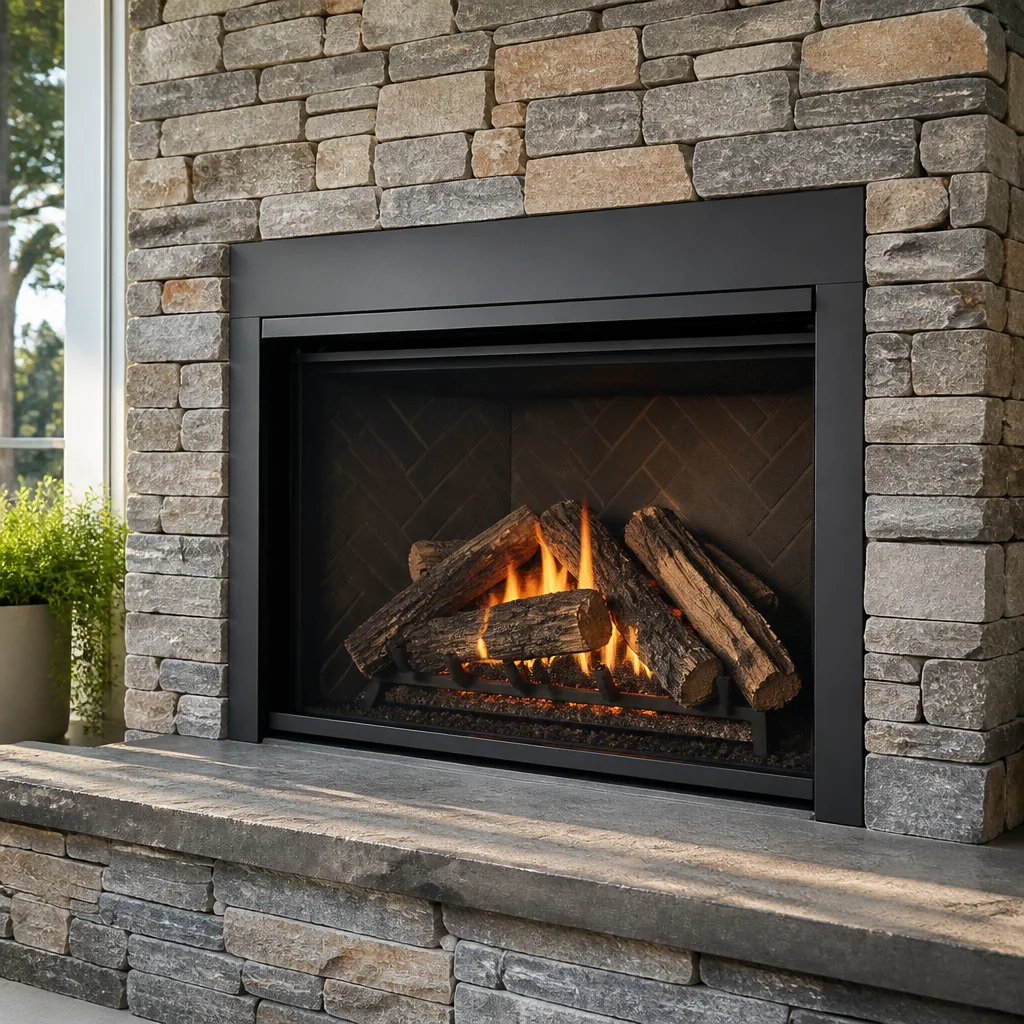
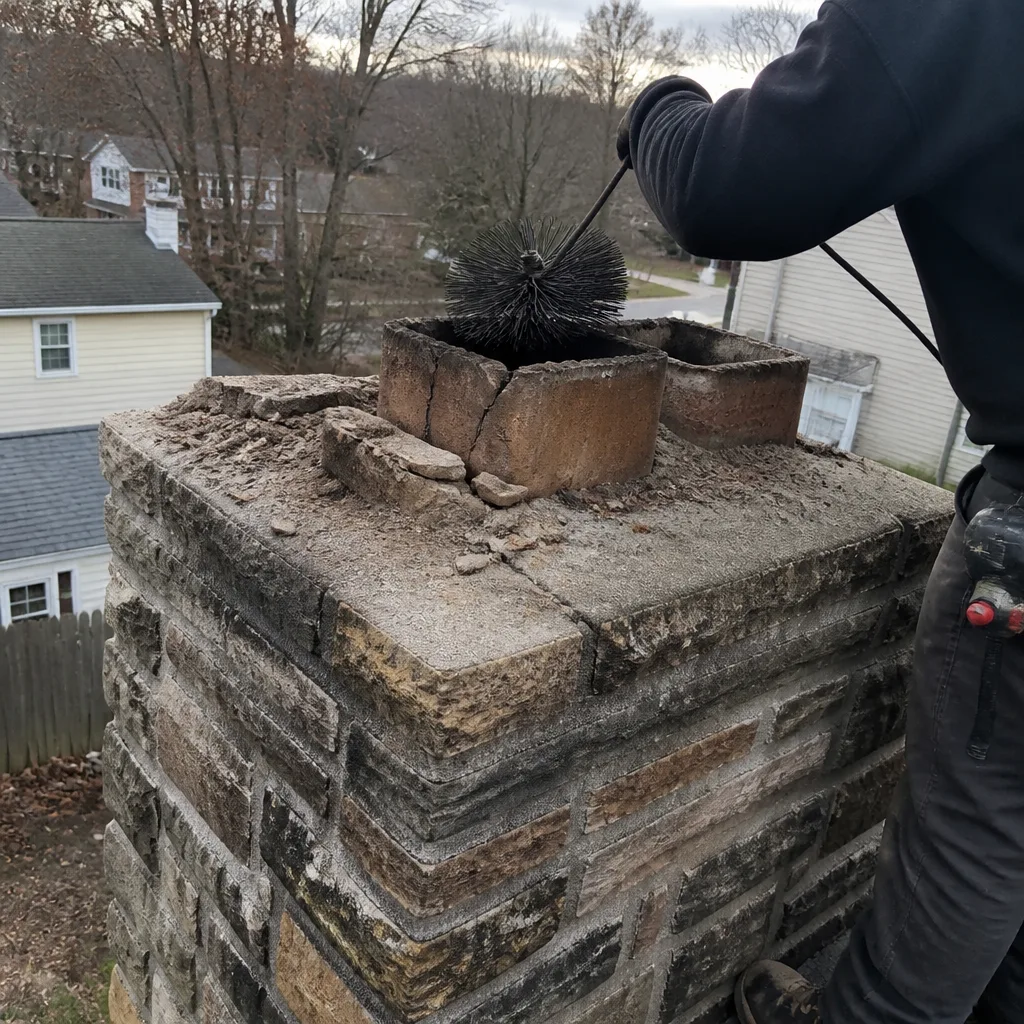 Before
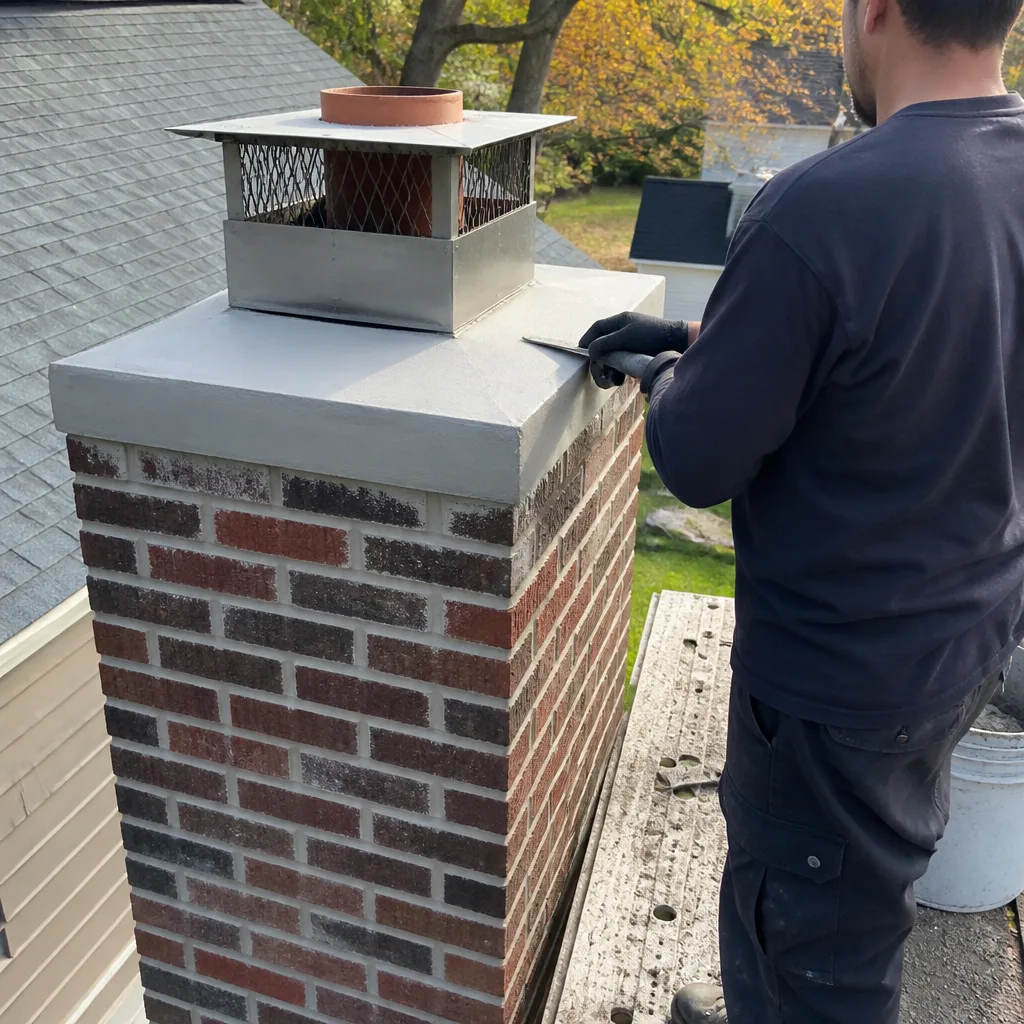 After
After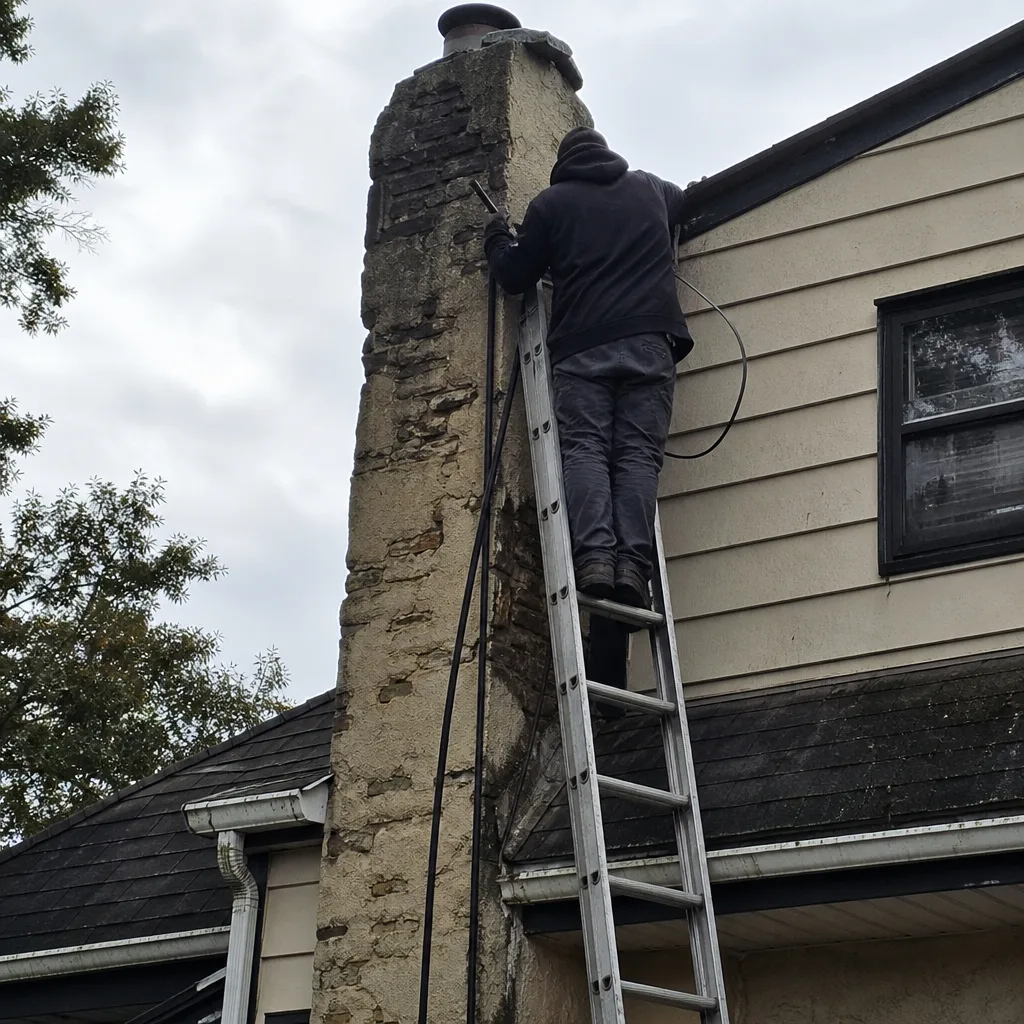 Before
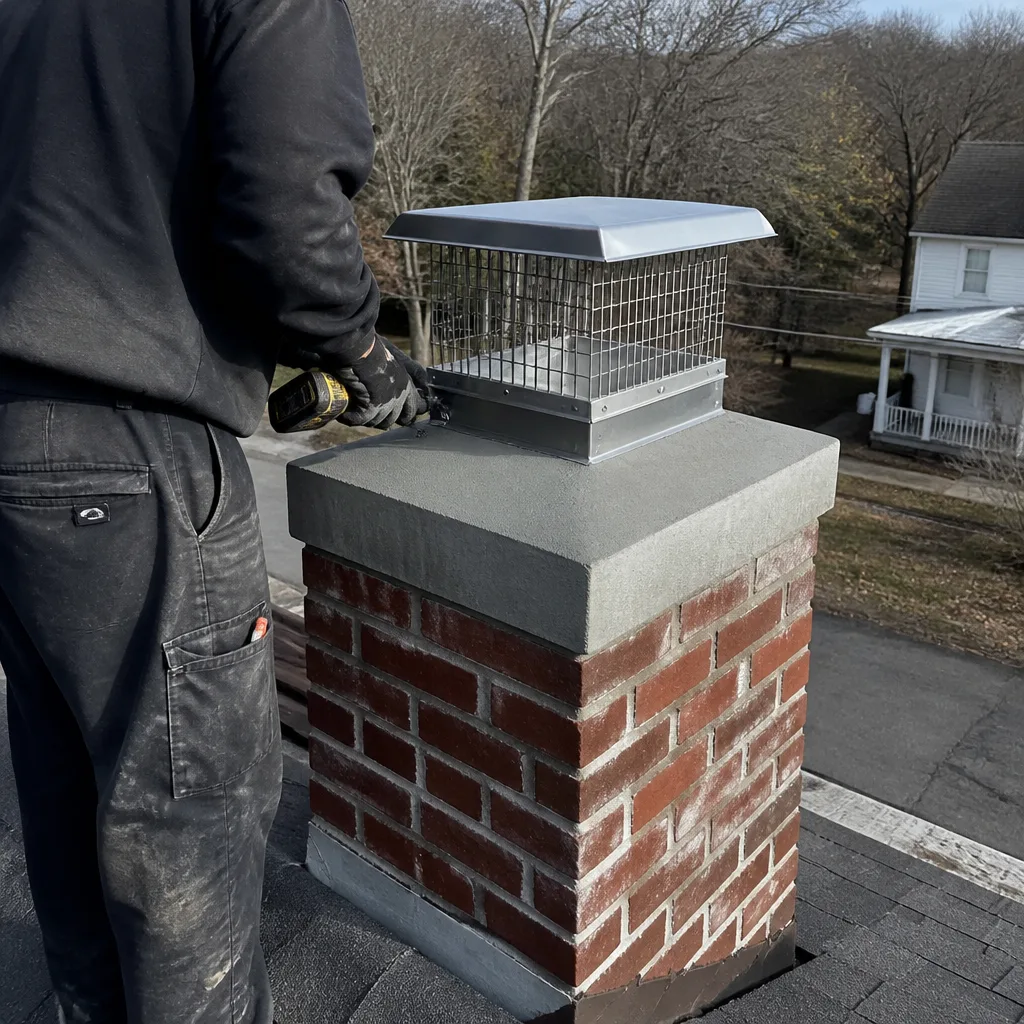 After
After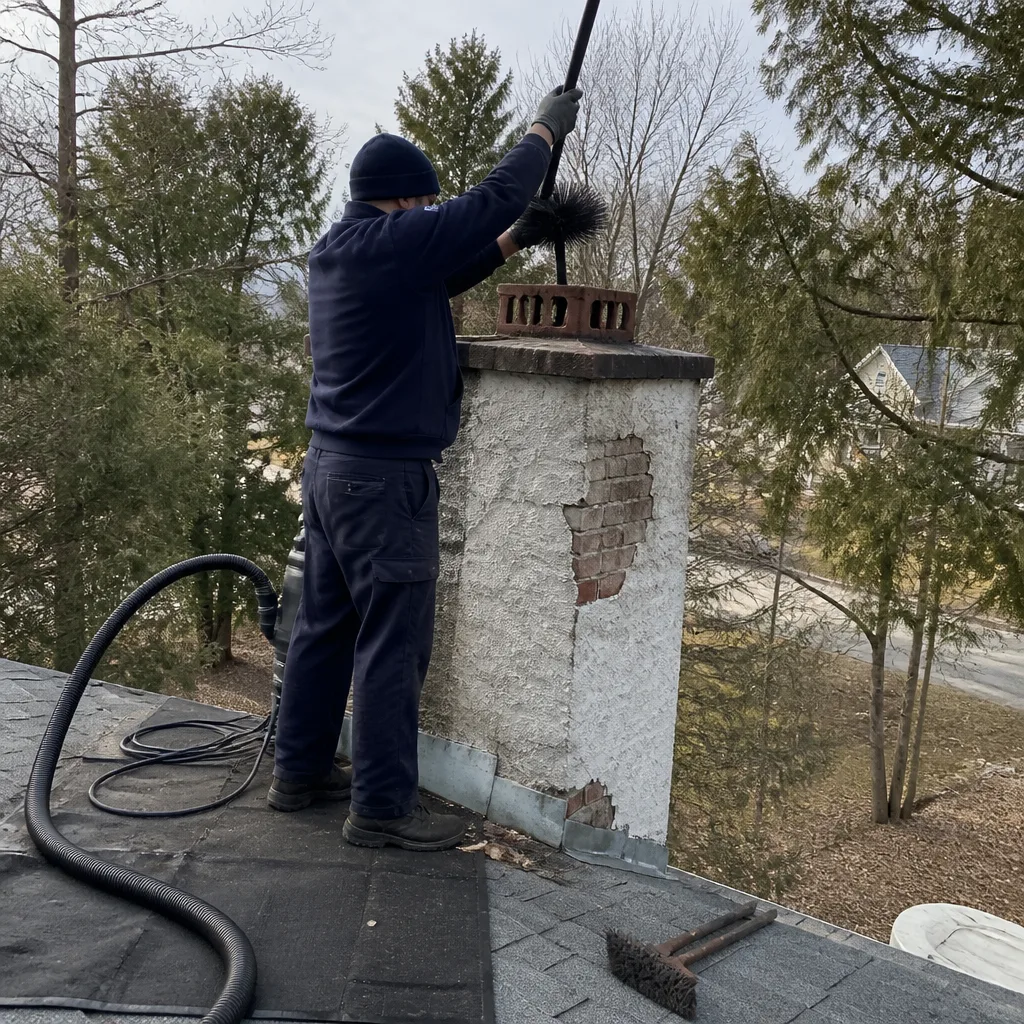 Before
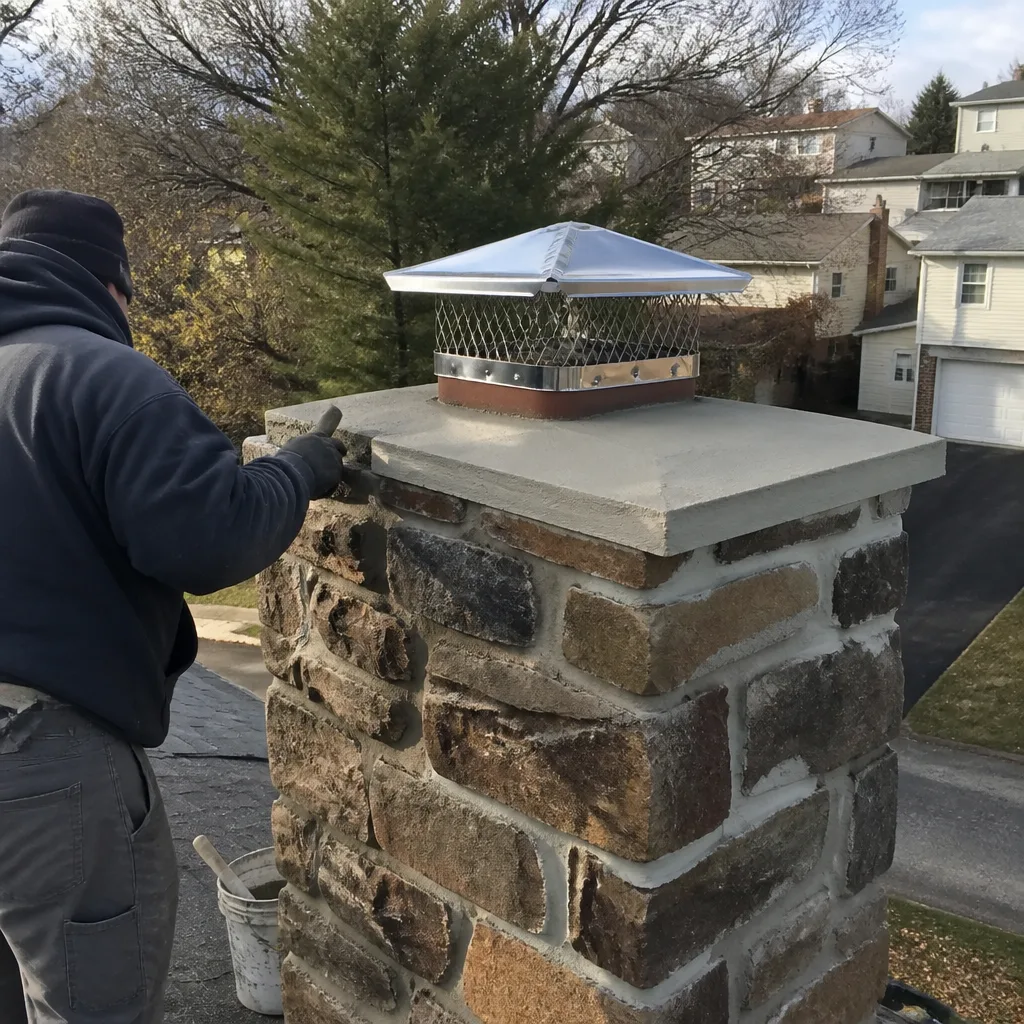 After
AfterChimney Cleaning Warning Signs: A Norristown Homeowner’s Reference Guide
White staining on exterior brick - called efflorescence - looks like a cosmetic problem. It is actually water moving through the masonry, and in a Norristown home with clay tile liner joints, that same water may be working through mortar gaps inside the flue that no flashlight will show. Since 2009, we’ve inspected over 38,000 chimneys in the Delaware Valley, and the pattern is consistent: the warning signs homeowners notice on the outside rarely match the severity of what’s happening inside the liner. This guide pairs each visible symptom with its invisible counterpart, so you’ll know whether what you’re seeing means schedule soon or stop using the fireplace today. For the complete guide to chimney cleaning in Norristown, see our dedicated resource.
Quick Answer
The most serious chimney warning signs in Norristown homes are: efflorescence or spalling brick on the exterior (indicates water penetration that damages liner joints), smoke backing up into rooms (draft failure or blockage), and a sticking damper that won’t fully open or close (often liner shift, not hardware failure). These three require professional inspection before the next fire. Less urgent but still important: creosote odors, rust stains on the chase cover, and tile debris in the firebox signal maintenance is overdue but don’t require immediate grounding.
Table of Contents
- Seven Exterior Warning Signs and What They Hide Inside
- Smoke, Odor, and Draft Problems: Three Different Urgencies
- What Your Firebox Can Tell You: A Homeowner Self-Check
- The Misdiagnosed Sticking Damper: Liner Shift vs. Hardware
- Urgency Triage: This Month, This Week, or Right Now
- How Norristown’s Freeze-Thaw Cycle Accelerates Damage
- What a Level 2 Inspection Actually Shows You
 Before
 After
AfterSeven Exterior Warning Signs and What They Hide Inside
Every symptom on your chimney’s exterior corresponds to a condition inside the flue. Here’s what we’ve documented across thousands of Norristown inspections.
1. Efflorescence (White Powdery Staining)
Efflorescence is salt left behind when water moves through masonry and evaporates at the surface. In Norristown’s older housing stock - particularly in neighborhoods like West End and the near-century homes along Airy Street - we see this frequently on brick chimneys with original clay tile liners.
The interior counterpart: water migrating through the masonry finds gaps in mortar joints between liner tiles. Those gaps expand with each freeze-thaw cycle. By the time efflorescence is visible outside, the liner may have lost significant structural integrity. A flashlight inspection from the top won’t show this. Only a camera scan, dropped the full length of the flue, reveals the joint separation and glaze pattern that tells us whether the liner is still containing combustion gases.
We document this with photos under Haven Standard Clause 4. If joint gaps exceed acceptable tolerances, we quote liner repair or replacement in writing before any work begins.
2. Spalling Brick (Flaking or Crumbling Face)
Spalling occurs when water trapped in brick freezes, expands, and fractures the surface. Norristown’s winter temperature swings - often above 40°F during the day and below freezing at night - make this particularly aggressive.
The interior counterpart: spalling indicates that water has penetrated the full thickness of the masonry. That same water reaches the liner, and if the liner has existing cracks, it accelerates deterioration of the tile or terracotta. We’ve replaced liners in Norristown homes where the exterior showed moderate spalling but the interior revealed complete tile collapse in the smoke chamber - the area just above the firebox where gases collect and turn.
Materials we use for liner replacement include DuraFlex stainless steel liners and HeatShield cerfractory resurfacing, selected based on what the camera reveals.
3. Rust Stains on the Chase Cover or Cap
Rust-colored streaks running down a factory-built chimney chase indicate the galvanized or stainless chase cover is failing. In Norristown, we see accelerated rust on homes within two miles of the Schuylkill River corridor where humidity runs higher.
The interior counterpart: a compromised chase cover allows water directly into the flue of a factory-built fireplace. Unlike masonry chimneys where water spreads through brick, factory-built systems have metal flue pipes with factory seams. Water at those seams causes corrosion from the inside out. By the time rust stains show on the exterior, the interior flue pipe may have pinhole leaks or seam separation that vents combustion gases into wall cavities.
This is a “do not use” condition until inspected. We replace chase covers with Gelco stainless steel units or custom-fabricated copper from Copperfield’s catalog, quoted in writing with photos of the existing damage.
4. Missing or Dislodged Chimney Cap
A missing cap is an open invitation for water, animals, and debris. In Norristown’s tree-canopied neighborhoods like East Norriton Township and the areas near Elmwood Park, we find squirrel and raccoon nesting material in uncapped flues every fall.
The interior counterpart: nesting material creates partial blockages that restrict draft. More seriously, animal urine is acidic and degrades clay tile glaze. A capless flue in Norristown typically shows accelerated liner deterioration within three to five years compared to capped counterparts.
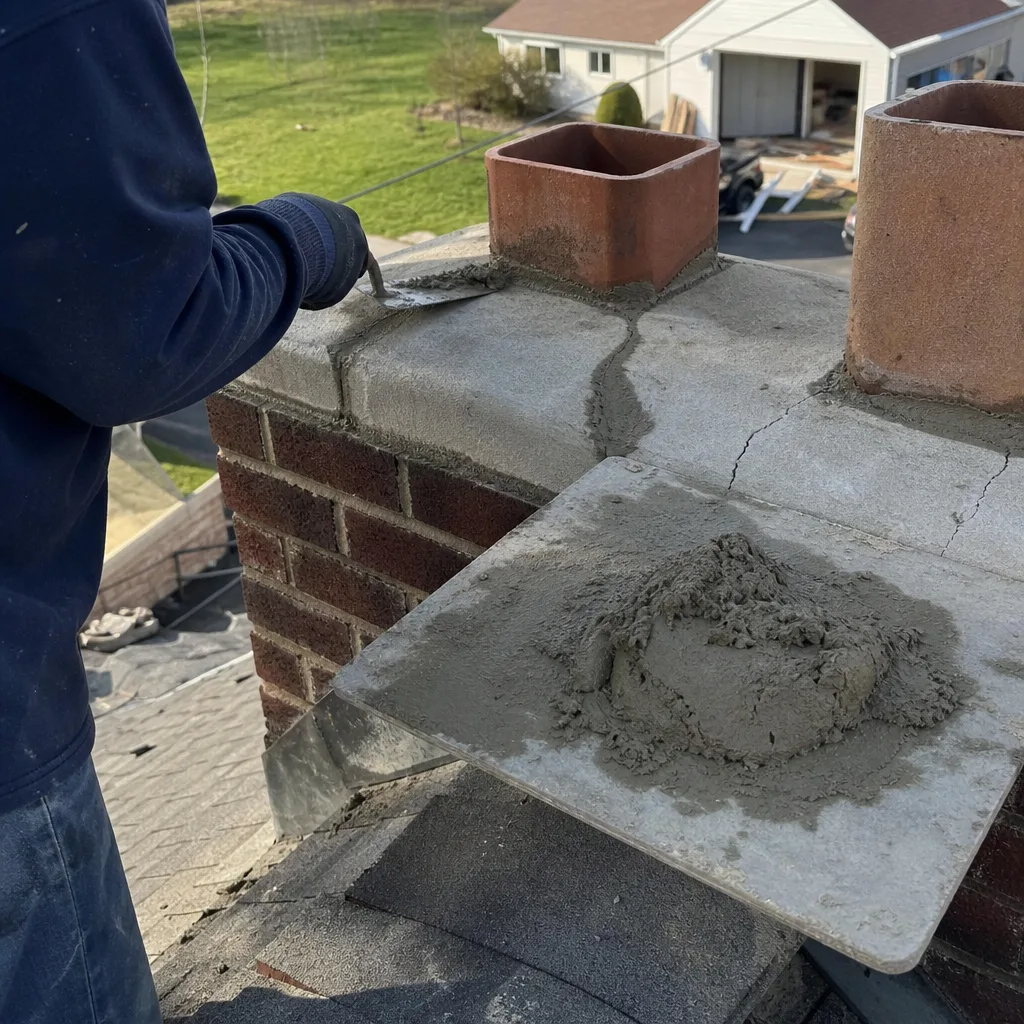
5. Cracked or Deteriorated Crown
The crown is the concrete slab that seals the top of a masonry chimney. Hairline cracks allow water penetration; larger cracks indicate structural movement.
The interior counterpart: crown cracks channel water to the liner’s top course of tiles. We regularly find the top three to four feet of liner in Norristown chimneys more deteriorated than the lower sections - direct evidence of crown failure. This pattern is so consistent that when we see crown cracks, we anticipate liner damage and price for both possibilities, confirming with the camera before presenting the written scope.
6. Leaning or Separated Chimney
A chimney that tilts away from the house or shows visible gap at the roofline indicates foundation settlement or structural failure. This appears most often in Norristown’s pre-1950 homes with shallow footings on clay soils.
The interior counterpart: structural movement fractures the liner. Even a slight lean can open continuous cracks running multiple feet. This is an automatic “do not use” - combustion gases can escape through liner cracks into living spaces. We ground the system and recommend immediate rebuild evaluation.
7. Discolored or Stained Siding Near the Chimney
Water staining on exterior walls adjacent to the chimney indicates flashing failure - the metal seal between chimney and roof has separated.
The interior counterpart: flashing leaks rarely affect the liner directly, but they saturate the chimney’s structural core. Over time, this moisture weakens the bond between liner and surrounding masonry, creating voids where gases can migrate. We coordinate flashing repair with our roofing partners and inspect the adjacent liner section with enhanced attention.
Smoke, Odor, and Draft Problems: Three Different Urgencies
Not all smoke and odor problems carry the same risk. Distinguishing them correctly determines whether you schedule a sweep or stop using the system immediately. If you’re weighing whether to tackle maintenance yourself, our DIY vs professional chimney cleaning guide for Norristown homeowners can help you decide.
Smoke Backing Up Into the Room
Smoke entering the living space during a fire indicates either a blocked flue, a failed liner, or a negative pressure condition in the house. In Norristown’s tighter new construction and renovated row homes, negative pressure from exhaust fans and HVAC systems increasingly causes this symptom even with a clean, intact flue.
The danger: smoke carries carbon monoxide. If smoke enters the room, CO may be present at lower concentrations even if a detector hasn’t alarmed. Ground the fireplace. Do not use it until a Level 2 inspection identifies the cause. We’ve traced this to bird nests in April, liner collapse in January, and simply a bathroom exhaust fan left running during ignition in November.
Creosote Odor (Strong Tar Smell, Especially in Humid Weather)
A sharp, acrid smell from the fireplace in summer indicates Class I or II creosote deposits that have absorbed humidity. This is common in Norristown from June through September when dew points climb.
The urgency: odor alone doesn’t indicate immediate danger, but it confirms deposits are present and will ignite at lower temperatures when burning resumes. Schedule a sweep before the heating season. The odor typically resolves with cleaning. If it persists after sweeping, we inspect for hidden deposits in the smoke chamber or above the damper - areas a basic sweep sometimes misses.
Backdraft Smell (Cold Air, Soot, or “Sewer” Odor When Fireplace Is Not in Use)
A cold draft carrying soot particles or unpleasant odor from the fireplace when no fire is burning indicates reverse airflow. This can mean a blocked flue top, a failed damper seal, or - most seriously - a liner breach that has altered pressure dynamics.
The urgency: backdrafting can pull combustion gases from other appliances (furnace, water heater) into living spaces. If you smell exhaust or experience headaches, dizziness, or nausea when the fireplace is cold, treat this as a potential carbon monoxide event. Evacuate and call emergency services, then contact us for inspection after the immediate hazard is cleared.
What Your Firebox Can Tell You: A Homeowner Self-Check
The firebox - the brick or refractory chamber where you build fires - offers visible indicators that don’t require professional equipment to assess. Here’s what to look for and what each finding suggests about conditions higher in the system.
- Shaling tile debris in the firebox. Thin, curved fragments of clay tile that resemble pottery shards indicate the flue liner above is deteriorating. Tile flakes fall from cracked or spalling liner surfaces. This finding always warrants camera inspection - the debris you see represents material that has already detached, but the liner may have additional cracks that haven’t yet released fragments. In Norristown homes with 1960s-1980s construction, we see this frequently as those clay liners reach end of service life.
- White mineral deposits on firebox walls. These efflorescence deposits indicate moisture moving through the rear wall of the firebox, typically from a leaking chimney crown or failed flashing. The moisture carries salts from the masonry, depositing them on the firebox surface. This same moisture path damages the liner from the outside in. We inspect the corresponding exterior area and the liner section adjacent to the stained wall.
- Cracked or missing mortar joints in the firebox floor. The firebox floor takes direct flame impingement and thermal cycling. Open joints allow embers to contact combustible framing behind the firebox. This is an immediate repair need - not necessarily a full rebuild, but refractory panel or brick replacement with proper clearances restored. We document the joint condition and quote repair with material specifications from Olympia Chimney or Famco’s refractory lines.
- Gaps between firebox walls and facing material. Separation between the structural firebox and the decorative surround (tile, brick, or stone) indicates structural movement or deterioration of the supporting framework. This may be cosmetic or may indicate that the firebox itself has shifted, stressing the liner connection above. We assess whether the gap is static or active, and whether liner alignment has been affected.
- Damaged or missing firebrick. Individual firebrick that has cracked, spalled, or fallen out exposes the surrounding structure to excessive heat. Replace damaged brick with matching refractory material - standard clay brick from a hardware store will not withstand firebox temperatures and will fail again within a season.
These five checks take approximately ten minutes with a flashlight. Document what you find with photos; they help us prioritize what to inspect first when we arrive.
The Misdiagnosed Sticking Damper: Liner Shift vs. Hardware
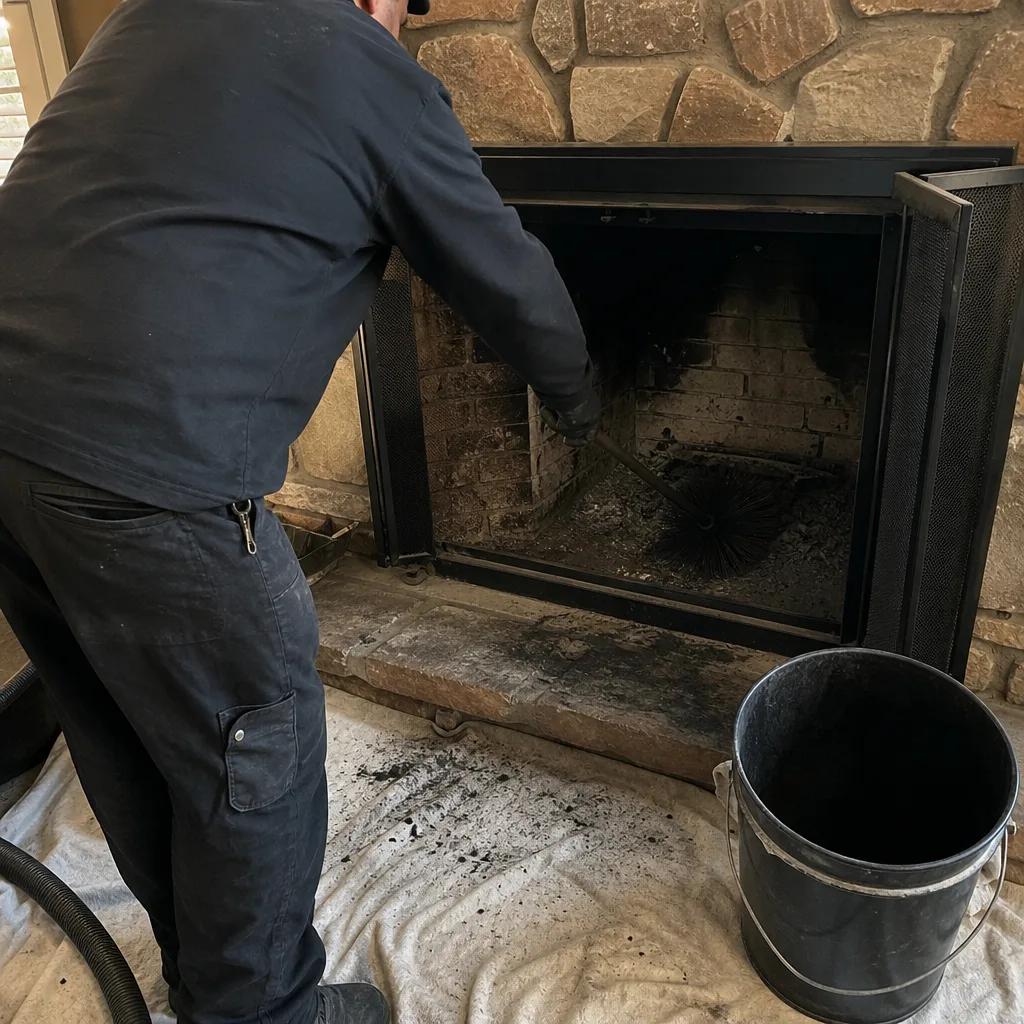
The single most commonly misattributed chimney symptom is a damper that “sticks,” won’t fully open, or won’t fully close. Homeowners and some technicians assume the damper plate, hinge, or handle mechanism has failed. In our experience across Norristown inspections, the actual cause is liner shift approximately 60% of the time.
Here’s how it works: clay tile liners expand and contract with heating cycles. Over decades, this movement, combined with mortar degradation, allows the liner to settle or shift within the chimney structure. When the liner moves even slightly, it can contact the damper frame or plate, physically blocking operation. The handle turns; the plate moves until it hits the liner; the homeowner feels resistance and assumes rust or debris.
Diagnosing this requires a camera inspection looking upward from the firebox. We position the camera below the damper and document whether the liner encroaches on the damper’s sweep path. If it does, the repair is liner stabilization or replacement - not damper replacement. Replacing the damper without addressing liner shift wastes the investment; the new damper will bind identically within months.
We’ve seen this misdiagnosis cost Norristown homeowners two or three damper replacements before the correct cause was identified. Under Haven Standard Clause 4, we provide the camera documentation that shows exactly what’s happening. If your damper has been “repaired” multiple times and still sticks, request a Level 2 inspection with upward-looking camera verification.
Urgency Triage: This Month, This Week, or Right Now
Not every warning sign demands the same response. This triage system, developed from our field documentation, helps you calibrate urgency accurately. When you’re ready to hire, our step-by-step guide to hiring a chimney cleaning contractor in Norristown walks you through vetting and selection.
Schedule Within the Month
- Creosote odor in humid weather - indicates deposits present, fire risk elevated when burning resumes
- Rust stains on chase cover - water entry ongoing, but factory-built systems typically have secondary protection
- Minor efflorescence without spalling - water penetration early stage, monitor and address before freeze season
- Missing chimney cap - debris and animal risk, but no immediate combustion hazard if flue is clear
Schedule This Week
- Spalling brick with visible liner gaps suspected - structural water penetration accelerating
- Smoke occasionally drifting from fireplace at startup - partial blockage or pressure imbalance developing
- Shaling tile debris in firebox - liner actively deteriorating, next heating cycle may worsen
- Cracked firebox mortar joints - ember contact risk with each use
Do Not Use - Call Today
- Smoke consistently backing up into living space - carbon monoxide risk, flue blockage or liner failure
- Backdraft odor when fireplace is cold - potential CO from other appliances entering living space
- Leaning or separated chimney - structural failure, liner certainly fractured
- Damper completely immobilized - possible liner shift blocking flue, combustion gases uncontrolled
- Visible flames or glowing material in wall or ceiling near chimney - chimney fire in progress, call 911
The distinction between “this week” and “right now” matters. A homeowner who treats every symptom as emergency will eventually ignore actual emergencies. A homeowner who treats actual emergencies as routine risks serious injury or death. When in doubt, our live phone support is available 24 hours a day to help you classify what you’re observing.
How Norristown’s Freeze-Thaw Cycle Accelerates Damage
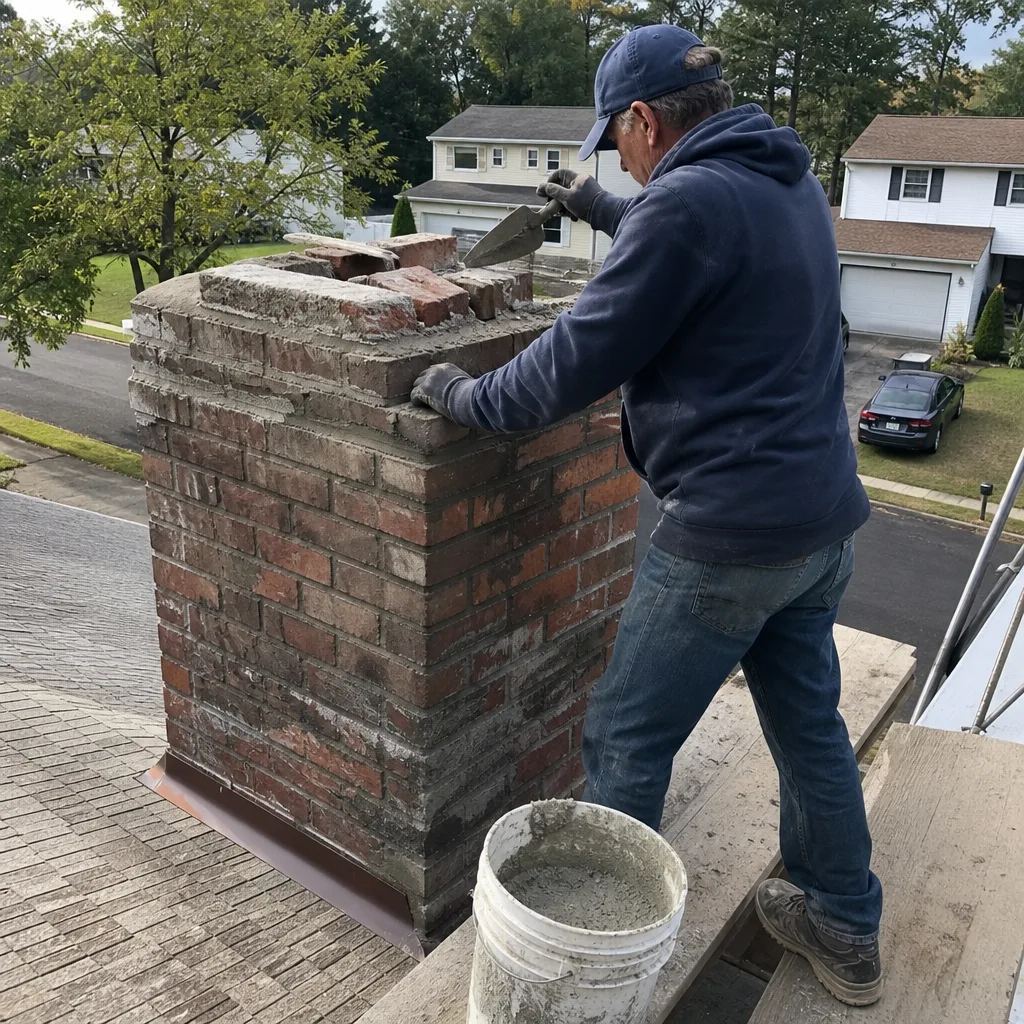
Norristown’s climate sits in a damage-intensive zone for masonry chimneys. The Köppen classification is humid subtropical, but winter behavior matters more than annual averages.
From December through March, daytime temperatures regularly rise above freezing while nights drop below. This cycle may occur 40-60 times per winter season. Each cycle drives water deeper into masonry microcracks, then freezes it into ice that expands with approximately 9% volumetric force. The result is progressive fracture propagation - cracks lengthen and connect.
For chimneys, this means:
- Efflorescence that appears in March indicates water penetration that has survived the full winter freeze cycle - the masonry’s internal damage is more advanced than the surface suggests
- Spalling that accelerates in April reveals winter damage that was hidden by ice until thaw
- Crown cracks that open in January may seal with ice until March, then leak continuously through spring rains
Norristown’s proximity to the Schuylkill River and its tributary valleys also elevates ambient humidity, particularly in neighborhoods below the 200-foot contour line. Higher humidity means masonry stays wet longer between rain events, extending the window for freeze-thaw damage when temperatures drop.
We’ve documented faster liner deterioration in riverside Norristown homes compared to properties above the ridge line in Plymouth Township or Blue Bell - not dramatically, but consistently enough that we inspect more frequently and recommend more proactive crown and cap maintenance in those microclimates.
What a Level 2 Inspection Actually Shows You
The Chimney Cleaning & Sweep in Norristown page describes our sweep process. This section explains what the inspection component delivers - the documentation that transforms warning signs into actionable knowledge.
NFPA 211 defines three inspection levels. Level 1 is visual, from accessible areas, without tools. Level 2 adds camera inspection of the flue interior, accessible attics, and crawl spaces, and is required upon sale or transfer of property, after chimney fire or lightning strike, or when any warning sign is present. Level 3 involves demolition of building components and is reserved for investigating known hazards. Explore more guides & resources in our blog for additional chimney safety information.
We perform Level 2 as our default - Haven Standard Clause 4 requires it - because warning signs visible to homeowners are, by definition, indicators that conditions inside may differ from surface appearance.
Here’s what you receive:
- Written scope and price before work begins. Haven Standard Clause 1 - “Have it in writing” - means you know exactly what we’ll do and exactly what it costs before anyone starts. No surprises, no pressure after inspection.
- Camera footage and still photos of the full flue length. You see what we see: liner condition, joint integrity, creosote class and thickness, obstruction location if present. These images become your documented record, stored under Haven Standard Clause 4.
- Specific material recommendations with sourcing transparency. If liner replacement is needed, we specify DuraFlex, HeatShield, or other materials by model and source through our Haven buying network. You know what you’re receiving and why it was selected.
- Written warranty and the 365-Day Done Right Promise. If it’s not done right, we make it right. The promise is stamped on every job, not offered verbally and forgotten.
For Chimney Repair in Norristown needs identified during inspection, we quote those separately with the same documentation standard. For Fireplace Services in Norristown including insert installation or gas conversion, the inspection establishes whether the existing chimney is compatible or requires modification.
Common Mistakes to Avoid
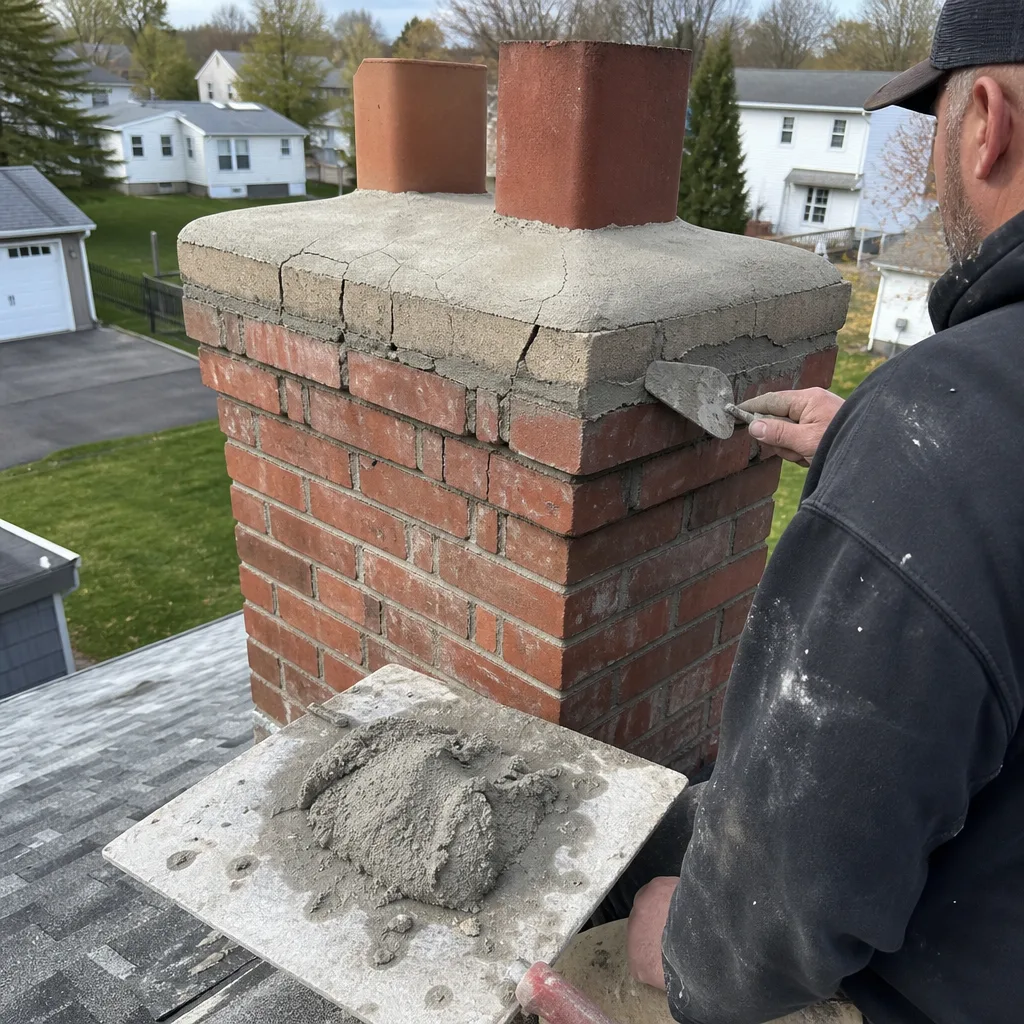
- Assuming efflorescence is just “old brick character.” In Norristown’s historic districts, homeowners often accept white staining as age-appropriate patina. It’s not. It’s active water migration that destroys liner joints while you wait.
- Using the fireplace “just once more” after noticing smoke backup. Carbon monoxide is odorless and can reach dangerous levels before a detector alarms. One more fire is one too many.
- Accepting a flashlight inspection when warning signs are present. A flashlight from the top or bottom of the flue illuminates approximately 15% of the surface. The camera sees 100%. If a company won’t use a camera, they can’t diagnose what they can’t see.
- Ignoring creosote odor because “it always smells in summer.” That smell is volatile organic compounds off-gassing from deposits that will ignite at lower temperatures come fall. It’s a calendar reminder to schedule, not a quirk to accept.
- Replacing a damper without camera verification of liner position. As described above, this is the most expensive misdiagnosis we correct. Demand upward-looking camera documentation before approving damper replacement on a “sticking” unit.
- Waiting for “the off season” to save money. In Norristown, chimney professionals are busiest September through January. Pricing doesn’t vary seasonally for reputable companies - our written price is our written price year-round. Waiting risks using a damaged system through a heating season.
- Trusting a verbal estimate for major work. If a competitor gives you a number without written scope, warranty, and material specification, you have no recourse when the actual cost doubles. Our Free Second Opinion on Any Written Estimate exists specifically to help homeowners compare documented proposals against verbal promises.
When to Call a Professional
Call when any warning sign in this guide appears - but especially when smoke, backdraft odor, or structural movement is involved. These three categories carry genuine safety risk that homeowner assessment cannot fully evaluate.
For all other symptoms, the inspection provides certainty. You’ll know whether the efflorescence on your Norristown home’s chimney is early-stage moisture or advanced liner compromise. You’ll know whether the damper sticks from rust or from liner shift. You’ll know whether that creosote smell means routine sweeping or whether hidden Class III glazed deposits require mechanical removal.
Emberly Chimney Cleaners Norristown offers free estimates in Norristown - call (484) 552-9695. Every estimate includes the written scope, written price, and written warranty that Haven Standard Clause 1 requires. If you’ve received a written estimate from another company, our Free Second Opinion lets you compare documentation against documentation, not hope against marketing.
Frequently Asked Questions
A standard chimney sweep and Level 2 inspection in Norristown typically ranges from $249 to $389, depending on flue accessibility, number of appliances served, and whether mechanical creosote removal is required. We deliver a written price before work starts - no exceptions - and that price includes the camera inspection, photo documentation, and written condition report. Call (484) 552-9695 for an exact quote; estimates are free.
NFPA 211 recommends annual inspection for all chimney systems, with cleaning frequency determined by use and fuel type. In Norristown, where many homeowners burn hardwoods like oak and maple from local suppliers, we typically find adequate cleaning intervals of every cord of wood burned or annually, whichever comes first. Gas fireplaces require less frequent cleaning but still need annual inspection for liner integrity and venting performance. The 38,000+ inspections in our archive show that Norristown systems inspected annually rarely develop the advanced deterioration that requires costly repair.
You need a new liner when inspection reveals conditions that cleaning cannot correct: cracked or missing tiles, joint gaps exceeding 3/16 inch, spalling or flaking that exposes the chimney structure, or glazed creosote that has physically altered the flue surface. Cleaning removes deposits; it does not restore structural integrity. We show you the camera footage and explain which category your liner falls into. If cleaning is sufficient, we say so plainly - our incentive is long-term customer relationship, not single-transaction pressure. Call (484) 552-9695 and we’ll inspect without pre-judgment.
Skipped maintenance leads to progressive, predictable damage. Creosote deposits thicken until they ignite - chimney fires in unlined or deteriorated chimneys can reach 2,000°F and damage surrounding structure. Water penetration through uncapped or crown-damaged flues destroys liner joints, eventually allowing combustion gases into living spaces. In Norristown’s freeze-thaw climate, minor cracks become major spalling within three to five skipped seasons. The cost trajectory is severe: annual inspection and sweep ($249-$389) prevents liner replacement ($2,800-$6,500) and rebuilds ($8,000-$25,000). We document this progression in our archive; the pattern is unmistakable.
Summer humidity reactivates volatile compounds in creosote deposits that remain dry and inert during heating season. The smell is actually a useful indicator - it confirms deposits are present and signals that your system needs cleaning before the next burning season. In Norristown’s humid summers, we field more odor-related calls from June through August than any other symptom. The solution is thorough sweeping, sometimes with deodorizing treatment if deposits have penetrated masonry. If odor persists after cleaning, we inspect for hidden deposits in the smoke chamber or above the damper, areas a basic sweep may not reach.
You can assess the firebox and damper operation as described in this guide, but you cannot safely or effectively inspect the full flue length without professional equipment. The flue in a typical Norristown two-story home runs 20-30 feet; a flashlight beam illuminates only the surface directly in front of it, missing cracks on the sides, behind offsets, or above the smoke chamber. More importantly, roof access for top-down inspection involves fall risk on pitched surfaces, and disturbing creosote deposits without proper containment equipment spreads carcinogenic material into your home. We encourage homeowner awareness of surface symptoms; we strongly recommend professional camera inspection for interior evaluation. Call (484) 552-9695 to schedule; estimates are free.
The Bottom Line
Every chimney warning sign has two versions: what you can see and what you can’t. This guide pairs them so you know whether you’re looking at cosmetic weathering or a system that needs grounding. The critical skill is matching surface symptom to interior condition, then calibrating urgency accurately. When in doubt, the camera removes doubt. Since 2009, we’ve built our practice on showing homeowners exactly what exists inside their flue - not telling them, showing them - with written prices before work starts and documented records when it’s done. That’s Haven Standard Clause 4, and it’s the standard we apply on every visit to every Norristown home.
Written by Corrine Halstead, Owner at Emberly Chimney Cleaners Norristown, serving Norristown since 2009.